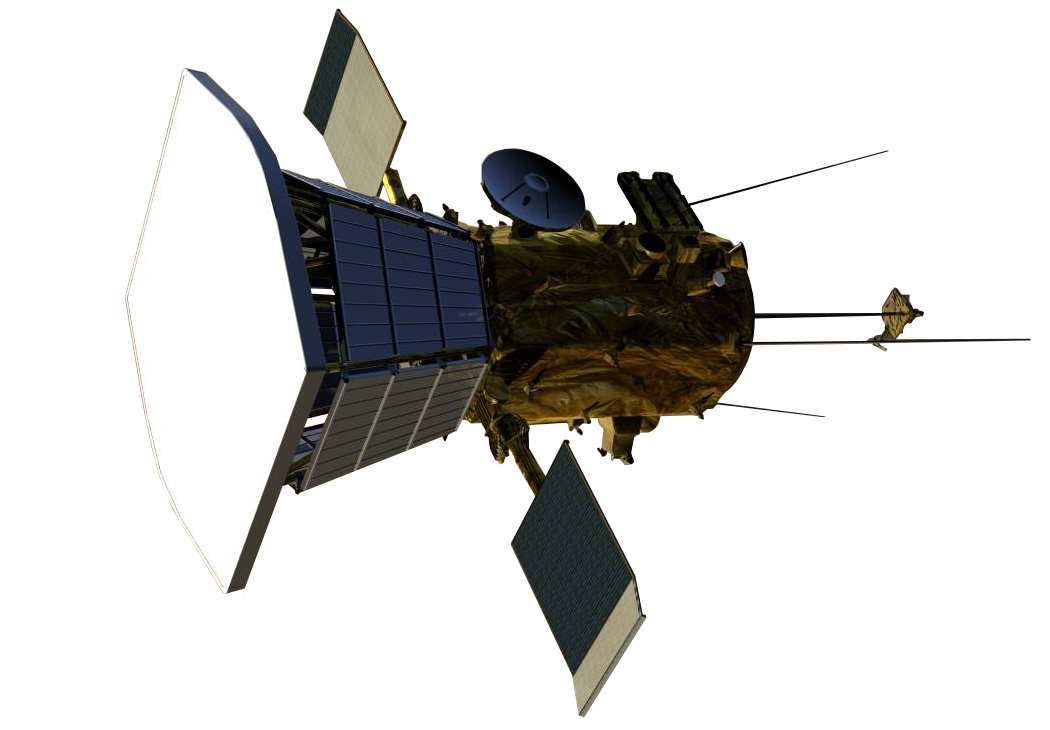
The Parker Solar Probe is a NASA spacecraft that explores the Sun's corona to enhance our understanding of solar activity and its impact on space weather.

Set reading age
View for Kids
Easy to read and understand
View for Students
Clear, detailed explanations
View for Scholars
Deep dives and big ideas
The Parker Solar Probe is a special spacecraft launched by NASA to study the Sun! ☀️ It was sent into space on August 12, 2018, and is named after Dr. Eugene Parker, an astronomer who studied the Sun's outer glow called the solar wind. The probe travels close to the Sun, closer than any other spacecraft ever! Its mission is to learn more about how the Sun works, including its atmosphere, magnetic fields, and solar flares. The information it gathers can help scientists understand space weather, which is important for communication on Earth! 🌍
The Parker Solar Probe launched from Cape Canaveral, Florida, on a mission to explore the Sun! 🚀It was sent into space using a powerful rocket called the Delta IV Heavy. The launch was part of NASA's mission to study the solar system. After leaving Earth, the spacecraft performed seven flybys of Venus to gradually adjust its orbit and get closer to the Sun. Every time it flies by our neighboring planet, it gets a boost to go even faster! This clever plan helps it reach its goal over the next several years! 🌌
Since its launch, the Parker Solar Probe has made amazing discoveries about the Sun! 🌟It found that the solar corona is much hotter than scientists thought, reaching temperatures over 3 million degrees Fahrenheit (1.6 million degrees Celsius)! The probe also discovered that solar wind travels faster than expected and got a closer look at solar particles that could affect Earth. In addition, it caught sight of structures in the corona called "switchbacks," which are mysterious magnetic waves. Each of these discoveries helps us understand the Sun better and its impact on space weather! 🌌
The Parker Solar Probe has four main objectives! 📝First, it wants to trace the flow of energy and understand the heating of the solar corona, the Sun's outer layer. Second, it aims to explore the structure of the solar wind, which is the stream of charged particles released from the Sun. Third, it will learn about solar magnetic fields, which affect space weather. Finally, it will study solar eruptions, like flares and coronal mass ejections! 🌌This knowledge helps keep us safe from solar storms, especially for our satellites and astronauts!
The Parker Solar Probe is designed to withstand extreme temperatures! 🔥It has a special heat shield called the Thermal Protection System, made of carbon-composite material. This shield keeps the instruments inside cool, even when the probe is about 2.7 million miles from the Sun! To gather data, it uses a suite of scientific instruments, including cameras and sensors. The probe is small, roughly the size of a car, making it easy to launch and maneuver. It’s a fantastic engineering marvel that helps us understand our nearest star! 🚀
The Parker Solar Probe will continue its mission until at least 2025! 🚀Over the next few years, it will complete more orbits around the Sun, getting closer and closer with each pass. This will allow scientists to gather more data and make new discoveries! The mission will give us insights into solar eruptions and their effects on Earth, helping to predict space weather. By studying the Sun in its environment, we can learn how it affects our planet and solar system. The future looks bright for solar research! ☀️
The Parker Solar Probe carries a variety of scientific instruments to learn about the Sun! 🛠️ It has four main instruments: the WISPR (Wide-Field Imager for Parker Solar Probe), which takes images of the solar corona, and the FIELDS instrument that measures electric and magnetic fields. Another tool is the ISʘIS (Integrated Science Investigation of the Sun), which studies solar particles, and the COSTEP and EPI-Hi instruments that examine particles from the Sun! Each of these instruments helps scientists gather important data about solar activity! 🌞
The Parker Solar Probe faces many challenges during its mission! 🌡️ One major challenge is the intense heat and radiation from the Sun. To tackle this, the spacecraft uses its advanced heat shield, which protects its instruments. Another challenge is communicating with Earth. As it gets closer to the Sun, signals can be weak and delayed. NASA has designed a solid communication system that allows the probe to send important data back to scientists, even from such great distances! By overcoming these challenges, the probe can gather vital information! 📡
The Parker Solar Probe is changing the way we study the Sun! 🌞Its findings have already made scientists rethink some ideas about solar physics. With this new knowledge, researchers are developing better models of solar activity, which can help predict solar storms. Understanding the Sun's behavior is crucial for protecting astronauts and our technology on Earth, like satellites and power grids. The data collected by the Parker Solar Probe is paving the way for future space missions, making it an essential tool for the future of solar research! 🌠


DIY is a creative community where kids draw, build, explore ideas, and share.
No credit card required