Pangaea Facts For Kids
Pangaea was a massive supercontinent that existed during the late Paleozoic and early Mesozoic eras, bringing together all major landmasses before it began to break apart about 175 million years ago.
Select reading age

Pangaea Facts For Kids
Videos & Quizzesincluded
About this topic
Pangaea, also spelled Pangea, was a gigantic supercontinent that existed around 335 million years ago! 🌍Imagine all the continents joining together like puzzle pieces! Pangaea began breaking apart about 175 million years ago! This means that the continents we see today, like Africa, Europe, and South America, were once all connected! Isn’t that cool? 🌏Scientists study Pangaea to understand how our Earth has changed over millions of years. Knowing about Pangaea helps us learn about earthquakes, volcanoes, and where dinosaurs roamed! 🦖Just like a giant jigsaw puzzle, the Earth is always changing!
Explore with ChatDinoKey Points
Around 175 million years ago, Pangaea started breaking apart!
Geological evidence gives us clues about Pangaea's existence!
Pangaea formed during the late Paleozoic Era, about 335 million years ago!
Pangaea was filled with fascinating plants and animals!
Pangaea's breakup had a huge impact on modern continents!
Plate tectonics is like Earth’s own puzzle game!
Pangaea plays a big role in science education!
During the Paleozoic Era, Pangaea was a bustling place!
Pangaea has inspired lots of stories, movies, and cartoons!
Pangaea had very different climates and environments across its vast land!
Photos of Pangaea

Alfred Wegener c. 1924–1930

World map of Pangaea created by Alfred Wegener to illustrate his concept
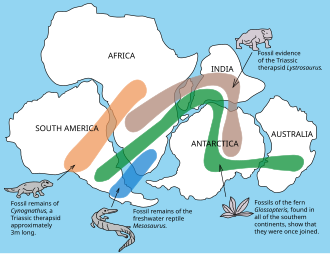
The distribution of fossils across the continents is one line of evidence pointing to the existence of Pangaea.

Appalachian orogeny
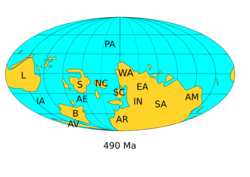
Pangaea — photo 5
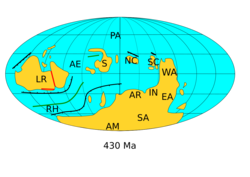
Pangaea — photo 6
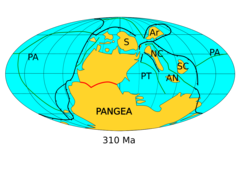
Pangaea — photo 7

Pangaea — photo 8
😱 Breakup Of Pangaea
Around 175 million years ago, Pangaea started breaking apart! 😱This was a monumental change for our planet! As tectonic plates moved, the supercontinent split into smaller continents we recognize today. 🌍Europe drifted away from North America, while Africa moved south! Over millions of years, these continents traveled to form the Earth we live on now! 🗺️ Imagine them like drifting pieces of a giant pizza! 🍕The breakup caused changes in climate, the disappearance of some animals, and the birth of new species, leading to today’s incredible variety of life!
Go deeper🧩 Geological Evidence
Geological evidence gives us clues about Pangaea's existence! 🧩For example, scientists have found similar rock layers on different continents. 🏔️ Imagine finding the same colored crayon in two different classrooms! In South America and Africa, there are matching fossilized plants like Glossopteris. 🌿This plant lived only in warm regions, showing that these continents were once together! Also, by studying ancient mountain ranges and coastlines, scientists can see how the continents used to be aligned! 🌐All these clues help scientists understand what Earth looked like a long time ago, just like detectives solving a mystery!
Go deeper🕰️ Formation Of Pangaea
Pangaea formed during the late Paleozoic Era, about 335 million years ago! 🕰️ How did it happen? Well, tectonic plates, which are pieces of Earth's crust, began to move closer together. These plates are like giant floating rafts on Earth’s hot mantle! 🌊When they bumped into each other, they created mountains, valleys, and the supercontinent Pangaea! 🌄This giant landmass meant lots of animals and plants could live together! Pangaea took millions of years to form, just like a masterpiece painting that needs time to finish! 🎨Imagine all the adventures and discoveries waiting to happen on this huge land!
Go deeper🌼 Flora And Fauna Of Pangaea
Pangaea was filled with fascinating plants and animals! 🌼During its time, giant ferns, clubmosses, and cycads ruled the forests. 🏞️ In the oceans, creatures like ammonites, which looked like squishy snails, swam around! 🦑On land, the first reptiles appeared, leading to dinosaurs many years later! 🦖The creatures had to adapt to different climates; some were big and strong, while others were small and sneaky! 🎋Pangaea was a giant playground for diverse life! Every corner held amazing plants and animals that would later influence the creatures we know today!
Go deeper🌍 Impact On Modern Continents
Pangaea's breakup had a huge impact on modern continents! 🌍Today’s continents—like Africa, Asia, and North America—are shaped by this ancient supercontinent. 🌏The distance between continents created different climates and environments. For instance, animals in Australia, like kangaroos, developed separately from those in Africa, like lions! 🦘🐅 This means Pangaea helped create unique habitats and species all over the world! When we look at a globe, we see how Pangaea once fit together, just like a giant puzzle! 🌐It shows us how Earth has changed and continues to change through time!
Go deeper🧩 Pangaea And Plate Tectonics
Plate tectonics is like Earth’s own puzzle game! 🧩The pieces are gigantic plates that float on the hot, liquid mantle beneath them. 🔥When these plates shift, they can bump into or pull away from each other! This movement helped bring Pangaea together and later pulled it apart. 🌏When plates collide, they create mountains, while other movements can cause earthquakes. ⚡️ Understanding plate tectonics helps scientists learn how continents shift and evolve over time. It’s like watching a dance that has been going on for millions of years, shaping the Earth as we know it!
Go deeper🏫 Pangaea In Science Education
Pangaea plays a big role in science education! 🏫Teachers love to share its story because it helps us understand how Earth moves and changes. 🌍Kids learn about plate tectonics, fossils, and ancient ecosystems through Pangaea. By studying it, students can see how life evolves and adapts over time! 📖Fun activities like creating models of Pangaea or exploring fossils from different continents make learning exciting! Scientists encourage kids to ask questions about the past! 🧐Understanding Pangaea not only teaches us about Earth’s history but also inspires curiosity about the world around us! 🌟
Go deeper🦋 Pangaea In The Paleozoic Era
During the Paleozoic Era, Pangaea was a bustling place! 🦋This era lasted from about 541 million to 252 million years ago. Many creatures, like trilobites and giant ferns, thrived here! 🦠The oceans were filled with strange sea animals, and there were even huge swampy forests! 🌳Pangaea allowed animals to travel easily between areas, leading to many new species. However, this era ended with a massive extinction event, wiping out about 90% of life on Earth! 😱The world was changing fast, but Pangaea had created an amazing stage for life to flourish!
Go deeper📚 Cultural References To Pangaea
Pangaea has inspired lots of stories, movies, and cartoons! 📚People are curious about how our planet once looked. Many movies, like “The Land Before Time,” depict dinosaurs exploring a world where the continents are connected! 🦖📽️ Also, Pangaea is often mentioned in school lessons and books, teaching kids about Earth's history! Some scientists even write songs about it! 🎶From fun animations to exciting documentaries, Pangaea captures our imagination by showing a time when the world was different. 🌎Learning about Pangaea helps us appreciate the fascinating journey of our planet!
Go deeper🌞 Climate And Environment Of Pangaea
Pangaea had very different climates and environments across its vast land! 🌞In some areas, it was hot and dry like deserts, while others were cool and wet like lush forests. 🌲For example, the center of Pangaea was arid, while the edges had rainy coasts! 🌧️ This diverse climate allowed many plants and animals to thrive, making it a vibrant world! The weather changed over the years, influencing how animals lived and evolved. Imagine living in a place where snow, rain, and sunshine all meet! ☔️ The different climates shaped Pangaea’s awesome habitats and ecosystems!
Go deeper