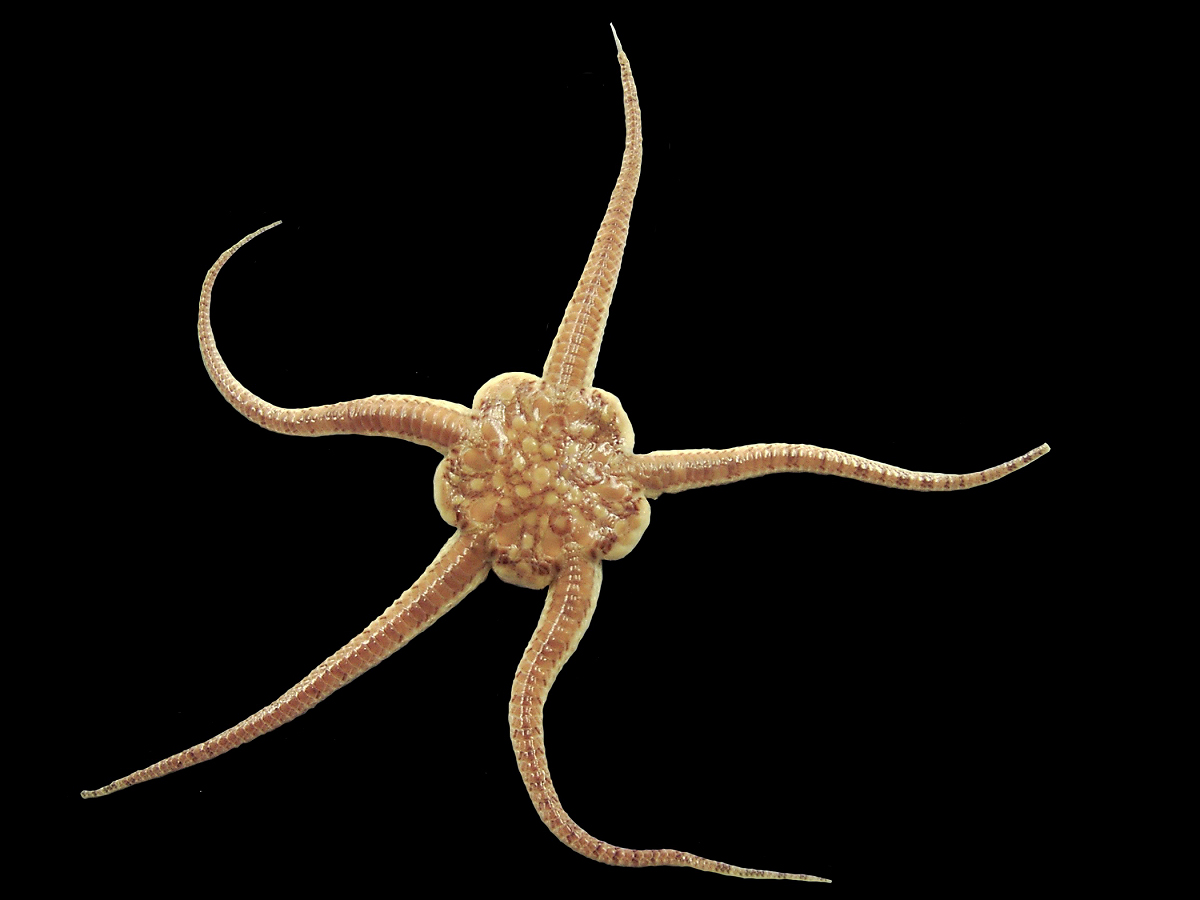
Ophiuroidea, or brittle stars, are unique echinoderms closely related to starfish, known for their long, flexible arms and ability to regenerate when injured.
Set reading age
View for Kids
Easy to read and understand
View for Students
Clear, detailed explanations
View for Scholars
Deep dives and big ideas
Brittle stars, also called serpent stars, live in oceans around the world. 🌊They belong to the class Ophiuroidea and share family ties with starfish! They got their name because their arms are long and snake-like, which can easily bend. Brittle stars come in many colors like brown, yellow, and even purple! They can also vary in size, some are tiny, while others can grow to be about 12 inches long. 🌟These fascinating creatures have unique ways of moving, feeding, and interacting with their environment. Let’s dive deeper into their amazing world!
Brittle stars are like little vacuum cleaners of the ocean! 🧽They mainly eat tiny bits of food like plankton, detritus (dead plants and animals), and small crustaceans. They use their tube feet, which are covered in mucus, to catch food floating by! 🦐Once they grab it, they quickly bring it to their mouth located on the underside of their body. They don’t have stomachs like us; instead, they digest food in their arms! This helps them get all the nutrition they need to grow and stay healthy in the ocean.
1. Did you know that brittle stars can regenerate lost arms? It’s like having a superpower! 💪
2. Some brittle stars can be bright colors, like purple or orange, making them very eye-catching! 🌈
3. They can twist and bend their arms in all directions, allowing them to navigate their world easily! 🌍
4. Brittle stars use their tube feet to catch food, and each foot can produce a sticky substance! 🥡
5. Some species of brittle stars can live for up to 5 years in the wild! 🌱
Brittle stars are truly fascinating creatures of the ocean!
Brittle stars are great at moving around the ocean! 🏊♀️ They use their flexible arms to crawl across the seafloor, often using their tube feet. They are not fast swimmers like fish; instead, they prefer to slowly wander and explore! When in danger, brittle stars can drop an arm to escape predators, which can later grow back. They also like to hide in crevices, under rocks, or in coral to protect themselves from hungry animals. Their movement and behavior help them stay safe in their underwater homes!
Brittle stars play an important role in the ocean ecosystem! 🌍They help clean up the ocean floor by eating decomposing plants and animals. This means they help recycle nutrients back into the ecosystem, which is great for the ocean environment! Additionally, brittle stars are food for many animals, like fish and turtles. 🐢By being part of the food chain, they help keep the balance in the underwater world. Without brittle stars, our oceans would not be as healthy and lively!
Brittle stars have some interesting ways to have baby brittle stars! 🌼Most of them reproduce by releasing eggs and sperm into the water, where the babies develop and grow. Some species can also reproduce asexually! This means they can grow new brittle stars from their arms. They sometimes split themselves in two, and each part can become a new star! 🪴This amazing ability helps them thrive, even if conditions aren’t perfect in the ocean!
Brittle stars can be found in many places around the world’s oceans! 🌎They usually live on the ocean floor, from shallow waters up to deep ocean trenches. You can find them in the Atlantic and Pacific Oceans, and even the Indian Ocean! Some live in coral reefs, while others prefer sandy or rocky areas. They adapt well to different ocean environments, making them great survivors! For example, the Pacific brittle star lives in the North Pacific Ocean and is known for its beautiful colors and patterns.
Brittle stars have five long, flexible arms that easily bend, almost like a dancing snake! 🐍The central part of their body is shaped like a disk, and their arms can be different lengths and colors. Unlike starfish, they can easily lose an arm, but no worries! They can grow it back over time, making them super resilient. They also have tube feet, but unlike starfish, these are not used for walking. Instead, they help them grab food and move! With their spiny skin, brittle stars are unique and fun to look at under the ocean!
Brittle stars have been around for millions of years! 🌊The oldest fossils of these creatures date back to the Jurassic period, over 200 million years ago! 🕰️ Their ancestors lived during this time, and they continue to evolve and adapt to changes in the ocean. Scientists study these fossils to learn about how brittle stars have changed over time! By understanding their evolution, we can gain insights into the history of marine life and how different sea creatures are connected.
Brittle stars have many friends and some foes in the ocean! 🤝They often interact with other creatures, like shrimp and small fish, who may use them for shelter. Some brittle stars can also camouflage themselves, hiding from predators like fish and sea turtles! 🐠While they are usually safe, they face threats from animals like larger fish and even seagulls. Understanding these interactions helps us learn about how animals survive in their environment and depend on each other.
Scientists are studying brittle stars to learn more about their lives and habits! 🧑🔬 They monitor populations in different regions to see if their numbers are healthy. Protecting their habitats, such as coral reefs, is essential for their survival. Many organizations work to keep the oceans clean and safe, so brittle stars can thrive. Conservation efforts help ensure that these amazing creatures can continue living in our oceans, making them an essential part of the underwater ecosystem! 🌊❤️


DIY is a creative community where kids draw, build, explore ideas, and share.
No credit card required