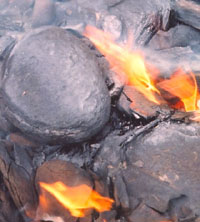
Oil shale is an organic-rich fine-grained sedimentary rock containing kerogen that can be heated to produce liquid hydrocarbons.

Set reading age
View for Kids
Easy to read and understand
View for Students
Clear, detailed explanations
View for Scholars
Deep dives and big ideas
Oil shale is a special type of rock that looks a bit like gravel but is packed with a gooey substance called kerogen. 🌍This rock can be found in many parts of the world, like the United States, China, and Brazil! Oil shale is important because it can be turned into oil and gas, which we use for energy. This is especially important when we need fuel for cars and heat for our homes. 🚗🏠 Did you know that people have been using oil shale for hundreds of years? Let’s explore more about this fascinating rock!
Did you know that people have been using oil shale for centuries? 🏺Ancient civilizations in places like Scotland and Estonia burned it for fuel! In the 19th century, oil shale was used to make oil lamps. 💡As time passed, people learned how to process oil shale better, which brought about the modern industry. Today, many countries are rediscovering oil shale. This resource continues to play a role in meeting our energy needs and can help us understand how to study fossil fuels! 🔬
Oil shale is often compared to regular oil, also called “conventional oil.” 🛢️ Conventional oil comes from deep underground pools, while oil shale is found in solid rock. Getting oil from conventional sources is usually cheaper and less complicated. ⛽However, oil shale is important because it can be found in many places! Also, as conventional oil gets harder to find, oil shale might be more helpful in the future. 🌍Scientists are working to make extracting oil from shale better, cheaper, and friendlier for our planet!
Oil shale forms very slowly over millions of years! It starts off as small plants and tiny sea animals that sink to the ocean floor. 🌊Over time, these remains get buried under layers of dirt and sand. The pressure from all that weight turns them into a rock called "shale." 🌱🔥 Heat and pressure help create kerogen inside it. So, it takes a long time for oil shale to form, and it’s a bit like making a fossil! Fossils also take a long time to form, too!
To get that valuable kerogen out of oil shale, we need to use special methods. 🔧One way is called “retorting,” where the rock is heated, and the kerogen turns into oil vapors. The vapors can be cooled down and collected as liquid oil! Another method is “in-situ” processing, where we heat the rock underground, making it easier to extract the kerogen without moving the rock. 🌋These techniques help us turn oil shale into the energy we need, although they can take a lot of energy, too!
Scientists are always looking for ways to make oil shale production better and cleaner! 🔍Many researchers are working on innovative technologies that can reduce the environmental impact. Some are studying using renewable energy sources to power the extraction process! 🌞Others are finding ways to recycle water used in production. By doing this, we can become smarter about how we use our natural resources. This means that oil shale could be part of a cleaner, greener future! 🌿The adventure of oil shale exploration continues!
Kerogen is the star of the oil shale family! 🌟It’s a mix of carbon and other elements that can turn into oil when treated correctly. Kerogen can smell like gasoline and is found inside the oil shale rock. 👃When kerogen is heated, it breaks down and releases oils that we can use for different things. The amount of kerogen can vary widely, with some rocks having a little and others a lot! This makes each oil shale deposit unique! 🌈Being able to extract kerogen means we can use oil shale to help power our world!
Oil shale can also be a big business! 💼By extracting oil from shale, countries can make money and create jobs. For example, in the United States, there are hundreds of thousands of jobs linked to oil shale production! 🌟This energy source can help reduce our need for oil from other countries, which is great for national security. 💪However, the costs of extracting oil from shale can be high, and prices can change based on many factors, like how much oil is being used worldwide.
Oil shale can be found all around the world! 🌎One of the largest deposits is in the Green River Basin, which stretches across parts of Colorado, Utah, and Wyoming! In fact, it holds nearly 60% of the world’s oil shale! 🤯Other countries like Brazil and China also have large deposits. Knowing where oil shale is located helps countries plan for energy production! 🗺️ In some places, these deposits are even used to produce oil and gas right now, making them important resources for the future!
While oil shale can provide energy, its production can impact the environment. 😟First, the process can use a lot of water, which may affect nearby rivers and lakes. 🌊It can also create air pollution and damage plants and animals in that area. 🐦Additionally, mining oil shale can leave big holes in the ground, changing the landscape. That's why scientists are looking for better ways to carefully extract it while keeping nature safe. 🌳Finding a balance is super important for protecting our planet!
To protect our environment, there are laws and regulations about oil shale extraction. 📜These rules help ensure the production is done safely and responsibly. Governments want to make sure that water, air, and wildlife stay safe! In the U.S., the Bureau of Land Management manages oil shale activities on public land. 🌳This way, we can balance using this resource and protecting our beautiful planet for future generations. Children, being aware of these laws helps us understand the importance of caring for Earth! 🌏


DIY is a creative community where kids draw, build, explore ideas, and share.
No credit card required