Nimrud is an ancient Assyrian city located in Iraq, about 30 kilometers south of Mosul, known for its rich history, grand architecture, and archaeological significance.

Set reading age
View for Kids
Easy to read and understand
View for Students
Clear, detailed explanations
View for Scholars
Deep dives and big ideas
Nimrud is a fascinating ancient city in Iraq! 🌍It is about 30 kilometers (around 18 miles) south of Mosul and only 5 kilometers (around 3 miles) from a village called Selamiyah. Located in a region known as the Nineveh Plains, this city played a big role in the life of the Assyrian Empire, which existed thousands of years ago! 🏰Nimrud was not just a home for people, but also a center for trade, art, and culture. Isn't it exciting to think about what life was like there? Let's explore more about this amazing place! 🌿
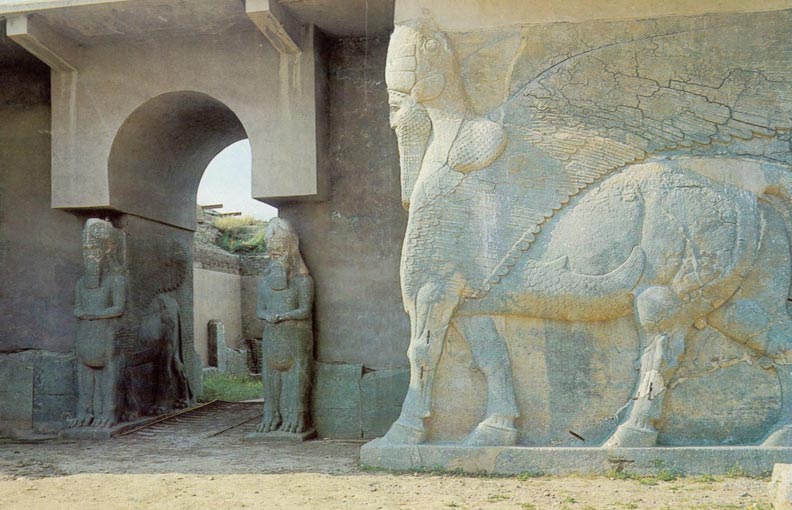
Many exciting discoveries were made at Nimrud! 🎉In the 1840s, archaeologist Austin Henry Layard found precious artifacts, including beautiful carvings of animals and humans. Some of these findings showed gods and goddesses that the Assyrians worshiped! 🐏Layard uncovered the grand palace of King Ashurnasirpal II, complete with amazing wall reliefs. Additionally, the famous "Nimrud Dagger" and large stone sculptures called "lamassu" (mythical creatures with wings) were discovered, giving us insight into the artistic skills of the Assyrians. These treasures allow us to visualize their daily lives! 🚪
Nimrud's history dates back to around 900 BC, when it became a flourishing city under the Assyrian kings! 👑King Ashurnasirpal II, who ruled from 883 to 859 BC, was a big part of its development, turning Nimrud into the capital of Assyria. The city had beautiful palaces, temples, and gardens. 🌼It was an important hub for trade and military activities. Over the years, other kings built monuments and made the city grander. However, by 612 BC, the Assyrian Empire started declining, and Nimrud was abandoned. 🏺
At Nimrud, many amazing cultural artifacts were discovered! 🎨Items such as pottery, jewelry, and tools tell us a lot about how the ancient Assyrians lived and worked. The pottery often had beautiful designs and was used for cooking or storing food. 🍽️ Jewelry made of gold and precious stones showed the wealth of some families. 🪙One interesting find was the "flying carpet" plaque, which had colorful images of animals and flowers. These artifacts help us learn about art, trade, and everyday life in this ancient city!
Religion was very important in Nimrud. ⛪The Assyrians worshiped many gods and built grand temples to honor them. One of the most famous temples was dedicated to the goddess Ishtar, who was the goddess of love and war! 🌺People brought offerings like food and flowers to please their gods. There were also festivals with music and dancing to celebrate the gods’ strength and blessings. 💃Temples were places for rituals and gatherings, showing us how ancient people connected with their spirituality and the importance of their beliefs in everyday life!
Nimrud began to decline around 612 BC, when the Assyrian Empire weakened. ⚔️ Enemies, like the Babylonians and Medes, attacked and captured the city. The royal families and rich families either fled or were taken away, leaving the city empty. 🏚️ By the late 7th century, Nimrud was abandoned and slowly forgotten. Nature took over, burying the city under layers of dirt and plants. 🌳Today, archaeologists work hard to uncover and study its ruins, but many secrets remain hidden, waiting to be discovered again!
Today, Nimrud is a key focus for archaeologists and historians! 🕵️♂️ Researchers study the ancient structures and artifacts to understand more about the Assyrian civilization. 💼Sadly, in recent years, parts of Nimrud were damaged due to conflicts, but many experts are working to preserve what’s left. 📚Modern technology like drones and ground-penetrating radar helps scientists explore the site without digging. This way, they can gather information about the city's layout and artifacts. Nimrud continues to be a valuable site for learning about ancient cultures!
Nimrud was a central part of the Assyrian Empire! 🌍It was more than just a city; it was a political and cultural heart of the Assyrians! The kings ruled from here and made important decisions about wars and trade. 🏔️ People from various cultures lived in Nimrud, making it diverse and lively. Festivals and religious ceremonies were common, as people celebrated their gods. 🎉The city was a hub for artisans, traders, and soldiers, showing us how the Assyrian society worked together to create a strong and vibrant community!
Nimrud has been called an archaeological treasure! 🏺Archaeologists have found incredible things buried in the ground since the mid-19th century. They unearthed palaces, statues, and wall carvings that tell us about ancient Assyrian life. 📜Nimrud's ruins are so important that UNESCO, a part of the United Nations, recognized it as a World Heritage site. This means it is protected and cared for because of its historical value! 🌏The discoveries here help us learn about the past, making Nimrud a key location for finding out more about ancient civilizations.
Nimrud holds a special place in Assyrian heritage! 🇮🇶 It represents the achievements and creativity of the Assyrian Empire. The findings show us how people lived, worshiped, and traded long ago. 🌟The art and architecture discovered at Nimrud inspire pride in Assyrian history and identity today. Many Assyrians celebrate their connection to Nimrud, recognizing it as a symbol of strength and culture. 📜Increased interest in this ancient city helps educate the world about the Assyrian civilization, ensuring that its story is remembered for generations to come! 🌟
Nimrud was famous for its impressive architecture! 🏛️ The city was carefully planned with wide streets and beautiful buildings. The palaces were grand and had many rooms, often decorated with colorful paintings and carvings. 🌈The most remarkable feature was the "ziggurat," a giant temple built in steps, which the Assyrians used for worship. The ziggurat was often surrounded by gardens filled with flowers and trees. 🌸The city's layout and structures helped us understand how the Assyrians organized their society and their ideas about beauty and religious devotion!