All Articles

Nicholas I Of Russia

Nicholas I Of Russia Facts For Kids

Nicholas I of Russia was an influential emperor who ruled from 1825 to 1855, known for his strict autocratic governance and significant military and cultural developments.

🎨 Reading age for 6-8
Background blob
Nicholas I Of Russia
Facts for Kids!

Do more with AI

Introduction

Nicholas I of Russia (1796-1855) was a famous ruler! 🏰He became Emperor of Russia in 1825 and ruled for 30 years. Nicholas was known for being strict but wanted to modernize Russia. He controlled the vast land that included parts of Europe and Asia. During his reign, he worked hard to maintain order and strengthen the empire. His rule is marked by great changes in society, the military, and culture. 🌍He was also King of Congress Poland and Grand Duke of Finland, which shows how powerful he was! 🌟

Images of Nicholas I Of Russia

Portrait of Grand Duke Nicholas Pavlovich (c. 1808), by anonymous painter after Johann Friedrich August Tischbein, located in the Russian Museum, Saint Petersburg

Portrait of Grand Duke Nicholas Pavlovich (c. 1808), by anonymous painter after Johann Friedrich August Tischbein, located in the Russian Museum, Saint Petersburg

Parade in Potsdam in 1817 by Franz Krüger. A painting commemorating his visit to Berlin to marry Princess Charlotte of Prussia

Parade in Potsdam in 1817 by Franz Krüger. A painting commemorating his visit to Berlin to marry Princess Charlotte of Prussia

Imperial monogramImage by Glasshouse, licensed under Creative Commons Attribution-Share Alike 3.0

Imperial monogram

Nicholas I "Family Ruble" (1836) depicting the Tsar on the obverse and his family on the reverse: Tsarina Alexandra Feodorovna (center) surrounded by Alexander II as Tsarevich, Maria, Olga, Nicholas, Michael, Konstantin, and Alexandra

Nicholas I "Family Ruble" (1836) depicting the Tsar on the obverse and his family on the reverse: Tsarina Alexandra Feodorovna (center) surrounded by Alexander II as Tsarevich, Maria, Olga, Nicholas, Michael, Konstantin, and Alexandra

Nicholas I with Alexander II in Bogdan Willewalde's studio in Saint Petersburg in 1854, oil on canvas, State Russian Museum

Nicholas I with Alexander II in Bogdan Willewalde's studio in Saint Petersburg in 1854, oil on canvas, State Russian Museum

Monument to Nicholas I on St. Isaac's Square
Monument to Nicholas I on St. Isaac's Square

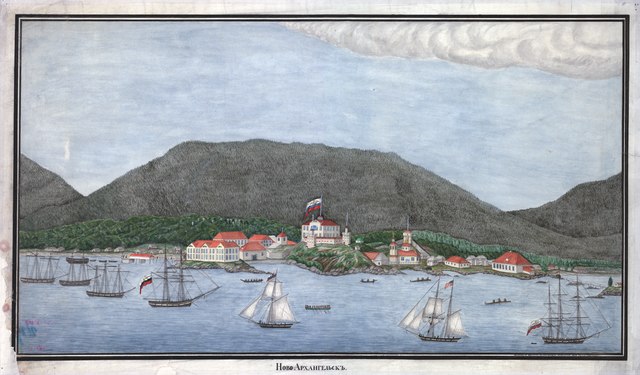
The Russian-American Company's capital at New Archangel (present-day Sitka, Alaska) in 1837

The Russian-American Company's capital at New Archangel (present-day Sitka, Alaska) in 1837

Nicholas I in an equestrian portraitImage by Shakko, licensed under Creative Commons Attribution-Share Alike 3.0

Nicholas I in an equestrian portrait

The Battle of Navarino, in October 1827, marked the effective end of Ottoman rule in Greece.

The Battle of Navarino, in October 1827, marked the effective end of Ottoman rule in Greece.

Portrait of Grand Duke Nicholas Pavlovich (c. 1808), by anonymous painter after Johann Friedrich August Tischbein, located in the Russian Museum, Saint Petersburg

Portrait of Grand Duke Nicholas Pavlovich (c. 1808), by anonymous painter after Johann Friedrich August Tischbein, located in the Russian Museum, Saint Petersburg

Parade in Potsdam in 1817 by Franz Krüger. A painting commemorating his visit to Berlin to marry Princess Charlotte of Prussia

Parade in Potsdam in 1817 by Franz Krüger. A painting commemorating his visit to Berlin to marry Princess Charlotte of Prussia

Imperial monogramImage by Glasshouse, licensed under Creative Commons Attribution-Share Alike 3.0

Imperial monogram

Nicholas I "Family Ruble" (1836) depicting the Tsar on the obverse and his family on the reverse: Tsarina Alexandra Feodorovna (center) surrounded by Alexander II as Tsarevich, Maria, Olga, Nicholas, Michael, Konstantin, and Alexandra

Nicholas I "Family Ruble" (1836) depicting the Tsar on the obverse and his family on the reverse: Tsarina Alexandra Feodorovna (center) surrounded by Alexander II as Tsarevich, Maria, Olga, Nicholas, Michael, Konstantin, and Alexandra

Nicholas I with Alexander II in Bogdan Willewalde's studio in Saint Petersburg in 1854, oil on canvas, State Russian Museum

Nicholas I with Alexander II in Bogdan Willewalde's studio in Saint Petersburg in 1854, oil on canvas, State Russian Museum

Monument to Nicholas I on St. Isaac's Square

Monument to Nicholas I on St. Isaac's Square

The Russian-American Company's capital at New Archangel (present-day Sitka, Alaska) in 1837

The Russian-American Company's capital at New Archangel (present-day Sitka, Alaska) in 1837

Nicholas I in an equestrian portraitImage by Shakko, licensed under Creative Commons Attribution-Share Alike 3.0

Nicholas I in an equestrian portrait

The Battle of Navarino, in October 1827, marked the effective end of Ottoman rule in Greece.

The Battle of Navarino, in October 1827, marked the effective end of Ottoman rule in Greece.

Rise To Power

Nicholas I became Emperor of Russia after his brother, Alexander I, died in 1825. 🌌His brother did not leave any children, so Nicholas took the throne. However, the people of Russia had a difficult time with change, and a revolt called the Decembrists happened. This was in December 1825, when some soldiers didn’t want him to be the leader. But Nicholas bravely stopped the revolt and showed his strength! 💪He then focused on improving Russia and keeping control. This made him an important ruler in Russian history!

Domestic Policies

As Emperor, Nicholas I wanted to make Russia stronger and more modern. He introduced ideas to help the economy and improve the military. 💼Nicholas created a new system of laws to make sure everyone followed the rules. He also focused on education, building new schools and universities. 🎓He believed that a well-educated society would be a strong society! His policies often favored the nobility, which made some people unhappy. Still, his efforts helped Russia grow during his reign! 🌟

Foreign Relations

Nicholas I's reign was marked by complex relationships with other nations. 🤝He worked to keep peace with countries nearby, like Austria and Prussia. Sometimes, though, tensions rose, especially with Western nations. He tried to maintain Russia's power and influence by forming alliances. 🌐He was worried about the spread of democracy and wanted to keep his empire strong and united. His efforts often led to conflicts or were met with resistance, shaping how Russia interacted with the world in the years to come. 🗺️

Reforms And Changes

During his reign, Nicholas I made many important changes. He worked on reforming the army and introduced a military code to make soldier life better. ⚔️ He also tried to reduce the power of the nobility, but it was tough, as many traditional ways were hard to change. He created the secret police to keep an eye on people and maintain order in the empire. 👮His reign was a mix of introducing modern ideas while holding on to old traditions. This balancing act helped shape Russia for future generations! 🌟

Cultural Contributions

Nicholas I's time as emperor also saw many cultural changes! 🎭He supported the arts and literature, encouraging famous writers like Alexander Pushkin and Fyodor Dostoevsky. These writers created stories that people loved! 📖He also promoted impressive architecture, leading to the construction of stunning buildings, like the Cathedral of Christ the Savior in Moscow! ⛪Nicholas believed in the importance of culture to show Russia’s greatness and to inspire people. His support helped Russian culture flourish! 🌼

Early Life And Education

Nicholas was born on July 6, 1796, in St. Petersburg, Russia. 🇷🇺 He was the second son of Emperor Paul I. As a child, he had a solid education, learning many languages, including French and German! 📚His family was quite important in Russia's royal history. Nicholas grew up seeing his father's leadership, which influenced his own ideas about ruling. By the time he became Emperor, he was well-prepared to take on his important job. 👑He was known for being disciplined and focusing on his duties.

Military Campaigns And Wars

Nicholas I was known for his interest in the military. ⚔️ He was involved in several important wars, including the Crimean War, which lasted from 1853 to 1856. This war was between Russia and several other countries, like Britain and France. The fighting was tough, and many soldiers faced hard conditions. Despite his efforts to expand Russia's territory, the war weakened his empire. 🔥Nicholas wanted Russia to be powerful, but this war showed that there was still much work to be done! 🚀

Legacy And Historical Impact

Nicholas I left a complicated legacy. 🏛️ Some praised his dedication to Russia and his modernization efforts, while others criticized his harsh rule. His decisions influenced how Russia developed in the late 19th century. Many of the changes he made laid the groundwork for future leaders. 📜The Crimean War, in particular, forced Russia to recognize the need for improvement in many areas. Nicholas I is remembered as a powerful and impactful ruler who tried to navigate the challenges of a changing world. 🌍

Nicholas I Of Russia Quiz

Q1
Question 1 of 10

Learn more about Nicholas I Of Russia

Ready to create?

Make

To create a safe space for kid creators worldwide!

Create

Vibe Coding

Kids GPT

All Tools

Kibu

Resources

Worksheets

SafeTube

Blog

FAQ

Account

Pricing

Log-in

Sign-up

Data Deletion

Company

About

Community Guidelines

Privacy Policy

Terms of Service

2025, URSOR LIMITED. All rights reserved. DIY is in no way affiliated with Minecraft™, Mojang, Microsoft, Roblox™ or YouTube. LEGO® is a trademark of the LEGO® Group which does not sponsor, endorse or authorize this website or event. Made with love in San Francisco.