All Articles

Niccolò Machiavelli

Niccolò Machiavelli Facts For Kids

Niccolò Machiavelli was a Florentine diplomat, author, philosopher, and historian known for his influential works on political theory during the Italian Renaissance.
🎨 Reading age for 6-8
Background blob
Niccolò Machiavelli
Facts for Kids!

Do more with AI

Introduction

Niccolò Machiavelli was an important thinker from Florence, Italy, born on May 3, 1469. 🌍He lived during the Renaissance, a period known for art and science. Machiavelli worked as a diplomat, which means he talked to leaders and made agreements. He wrote famous books, sharing his ideas about how leaders should act and make decisions. Many people remember him for his clever writing, especially in his book called "The Prince." He died on June 22, 1527, but his ideas still influence politics today! 📚✨

Images of Niccolò Machiavelli

John Adams admired Machiavelli's rational description of the realities of statecraft. Adams used Machiavelli's works to argue for mixed government.

John Adams admired Machiavelli's rational description of the realities of statecraft. Adams used Machiavelli's works to argue for mixed government.

Statue at the Uffizi

Statue at the Uffizi

Francis Bacon argued the case for what would become modern science which would be based more upon real experience and experimentation, free from assumptions about metaphysics, and aimed at increasing control of nature. He named Machiavelli as a predecessor.

Francis Bacon argued the case for what would become modern science which would be based more upon real experience and experimentation, free from assumptions about metaphysics, and aimed at increasing control of nature. He named Machiavelli as a predecessor.

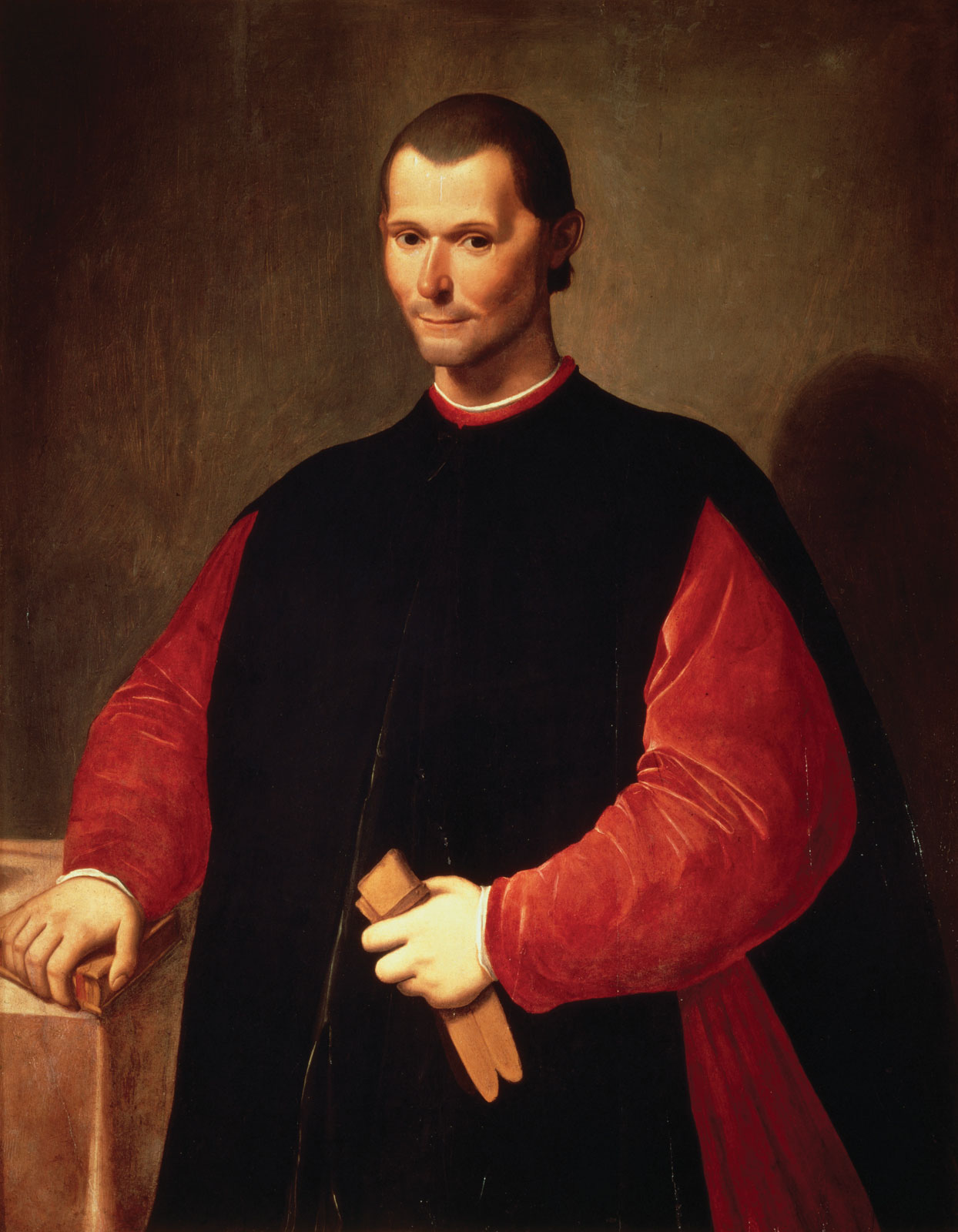
Oil painting of Machiavelli by Cristofano dell'Altissimo

Oil painting of Machiavelli by Cristofano dell'Altissimo

Machiavelli's tomb in the Santa Croce Church in FlorenceImage by Gryffindor, licensed under Creative Commons Attribution-Share Alike 3.0

Machiavelli's tomb in the Santa Croce Church in Florence

Lorenzo di Piero de' Medici, to whom the final version of The Prince was dedicated

Lorenzo di Piero de' Medici, to whom the final version of The Prince was dedicated

Engraved portrait of Machiavelli, from the Peace Palace Library's Il Principe, published in 1769

Engraved portrait of Machiavelli, from the Peace Palace Library's Il Principe, published in 1769

Xenophon, author of the Cyropedia

Xenophon, author of the Cyropedia

Statue at the Uffizi

Statue at the Uffizi

Francis Bacon argued the case for what would become modern science which would be based more upon real experience and experimentation, free from assumptions about metaphysics, and aimed at increasing control of nature. He named Machiavelli as a predecessor.

Francis Bacon argued the case for what would become modern science which would be based more upon real experience and experimentation, free from assumptions about metaphysics, and aimed at increasing control of nature. He named Machiavelli as a predecessor.

John Adams admired Machiavelli's rational description of the realities of statecraft. Adams used Machiavelli's works to argue for mixed government.

John Adams admired Machiavelli's rational description of the realities of statecraft. Adams used Machiavelli's works to argue for mixed government.

Biography

Machiavelli was born into a family of public officials in Florence. His education was important, and he learned about history and languages. 🏅He became a diplomat, traveling to places like France and Switzerland. During his life, Italy was divided into city-states, each with its own rulers. Machiavelli wanted a strong leader who could unite them. He wrote several works, with "The Prince" being the most famous. His ideas sometimes caused arguments, but he is still studied in schools around the world today! 🌎✏️

Major Works

Machiavelli wrote several important books. His most famous work is "The Prince," written in 1513. 📖In it, he advises rulers on how to gain and keep power. Another notable book is "Discourses on Livy," which compares ancient Rome's republic to modern politics. 🏛️ Machiavelli also wrote plays and poems, but "The Prince" is what many people study today. His ideas caused much discussion and debate because they challenged traditional views on morality in politics. 🔍🗣️

Discourses On Livy

In "Discourses on Livy," Machiavelli examines the Roman Republic's government. 🏛️ He argued that a mixed government, with kings, nobles, and common people, is better than just one ruler. His idea was that having different voices helps keep leaders in check and prevents corruption. Machiavelli praised liberty and thought the people should have a say in their government. His ideas in this book are still discussed in modern politics when talking about democracy and how governments should work! 🗳️🌟

Historical Context

Machiavelli lived in a time called the Renaissance, from the 14th to 17th century. 🎨This period was a time of great change in Europe, with amazing discoveries in art, science, and philosophy. Italy had many competing city-states, like Florence, Venice, and Rome. 😊People discussed ideas about government and power more than ever! Machiavelli's writings also reflected the struggles of his time, and he wanted to help leaders succeed in controlling their cities and defending against outside attacks. 🏰⚔️

Political Philosophy

Machiavelli had unique ideas about politics. He believed that leaders sometimes needed to be clever or even a little sneaky to keep power and protect their countries. 🔑He said that the ends justify the means, which means if something is done for a good reason, it's okay to use tricky methods. 🤔Some people agree with him, while others think this idea is wrong. His thoughts made many people think hard about how leaders should behave! 🌈🤷

The Prince: Key Ideas

In "The Prince," Machiavelli gives advice to rulers. One key idea is that a successful leader should be both loved and feared, but it's better to be feared if one cannot be both. 🦁He also talks about the importance of appearing virtuous while sometimes having to act differently behind the scenes. His famous saying is, "It is better to be feared than loved." 🎭 Machiavelli believed that a ruler needed to be pragmatic rather than moral, focusing on what works best for their rule and safety. 📈⚡

Critiques And Controversies

Machiavelli's ideas sparked debates, with critics arguing that his approach was too harsh. 😥Some people think he encourages dishonesty and cruelty among rulers. This led to a term called "Machiavellian," describing someone as cunning or deceitful. Many believe "The Prince" is a guidebook for tyrants, while others say it explains the reality of politics. 🏴‍☠️ Critics argue that leaders should be ethical and moral instead of focusing solely on power. These discussions show how his writing still impacts ideas about leadership today! 🌈⚔️

Machiavelli In Popular Culture

Machiavelli's thoughts and writings continue to appear in movies, books, and games! 🎬Many characters in stories use cunning strategies and clever tricks, reflecting Machiavelli's ideas. Video games featuring political strategy sometimes borrow concepts from his work. Chess masters admire Machiavelli's ideas on strategy and power struggles. 📊Machiavelli has become a figure in debates about leadership in movies and shows, keeping his ideas alive and relevant for new audiences! 🌟🎮

Influence On Modern Political Theory

Machiavelli's ideas influenced many political thinkers, including modern leaders and theorists. 📚His thoughts about power, government, and human behavior can be seen today in politics around the world. Many studies in political science explore his concepts, helping us understand how leaders act and how governments run. 🌐His name is often cited in discussions about power dynamics, statecraft, and the balance between ethics and effectiveness in leadership. Machiavelli's legacy continues to inspire and challenge new generations of thinkers! 🧠✨

Niccolò Machiavelli Quiz

Q1
Question 1 of 10

Learn more about Niccolò Machiavelli

Ready to create?

Drop Files here
Make

To create a safe space for kid creators worldwide!

Create

Vibe Coding

Kids GPT

All Tools

Kibu

Resources

Worksheets

SafeTube

Blog

FAQ

Account

Pricing

Log-in

Sign-up

Data Deletion

Company

About

Community Guidelines

Privacy Policy

Terms of Service

2025, URSOR LIMITED. All rights reserved. DIY is in no way affiliated with Minecraft™, Mojang, Microsoft, Roblox™ or YouTube. LEGO® is a trademark of the LEGO® Group which does not sponsor, endorse or authorize this website or event. Made with love in San Francisco.