Nazca Lines Facts For Kids
The Nazca Lines are vast geoglyphs in Peru, significant for their cultural, religious, and astronomical implications within the ancient Nazca civilization.
Select reading age

Nazca Lines Facts For Kids
Videos & Quizzesincluded
About this topic
The Nazca Lines are a group of giant drawings made on the ground in the Nazca Desert of Peru. 🏜️ They cover about 1,000 square kilometers (that’s about the size of a big city!). The lines include amazing shapes, like animals, plants, and even human figures. 🦙These incredible works of art were created by the Nazca people between 500 BC and 500 AD. Their purpose is still a mystery! Some think the lines had special meanings, while others believe they were made for rituals. No matter what, they show us how creative and skilled the Nazca people were! 🎨
Explore with ChatDinoKey Points
Taking care of the Nazca Lines is very important because they are a national treasure!
The Nazca Lines are very important to the Nazca culture!
To create the Nazca Lines, the Nazca people used simple yet clever tools.
The Nazca Lines attract many visitors each year!
The Nazca Lines were made by the Nazca culture, which flourished in southern Peru.
The Nazca Lines include over 800 geometric shapes, some really huge!
Today, scientists and archaeologists study the Nazca Lines to learn more about the Nazca culture.
The Nazca Desert is a unique place with little rain and dry winds.
Photos of Nazca Lines

Nazca lines seen from SPOT satellite

Satellite picture of an area containing lines: north is to the right (coordinates: 14°42′S 75°00′W / 14.7°S 75.°W / -14.7; -75.)

Nazca Lines — photo 3

Nazca Lines — photo 4

Nazca Lines — photo 5
Nazca Lines — photo 6

Nazca Lines — photo 7

Nazca Lines — photo 8

Nazca Lines — photo 9
💖 Conservation Efforts
Taking care of the Nazca Lines is very important because they are a national treasure! 💖The Peruvian government and international organizations work together to protect and preserve them. They have set up special areas where people can’t walk or drive, reducing damage. 🚷Schools and communities also teach visitors about respecting the lines and the environment. The beautiful lines remind us how important it is to care for our history and the Earth, ensuring that future generations can enjoy and learn from the Nazca Lines, just like we do today! 📚
Go deeper🎉 Cultural Significance
The Nazca Lines are very important to the Nazca culture! 🎉Many people believe that the lines show the Nazca people's beliefs and rituals. Some scientists think the lines were used in ceremonies to ask for rain or to honor deities, since water was essential for their crops. 🌧️ The drawings might also have been created to connect their land to the stars, helping them understand the movements of the Earth and the sky. The lines are now considered a UNESCO World Heritage Site, which means they are protected so future generations can learn about the Nazca people's rich history! 🌍
Go deeper🛠️ Construction Techniques
To create the Nazca Lines, the Nazca people used simple yet clever tools. 🛠️ They marked out the designs on the ground by removing the dark stones on top, making the lighter soil visible underneath. By using sticks and rope, they measured straight lines and figured out where to draw each shape. They worked together as a team to complete the big designs! 🌍They made lines that stretch for kilometers and are sometimes up to 10 meters wide. Because the desert is dry and windy, the drawings have stayed clear and beautiful for hundreds of years. Isn’t that amazing? 🌬️
Go deeper🌍 Tourism And Accessibility
The Nazca Lines attract many visitors each year! 🌍People from all over the world come to see these mysterious designs. You can see the lines from special viewing towers or take a plane ride, which offers the best view! ✈️ It's essential to choose responsible tours that respect the lines and the environment. There are also local guides who share interesting stories and facts about the Nazca culture, making the visit even more fun! As you learn about these incredible shapes, you'll discover the magic of history and art right in the heart of Peru! 🎊
Go deeper🏛️ History Of The Nazca Lines
The Nazca Lines were made by the Nazca culture, which flourished in southern Peru. 🏛️ This amazing civilization lived long ago, between 200 BC and 600 AD. The lines were created by removing the reddish-brown rocks on the desert surface to reveal the lighter sand underneath. 🌞Many people believe they were made for rituals, possibly related to water and agriculture. The first European to discover them was a pilot named Maria Reiche in the 1930s. She spent her life studying the lines and believed they were connected to astronomy! 🌌The lines remain an important part of Peru's history and culture.
Go deeper📏 Geometric Shapes And Figures
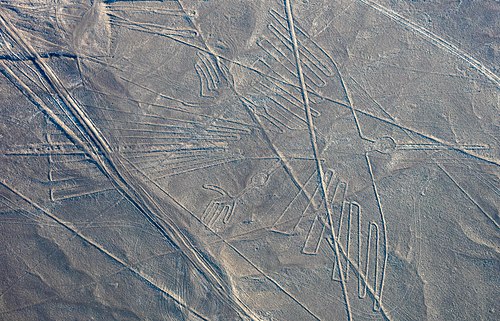
The Nazca Lines include over 800 geometric shapes, some really huge! 📏There are lines, triangles, spirals, and rectangles. Besides geometric figures, you can also find drawings of animals, plants, and even humans! 🦙Some of the most famous figures are the monkey, hummingbird, and spider. These shapes are so big that they can only be fully seen from the sky! ✈️ The largest figure, called the "Hummingbird," is about 100 meters long. Seeing these incredible designs from above is like being a bird flying over a magical landscape! 🕊️
Go deeper🔍 Modern Research And Discoveries
Today, scientists and archaeologists study the Nazca Lines to learn more about the Nazca culture. 🔍They use advanced technology like drones and satellite images to explore the area better. Researchers also study the lines to see if they connect to solar or astronomical events, like the solstices! 📅In recent years, new figures have even been discovered, showing that there might be even more to explore. These discoveries help us understand how ancient people lived and what was important to them. The Nazca Lines continue to surprise us and tell the story of a fascinating culture! 🌟
Go deeper☀️ Impact Of Climate And Environment
The Nazca Desert is a unique place with little rain and dry winds. ☀️ This environment is perfect for keeping the Nazca Lines safe for hundreds of years! The hot sun and very little rain mean there is less weathering, which helps preserve the designs. ☔️ However, the desert is also sensitive to human activity. Things like construction or pollution can harm the lines. 🌱That’s why people need to be careful not to disturb this special part of nature. It’s important for us to protect these incredible drawings as a gift for the future! 🌎
Go deeper