Myocardium Facts For Kids
The myocardium is the heart muscle responsible for pumping blood throughout the body and is essential for keeping us alive and healthy.
Select reading age
Myocardium Facts For Kids
Videos & Quizzesincluded
About this topic
Myocardium is a special type of muscle in your heart ❤️! It helps pump blood throughout your body. Did you know that the heart is a little muscle-making machine? The myocardium is unique because it never gets tired—just like a superhero! 🚀It's found only in the heart of humans and other animals. The heart itself pumps blood, which carries oxygen and nutrients to every part of the body, keeping us healthy and energetic. 🏃♂️💨 If you've ever felt your heart beating fast, that's the myocardium working hard for you!
Explore with ChatDinoKey Points
The main job of the myocardium is to contract, or squeeze.
The myocardium is made up of many tiny muscle cells called cardiomyocytes.
Like every other part of the body, the myocardium needs blood to function!
The myocardium plays a central role in heart disease, which affects how well your heart can pump blood 🚨.
The myocardium contracts thanks to special proteins called actin and myosin.
Sometimes the myocardium can get sick!
Scientists are always discovering new things about the myocardium!
Just like any other muscle in your body, the myocardium benefits from exercise!
A long time ago, in the 17th century, a scientist named William Harvey discovered how blood circulates in the body.
The heart has three main layers: epicardium, myocardium, and endocardium.
Photos of Myocardium

Myocardium — photo 1

3D rendering showing thick myocardium within the heart wall.

Differently oriented cardiac muscle fibers.


Cardiac sarcomere structure

Illustration of a cardiac muscle cell.

Intercalated discs are part of the cardiac muscle cell sarcolemma and they contain gap junctions and desmosomes.

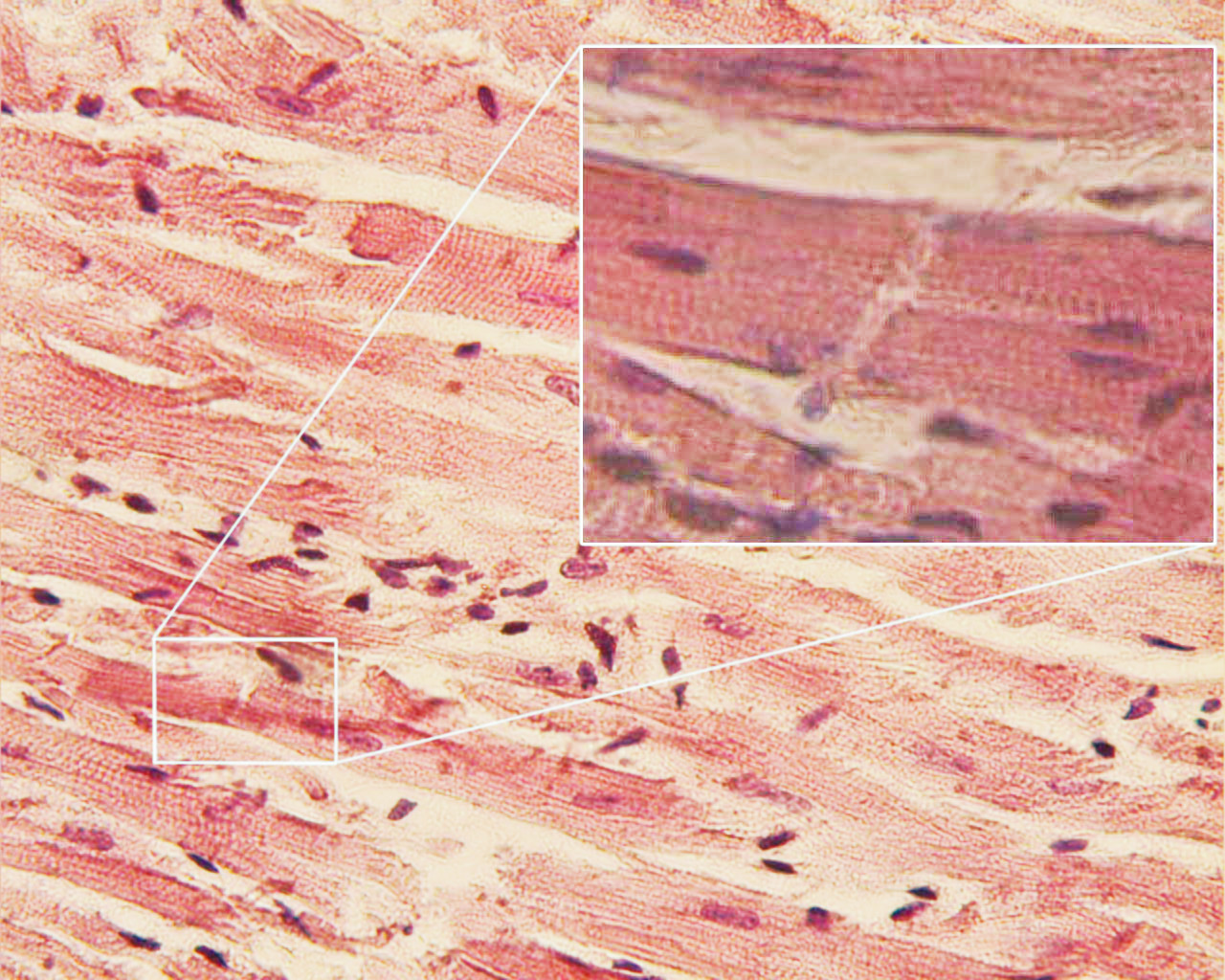
Dog cardiac muscle (400X)
🌡️ Function Of Cardiac Muscle
The main job of the myocardium is to contract, or squeeze. This action pushes blood out of the heart and into blood vessels 🌡️. The heart beats about 100,000 times a day! That's around 2.5 billion beats in a lifetime! 💓When the myocardium contracts, it helps send oxygen-rich blood to the body, while sending oxygen-poor blood back to the lungs for a fresh supply. 🌬️ This pump is vital for all our body parts to work properly. So, every time your heart beats, the myocardium is hard at work keeping you alive!
Go deeper🏛️ Structure Of The Myocardium
The myocardium is made up of many tiny muscle cells called cardiomyocytes. These cells work together to create a strong wall around the heart. 🏛️ The thickness of the myocardium can change based on which part of the heart it's in. For example, the left ventricle has a thick myocardium because it needs to pump blood to the entire body! 💪💙 The structure is organized in a spiral shape, making it easier for the heart to squeeze and pump effectively. Just like building blocks, these cells stack neatly to help the heart keep beating. 🧱
Go deeper🩸 Blood Supply To The Myocardium
Like every other part of the body, the myocardium needs blood to function! 🩸The coronary arteries are special vessels that supply blood to the heart muscle itself. There are two main coronary arteries: the left coronary artery and the right coronary artery. These arteries branch out, bringing oxygen-rich blood to the myocardium. If these arteries get blocked, it can be dangerous. ⚠️ That's why it's essential to take care of your heart with healthy food and exercise! Proper blood supply keeps the myocardium happy and healthy. 😊
Go deeper🚨 Role Of Myocardium In Heart Disease
The myocardium plays a central role in heart disease, which affects how well your heart can pump blood 🚨. Conditions like high blood pressure or blocked arteries can damage the myocardium over time. If the myocardium doesn’t get enough blood or oxygen, it can weaken and lead to serious problems. That’s why being aware of heart health from a young age is so important! 🧒❤️ Healthy eating, regular exercise, and listening to your body can help keep the myocardium strong and ready!
Go deeper🔬 Cardiac Muscle Contraction Mechanisms
The myocardium contracts thanks to special proteins called actin and myosin. 🔬These proteins slide past each other to make the muscle shorten, which is how the heart pumps. The electrical system helps signal the myocardium when to contract. The Sinoatrial Node is the "boss" that sends electrical signals, making the heart beat. It's located in the right atrium. 🏅Exercise can also help strengthen the myocardium! So, every time you run, dance, or play sports, you're giving your heart a workout! 🏃♀️🌈
Go deeper❤️ Common Diseases Affecting The Myocardium
Sometimes the myocardium can get sick! Some common diseases include cardiomyopathy and heart attacks. ❤️ Cardiomyopathy makes the heart muscles weak, making it hard to pump blood. A heart attack happens when a blood vessel gets blocked, stopping blood flow to the myocardium. 🚑Both of these issues can make people feel tired or cause pain. That's why it's important to eat healthy foods, exercise, and see a doctor regularly. Taking care of yourself means taking care of your myocardium! 🌟
Go deeper🧬 Research Advances In Myocardial Function
Scientists are always discovering new things about the myocardium! 🧬Recent studies focus on how to make hearts healthier. For example, doctors are researching stem cells, which can help repair damaged myocardium 💉. Researchers also study how exercise and nutrition affect heart health. Learning about new treatments helps prevent heart diseases in the future! 🧪By understanding how the myocardium works better, experts can create ways to keep hearts strong for everyone! Knowledge is power when it comes to health! 📚
Go deeper🎽 Influence Of Exercise On Myocardial Health
Just like any other muscle in your body, the myocardium benefits from exercise! 🎽When you play, run, or even jump rope, your heart is working harder. This increases blood flow and makes the myocardium stronger and healthier 🎉. Regular physical activity strengthens the heart walls, helping to pump blood more efficiently. It's important to get about 60 minutes of exercise every day to keep your heart and myocardium in top shape! 💖Taking care of your heart through fun activities helps you stay healthy as you grow!
Go deeper🧙♂️ Historical Discoveries Related To The Myocardium
A long time ago, in the 17th century, a scientist named William Harvey discovered how blood circulates in the body. 🧙♂️ This discovery helped people understand the importance of the heart and myocardium! In the early 20th century, researchers found out how the heart's electrical system works, which is crucial for contractions. ⚡Knowing these things helps doctors treat heart diseases better! Today, scientists continue to explore the myocardium to improve treatments and keep hearts strong. Learning from the past helps all of us care better for our hearts! ❤️
Go deeper🌊 Differences Between Myocardium And Other Heart Layers
The heart has three main layers: epicardium, myocardium, and endocardium. 🌊The epicardium is the outer layer, which protects the heart. The endocardium is the inner layer, lining the chambers. But the myocardium is different from these layers because it's made of muscle! 💖While epicardium and endocardium help with structure and protection, the myocardium actually does the pumping. This is why it's called cardiac muscle. Just like athletes train their muscles, the myocardium needs good care to keep working strong! 🏋️♂️
Go deeper