Microburst Facts For Kids
A microburst is a highly localized severe weather phenomenon characterized by intense downdrafts and strong wind gusts, occurring typically within thunderstorms.
Select reading age

Microburst Facts For Kids
Videos & Quizzesincluded
About this topic
A microburst is a powerful and quick blast of wind that comes from a thunderstorm! 🌩️ These winds can reach speeds of up to 168 miles per hour! They usually last for less than 5 minutes but can cause serious damage. Microbursts happen when cool air from the storm sinks to the ground and spreads out in many directions. There are two main types: wet microbursts, which bring rain, and dry microbursts, which can happen without any rain at all. Learning about microbursts helps us understand weather better and stay safe during storms! 🌬️
Explore with ChatDinoKey Points
Microbursts can be very dangerous for airplanes!
There are two main types of microbursts: wet and dry!
Microbursts form when a thunderstorm brings cold air downward.
Pilots learn a lot about safety regarding microbursts!
Microbursts are very powerful but short-lived!
Microbursts play a big role in weather forecasting!
There have been many historical cases of microbursts that people remember.
Scientists and meteorologists have tools to detect microbursts!
Photos of Microburst

Illustration of a microburst at an airport. The air moves in a downward motion until it hits the surface. It then spreads outward in all directions. The wind regime in a microburst is opposite to that of a tornado.

Downburst damages in a straight line.

Dry microburst schematic

A wet microburst

Second stage of a microburst
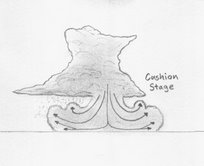
Third stage of a microburst

Microburst — photo 7

Microburst — photo 8

A series of photographs of the surface curl soon after a microburst impacted the surface
✈️ Effects On Aviation
Microbursts can be very dangerous for airplanes! ✈️ These sudden bursts of wind can affect a pilot's control of the plane, especially during takeoff and landing. The strong winds can make planes go up and down quickly, which can lead to accidents. Because they are short and unpredictable, pilots need to be extra careful during thunderstorms. 🎆Knowing when to avoid flying in stormy weather is crucial for safety. That's why pilots get lots of training about microbursts and other dangerous weather phenomena!
Go deeper🌧️ Types Of Microbursts
There are two main types of microbursts: wet and dry! 🌧️ A wet microburst comes with heavy rain and can lead to flash flooding. On the other hand, a dry microburst happens when there is little or no rain falling, just strong winds. The dry type can happen more often in desert areas. Microbursts are part of a storm's life cycle, but they are typically brief. No matter the type, both can cause strong gusts that last only a few minutes! Understanding these types is important for weather safety!
Go deeper☁️ Causes Of Microbursts
Microbursts form when a thunderstorm brings cold air downward. ☁️ When raindrops in the storm fall, they cool the air around them. This cool air becomes heavy and falls to the ground. When it hits the surface, it spreads out quickly in a burst! 🌪️ The air is pushed away from the storm and can create strong winds. This process usually happens when the air near the ground is warmer than the cooler air in the storm. The mixing of warm and cool air is what causes these powerful gusts!
Go deeper🛫 Safety Precautions For Pilots
Pilots learn a lot about safety regarding microbursts! 🛫Before flying, they always check weather reports for thunderstorms. If they see storms nearby, they might delay takeoff or land elsewhere. During training, pilots practice how to respond quickly if they encounter a microburst while flying. They also communicate with air traffic controllers who provide information on nearby weather. 🌩️ Being informed and prepared helps keep everyone on the plane safe! By following these precautions, pilots can make smart decisions when faced with tricky weather!
Go deeper🌬️ Characteristics Of Microbursts
Microbursts are very powerful but short-lived! 🌬️ They can create winds over 100 mph, and they can be difficult to see coming. A microburst usually has a circular shape and can be as wide as 2.5 miles (4 kilometers) across. These phenomena can happen in any part of the world, but they are most common in warm regions where thunderstorms occur. Rain and hail often accompany microbursts, and the wind can cause trees to bend and even snap power lines. 🌳⚡ Knowing their characteristics helps scientists and pilots identify them!
Go deeper📉 Microbursts In Weather Forecasting
Microbursts play a big role in weather forecasting! 📉Meteorologists study storms to understand how microbursts form and how they can predict them. By using tools like radar and satellites, they can warn people about severe weather ahead of time. They also pay attention to specific conditions, like heat and humidity, that can lead to microbursts. Receiving accurate forecasts means more time to prepare for storms, keeping people safe at home and in the air. ⚠️ Thanks to advancements in science, we can help protect communities from these natural wonders!
Go deeper🌆 Historical Instances Of Microbursts
There have been many historical cases of microbursts that people remember. One famous microburst occurred on July 2, 1982, in the city of Dallas, Texas. 🌆A plane was flying in when a microburst caused it to crash, resulting in tragic consequences. It's estimated that over 90 people died. Since then, it has raised awareness about microbursts and their dangers. Many organizations have worked to improve detection and warnings to ensure the safety of travelers. This event shows that learning about microbursts is very important!
Go deeper🛰️ Microburst Detection And Warning Systems
Scientists and meteorologists have tools to detect microbursts! 🛰️ One of these tools is called Doppler radar, which helps track storms and their wind patterns. This technology can detect the strong winds of a microburst before they hit the ground. Additionally, pilots use a system called Terminal Aerodrome Forecast (TAF) that gives them valuable weather information before flying. When microbursts are detected, warnings are sent out to keep pilots and passengers safe. 📊The combination of technology and training helps everyone prepare for unexpected weather!
Go deeper