Michael Smith Facts For Kids
Michael Smith was a British-born Canadian biochemist known for his invention of site-directed mutagenesis and received the Nobel Prize for his significant contributions to science.
Select reading age
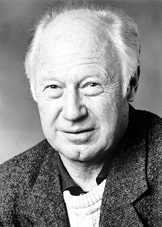
Michael Smith Facts For Kids
Videos & Quizzesincluded
About this topic
Michael Smith was a famous scientist from Canada who made amazing discoveries in biochemistry! 🧪Born on April 26, 1932, in Blackpool, England, he later moved to Canada, where he did most of his important work. He became known for helping us understand DNA, the building blocks of life! In 1993, he won the Nobel Prize in Chemistry for his research. Isn't that cool? 🌟He was also a loving husband and father. Michael spent his life teaching and inspiring others about science, reminding us how important it is to explore and learn about our world! 🌍
Explore with ChatDinoKey Points
Michael Smith was not just an amazing scientist; he was also a great family man!
Michael Smith received many awards for his incredible work!
After Michael finished his studies, he moved to Canada!
Michael Smith’s research has a massive impact on the field of biochemistry and medicine!
Michael Smith was born in England and loved science from a very young age.
Michael Smith's legacy lives on through his groundbreaking work and the people he inspired.
Every scientist faces challenges, and Michael Smith was no exception.
Michael Smith had many collaborations with other talented scientists!
Michael Smith's work changed the world of science forever!
Photos of Michael Smith

Michael Smith, Nobel prize winner, party at Mary Vickers's house, 1994.

Michael Smith, Nobel prize winner, party at Mary Vickers's house, 1994.
👨👩👧👦 Personal Life
Michael Smith was not just an amazing scientist; he was also a great family man! He married his wife, and together they had three children. 👨👩👧👦 Michael loved spending time with his family and sharing his passion for science with them. He enjoyed photography, playing chess, and hiking in nature! 🌳He believed that a good balance between work and play was essential for happiness. Michael always encouraged his kids to explore, ask questions, and never stop learning—just like he did! 🏞️
Go deeper🏆 Awards And Honors
Michael Smith received many awards for his incredible work! 🏆In 1993, he won the Nobel Prize in Chemistry, one of the highest honors a scientist can receive! 🎉He was also made a Companion of the Order of Canada, which recognizes remarkable contributions to the country. 🌟Additionally, he became a Fellow of the Royal Society, a prestigious British organization for leading scientists. Michael's hard work and determination earned him respect from people all around the world, reminding us that science can change lives! 🌈
Go deeper⚗️ Career Highlights
After Michael finished his studies, he moved to Canada! 🇨🇦 He worked at the University of British Columbia (UBC) where he continued his research in biochemistry. One of his biggest achievements was developing a technique called "site-directed mutagenesis." This helped scientists change genes to study their effects! ⚗️ Michael's work became very important in understanding genetic diseases and creating new medicine. He also had fun collaborations with many scientists across the world and shared his knowledge with students inspiring future generations! 👩🔬👨🔬
Go deeper🌟 Impact On The Field
Michael Smith’s research has a massive impact on the field of biochemistry and medicine! 🌟His techniques are crucial for scientists working on gene therapy, where they help patients by fixing or replacing faulty genes. This means people can get better treatments for illnesses! 🏥Michael also inspired many young scientists to follow in his footsteps, spreading the love for science and discovery. He showed us that curiosity and perseverance can lead to life-changing innovations! Thanks to his work, we now understand so much more about genetics! 🧬
Go deeper🧑🔬 Early Life And Education
Michael Smith was born in England and loved science from a very young age. 🧑🔬 He spent a lot of time reading books and doing little experiments! After school, he attended the University of Manchester, where he studied chemistry. 📚In 1954, he graduated with a Bachelor’s degree and then went on to earn his Master's degree. Finally, he obtained a Ph.D. in biochemistry in 1958. Michael was curious and never stopped learning! His passion for science paved the way for all his future discoveries. 🎓🤓
Go deeper🌈 Legacy And Future Influence
Michael Smith's legacy lives on through his groundbreaking work and the people he inspired. 🌈Many scientists today use the techniques he developed to find cures for diseases and create new technologies. His story encourages young learners to ask questions, imagine big, and work hard, just like he did! 📚Even now, schools and research centers honor his contributions by teaching about his discoveries. 🌍Michael Smith's impact on science will be remembered for generations, lighting a path for future explorers of the unknown! ✨🧪
Go deeper🐾 Controversies And Challenges
Every scientist faces challenges, and Michael Smith was no exception. 🐾As he worked on complicated research, he sometimes encountered setbacks or disagreements with others in the scientific community. But instead of giving up, Michael used these challenges to learn and grow! 🌱He believed that science should always be about sharing ideas and working together, even if opinions differ. These experiences taught him resilience, and they showed others that persevering through hard times can lead to amazing discoveries! 💪
Go deeper🤝 Collaborations And Partnerships
Michael Smith had many collaborations with other talented scientists! 🤝He worked with researchers from around the world on exciting projects. Together, they explored topics like genetic engineering and molecular biology. These partnerships helped Michael learn new things and share ideas that made everyone smarter! He also mentored many young scientists at the University of British Columbia, inspiring the next generation of researchers. 🌟In science, teamwork is essential, and Michael showed us that great things happen when people work together! 🧑🤝🧑
Go deeper🌍 Major Contributions And Achievements
Michael Smith's work changed the world of science forever! 🌍His most famous contribution was discovering how to modify DNA, which has helped doctors and researchers. 🧬His research led to breakthroughs in medicine, including treatments for diseases like cancer. Michael's discoveries are used today in genetic engineering and biotechnology! He also contributed a lot to the field of molecular biology and has many publications to his name. Almost every time scientists work with DNA, they are using ideas that Michael helped develop. Amazing, right? ✨
Go deeper