Mausoleum Of Maussollos Facts For Kids
The Mausoleum of Maussollos, built for Mausolus and his sister-wife Artemisia II, is an ancient tomb that showcases remarkable architectural designs and is one of the Seven Wonders of the Ancient World.
Select reading age

Mausoleum Of Maussollos Facts For Kids
Videos & Quizzesincluded
About this topic
The Mausoleum of Maussollos was a grand tomb built between 353 and 351 BC in Halicarnassus, which is now known as Bodrum, Turkey! 🏛️ It was created for Mausolus, a powerful ruler in ancient times, and his loving sister-wife, Artemisia II. This impressive structure was as tall as a 20-story building and combined Greek, Egyptian, and Lycian styles. It became so famous that people now call all grand tombs “mausoleums”, after Mausolus! How cool is that? So, if you ever find a big tomb, you can say it’s like the Mausoleum of Maussollos! 🌟
Explore with ChatDinoQuick Facts
Key Points
The Mausoleum was built using strong and beautiful materials.
The art and sculptures on the Mausoleum were fantastic!
Mausolus ruled Caria, which was part of the Persian Empire, around 377-353 BC.
The Mausoleum of Maussollos holds great cultural significance.
The building of the Mausoleum used some impressive engineering techniques!
The architecture of the Mausoleum of Maussollos was incredible!
The Mausoleum was lost for many centuries due to earthquakes and invasions.
The Mausoleum of Maussollos is one of the famous Seven Wonders of the Ancient World, like the Great Pyramid of Giza in Egypt!
Today, the Mausoleum of Maussollos influences how we build and think about tombs!
Photos of Mausoleum Of Maussollos

Mausolus (casting from the Pushkin Museum).

Reconstitutions of the Mausoleum at Halicarnassus.

Colossal statues of a man and a woman from the Mausoleum at Halicarnassus, traditionally identified as Mausolos and Artemisia II, around 350 BC, British Museum.

Mausoleum Of Maussollos — photo 4

Mausoleum Of Maussollos — photo 5

Timeline and map of the Seven Wonders of the Ancient World, including the Mausoleum at Halicarnassus

Mausoleum Of Maussollos — photo 7

Mausoleum Of Maussollos — photo 8
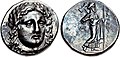
Mausoleum Of Maussollos — photo 9
🪨 Materials Used
The Mausoleum was built using strong and beautiful materials. Workers used local limestone to create the main structure. 🪨They also incorporated marble from nearby islands for a shiny finish. Marble is a type of stone that looks smooth and elegant! 🥇Artists carved stunning sculptures into the marble, making it extra special. It is believed that over 100 sculptors helped create these amazing decorations! Even after thousands of years, people still marvel at the craftsmanship and the materials used to build this incredible tomb! 🌏
Go deeper🎨 Art And Sculptures
The art and sculptures on the Mausoleum were fantastic! 🎨Many famous sculptors created elaborate statues and reliefs. Some sculptures showed scenes from ancient battles and myths, while others depicted animals like horses and griffins (a mix of lion and eagle!). 🦁🦅 The entire structure was like a huge art gallery! Each sculpture told a story and showed the culture of that time. The Mausoleum inspired many artists throughout history, who wanted to create beautiful works for their own monuments! 🌟
Go deeper🏺 Historical Context
Mausolus ruled Caria, which was part of the Persian Empire, around 377-353 BC. 🏺His sister Artemisia II loved him very much and wanted to honor him after he died. The construction of the Mausoleum took about 2 years and involved famous architects and sculptors of the time. 📜Countless people visited to pay their respects! This tomb showed how important Mausolus was, and it even made Halicarnassus a popular place in the ancient world. After it was built, other rulers started to create beautiful tombs too! It is one of the Seven Wonders of the Ancient World! 🏆
Go deeper🌈 Cultural Significance
The Mausoleum of Maussollos holds great cultural significance. Since it was one of the Seven Wonders of the Ancient World, it inspired artists and architects all over! 🌈After Mausolus died, having such an extravagant tomb showed how much he was loved and respected. It also influenced how people think of tombs today; now we create mausoleums to honor important figures, just like Mausolus did! The tomb reminded everyone of the deep love between Mausolus and Artemisia. ❤️ Because of its beauty, Halicarnassus became a place of history and tourism! 🌍
Go deeper⚙️ Engineering Techniques
The building of the Mausoleum used some impressive engineering techniques! ⚙️ The builders laid strong foundations to support the heavy stones. They designed the structure using precise measurements to ensure it was balanced and sturdy. To build the tall pyramid-shaped roof, engineers used ramps to lift the blocks up high! 🏗️ Ancient Greeks were excellent builders, and this structure showed their talent! Even though much of it is gone now, it teaches us how important clever design and planning are in construction. 📏
Go deeper🌌 Architecture And Design
The architecture of the Mausoleum of Maussollos was incredible! 🌌It combined different styles, making it unique and special. It stood 45 meters tall (about 148 feet)! The tomb had a square base, a long staircase, and a stunning pyramid-like roof. On top, there was a statue of Mausolus in a chariot pulled by horses! 🐴The exterior had many beautiful sculptures, showing scenes from Greek mythology and life. Even though it was destroyed by earthquakes long ago, its amazing design still inspires architects today! 🏗️
Go deeper🏰 Rediscovery And Archaeology
The Mausoleum was lost for many centuries due to earthquakes and invasions. 🏰However, in the 19th century, archaeologists started rediscovering its remains in Bodrum, Turkey. They found pieces of sculptures and sections of the tomb. 🧭Explorers documented their findings, and some pieces were even taken to museums in London! The excitement of discovering the Mausoleum excited people all over again! This shows that archaeology helps us learn about our past and understand how cultures lived and honored their loved ones! 🧐
Go deeper🌍 Comparison With Other Wonders
The Mausoleum of Maussollos is one of the famous Seven Wonders of the Ancient World, like the Great Pyramid of Giza in Egypt! 🌍Each wonder had its unique features. For example, the Great Wall of China is long and built to protect, while the Mausoleum was built as a tomb to honor Mausolus! The Statue of Zeus in Olympia was a giant statue dedicated to the god, while the Mausoleum celebrated a human life and love! ❤️ All these wonders show how creative people were in the ancient world and how special their cultures were! 🏆
Go deeper🏛️ Influence On Mausoleums Today
Today, the Mausoleum of Maussollos influences how we build and think about tombs! 🏛️ Many modern mausoleums are designed with elegance and beauty, just like this ancient wonder! Famous buildings, like the Taj Mahal in India, draw inspiration from it, celebrating love and remembrance. 🕌These structures serve as a way to honor important people and hold beautiful art. Even today, we create special places to remember our loved ones, making the spirit of Mausolus live on! ❤️ Every mausoleum tells a story, just like the inspiring Mausoleum of Maussollos! 🌟
Go deeper