Magpie Goose Facts For Kids
The magpie goose is a unique waterfowl native to Australia and New Guinea, known for its black and white feathers and social behavior.
Select reading age

Magpie Goose Facts For Kids
Videos & Quizzesincluded
About this topic
The magpie goose 🦢 is a cool bird native to northern Australia! It has striking black and white feathers that look just like a magpie, hence its name. This remarkable bird is the only member of the family Anseranatidae, meaning it has no close relatives. Magpie geese are social and can be often seen in groups! They are not just pretty to look at; they also play an important role in their ecosystem by helping to manage wetlands. The magpie goose is unique and special, and they live near lakes and wetlands in their natural habitat! 🌏
Explore with ChatDinoKey Points
Did you know that magpie geese can live up to 20 years in the wild?
Magpie geese are currently listed as "Least Concern" by the International Union for Conservation of Nature (IUCN).
Breeding season for magpie geese usually happens between October and March in Australia.
Magpie geese have a special place in the culture of Indigenous Australians.
Magpie geese face a few threats that people are working to address.
Magpie geese are herbivores, which means they mainly eat plants!
Magpie geese can be found mainly in Australia, especially in the northern regions like the Northern Territory and Queensland.
The magpie goose is a large bird, measuring about 70–80 cm (28–31 in) long.
Magpie geese are very social birds!
Photos of Magpie Goose

Magpie Goose — photo 1
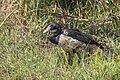
Magpie Goose — photo 2

Magpie Goose — photo 3

Magpie Goose — photo 4

Magpie Goose — photo 5

Magpie Goose — photo 6

Magpie Goose — photo 7
🎉 Interesting Facts
Did you know that magpie geese can live up to 20 years in the wild? 🎉They are good swimmers and can fly up to 1,000 km if needed! Magpie geese are great at adapting to different habitats and can learn new feeding techniques quickly. They also have a unique way of nesting; some pairs may reuse nests from previous years! 🏠So, even though they are not related to ducks or regular geese, they have some fascinating traits that make them a one-of-a-kind bird in the animal kingdom!
Go deeper🌍 Conservation Status
Magpie geese are currently listed as "Least Concern" by the International Union for Conservation of Nature (IUCN). 🌍This means they’re not endangered and have a stable population! However, habitat loss due to human activities, like draining wetlands for agriculture, can affect their numbers. Conservation efforts focus on protecting their habitats and promoting wetland restoration. Schools and organizations are educating people about the importance of preserving these birds and their homes! Together, we can help keep magpie geese thriving in the wild!
Go deeper🗓️ Breeding And Nesting
Breeding season for magpie geese usually happens between October and March in Australia. 🗓️ During this time, males court females with elaborate displays and calls. They build their nests in tall grass or reeds near water. The female usually lays around 5-10 eggs, which are pale buff in color. Both parents share the job of taking care of the eggs until they hatch after about 28-30 days! 🥚Once the chicks come out, they follow their parents around and learn how to find food and stay safe in the wetlands!
Go deeper🎨 Cultural Significance
Magpie geese have a special place in the culture of Indigenous Australians. 🎨They are often featured in stories, art, and songs, symbolizing connection to the land and nature. Many Indigenous tribes have specific names and traditional practices linked to these birds. Magpie geese are also a popular subject of study for scientists and birdwatchers. They remind us of the beauty of wildlife and the importance of living in harmony with nature. 🦢Celebrating these captivating birds helps to promote awareness and respect for different cultures!
Go deeper🏭 Threats And Protection
Magpie geese face a few threats that people are working to address. 🏭Habitat loss, pollution, and hunting can hurt their populations. Human activities can lead to disturbances in wetland areas, making it harder for magpie geese to live and breed. To protect them, nature reserves and protected areas have been created to ensure these birds have safe places to thrive. 🏞️ Conservation organizations also work to raise awareness about the need to keep wetlands clean and safe for magpie geese and other wildlife!
Go deeper🥬 Diet And Feeding Habits
Magpie geese are herbivores, which means they mainly eat plants! 🥬They love munching on grass, seeds, and even water lilies. Their strong beaks are perfect for picking up tasty greens from the ground. They usually feed in wetlands where they can find food easily. Magpie geese also enjoy foraging on farms, where crops like rice grow! 🍚They spend a lot of time walking around and looking for food, which helps them stay active and healthy!
Go deeper🏞️ Habitat And Distribution
Magpie geese can be found mainly in Australia, especially in the northern regions like the Northern Territory and Queensland. They love wetlands, swamps, and flooded grasslands, where they can easily find food and water. These geese are also seen in New Guinea and even some Pacific islands. Their favorite places are areas with lots of vegetation, which provide plenty of shelter and nests. With their wide wings, they can travel across different habitats to find their perfect home. 🏞️ Wetlands are super important for their survival!
Go deeper🦆 Physical Characteristics
The magpie goose is a large bird, measuring about 70–80 cm (28–31 in) long. They have long necks and sturdy legs, which help them walk easily on mud! Their most striking feature is their black and white plumage, with a black head, white body, and black wings. They have a distinctive orange bill and eye-catching orange-yellow feet. The males are usually bigger than the females. Their long wings also help them fly across water, making them swift and agile birds! 🦆Their size and colors help them stand out in their watery home!
Go deeper🐦 Behavior And Social Structure
Magpie geese are very social birds! 🐦They like to hang out in groups called flocks, which can have up to 100 birds! These flocks are important because they help keep each other safe from predators. When feeding or swimming together in a group, they communicate through honks and calls. They also like to preen each other's feathers to stay clean and look pretty. Besides being friendly with their flock, magpie geese also show a lot of teamwork when it comes to finding food and protecting one another! 🛡️
Go deeper