Lythraceae Facts For Kids
Lythraceae is a diverse family of flowering plants with around 620 species, ranging from herbs to trees, and is found worldwide, especially in tropical regions.
Select reading age
Lythraceae Facts For Kids
Videos & Quizzesincluded
About this topic
Lythraceae, pronounced "lith-ra-cie-ee," is a family of flowering plants! 🌺This family has about 620 different species spread across 32 genera, which are groups of related plants. You can find Lythraceae plants all around the world, especially in warm areas like North and South America, Asia, and Africa. These plants can be herbs, shrubs, or even trees! Many Lythraceae plants have beautiful flowers and are often found near lakes and rivers. Their bright colors attract bees and other pollinators, helping them grow and spread. Isn’t it amazing how nature works? 🌼
Explore with ChatDinoKey Points
One of the most famous species in the Lythraceae family is the pomegranate (Punica granatum).
Some Lythraceae species are at risk!
Lythraceae plants are also beautiful decorations in gardens!
Many Lythraceae plants are delicious!
Lythraceae plants play an essential role in nature!
In the scientific world, classification helps us understand how plants are related.
For many years, people have used Lythraceae plants in traditional medicine.
Plants in the Lythraceae family have various shapes and sizes!
Scientists are continuously studying Lythraceae plants to learn more about their benefits!
Lythraceae plants thrive in diverse habitats!
Photos of Lythraceae

Lythraceae — photo 1

Lythraceae — photo 2

Lythraceae — photo 3

Lythraceae — photo 4

Lythraceae — photo 5

Lythraceae — photo 6

Lythraceae — photo 7
🍷 Notable Species
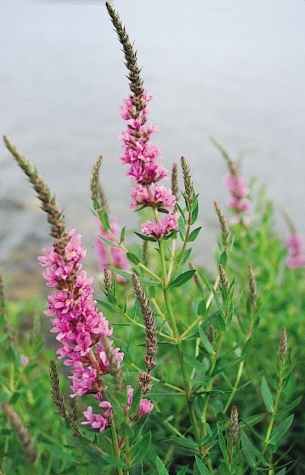
One of the most famous species in the Lythraceae family is the pomegranate (*Punica granatum*). 🍷It’s known for its unique, juicy seeds and health benefits! Another notable species is the purple loosestrife (*Lythrum salicaria*), famous for its tall purple flowers. Other interesting species include *Cuphea* which has tubular flowers, perfect for attracting hummingbirds. 🐦Each of these species showcases the incredible diversity of Lythraceae plants. Learning about them helps us appreciate their beauty and importance in nature!
Go deeper😞 Conservation Status
Some Lythraceae species are at risk! 😞Due to habitat loss and pollution, certain plants, like *Lythrum salicaria*, are considered invasive in parts of the United States. This means they can take over the habitats of local plants. 🌍On the other hand, some species are protected to ensure they don't disappear. Conservation efforts are essential to help preserve Lythraceae plants, allowing them to continue playing their role in ecosystems and our lives. 🌱Preserving nature is essential for future generations!
Go deeper🌺 Ornamental Varieties
Lythraceae plants are also beautiful decorations in gardens! 🌺Many species have stunning flowers that can brighten any space. *Lythrum salicaria*, or purple loosestrife, grows tall and has lovely purple spikes that attract butterflies! 🌸Other species, like the *Cuphea* (commonly called cigar plant), have unique tubular flowers that come in vibrant colors. With all their variety, Lythraceae plants make fantastic ornamental choices for gardeners looking to add color and beauty. Some even bloom for long periods, giving a beautiful show all summer long! 🌺
Go deeper🍽️ Culinary Applications
Many Lythraceae plants are delicious! 🍽️ The pomegranate, from the *Punica* genus, is a popular fruit that has juicy seeds packed with flavor! People love to eat them fresh, drink the juice, or use them in desserts. Some species are also used for adding flavor to dishes. For example, in India, the flowers from *Punica granatum* are sometimes added to salads for a zesty touch! 🌹🌸 Did you know that you can even make tea from certain Lythraceae leaves? They can add a lovely taste to your favorite beverage!
Go deeper🌼 Ecological Importance
Lythraceae plants play an essential role in nature! 🌼They provide habitats for many insects, birds, and other animals. The flowers attract pollinators, helping plants reproduce. This is important for the environment because many fruits and vegetables rely on pollination. Additionally, the leaves and stems of Lythraceae plants provide food for some herbivorous animals, and their roots help prevent soil erosion by holding the ground in place. 🌳So you see, these plants are like tiny superheroes of nature, keeping everything balanced and thriving!
Go deeper🌳 Taxonomy And Classification
In the scientific world, classification helps us understand how plants are related. Lythraceae belongs to the order Myrtales. 🌳Taxonomists have identified around 32 genera under this family. Some well-known genera include *Lythrum* (like the flowering plant known as loosestrife), *Punica* (which includes the pomegranate), and *Cuphea*. Scientists categorize these plants based on their traits, like flower shape and leaf pattern. The flowers of Lythraceae often have five or more petals and can come in shades of pink, purple, and white! 🌺This helps make nature vibrant and beautiful!
Go deeper🌿 Uses In Traditional Medicine
For many years, people have used Lythraceae plants in traditional medicine. 🌿Some tribes in Africa and Asia have made herbal remedies using parts of these plants to treat ailments like wounds and stomachaches. For example, the pomegranate (from the genus *Punica*) is not only tasty but also used to make tonics! 🍹Other plants like *Lythrum salicaria* have been used to help with fevers. It’s important to remember that while traditional remedies can be helpful, it is always best to consult a doctor for serious health concerns.
Go deeper🌿 Morphological Characteristics
Plants in the Lythraceae family have various shapes and sizes! 🌿Most of them have simple leaves, which may be long or wide depending on the species. The flowers are typically brightly colored and can be bowl-shaped or tubular! Many Lythraceae plants have woody stems, making them sturdy like trees and shrubs, while some are soft and leafy like herbs. Most flowers have five or more petals, and they often grow in clusters. Did you know that some species have special parts that produce sweet nectar? Bees and butterflies visit to sip it up! 🐝🌸
Go deeper🧪 Recent Research And Discoveries
Scientists are continuously studying Lythraceae plants to learn more about their benefits! 🧪Recent research focuses on their medicinal properties, particularly the pomegranate, which has antioxidant qualities. Studies show that the seeds are packed with vitamins and can help with heart health. Scientists are also looking at how Lythraceae plants can be used in landscaping to improve local ecosystems. 🌍This ongoing research reveals exciting possibilities for Lythraceae in health and environmental preservation. What do you think they will discover next? 🌱
Go deeper🌳 Growth Habitats And Distribution
Lythraceae plants thrive in diverse habitats! 🌳You can spot them near freshwater sources like lakes and rivers, or in wetlands where the soil is moist. They're also found in wooded areas and even in gardens! 🌱Most Lythraceae species prefer warm climates, although some can grow in cooler regions too. These plants are distributed globally, particularly in Malaysia, the Americas, Africa, and Europe. Some types, like the red valerian, are commonly found in gardens. 🌍Where do you think the nearest Lythraceae plant is to your home?
Go deeper