Locust Facts For Kids
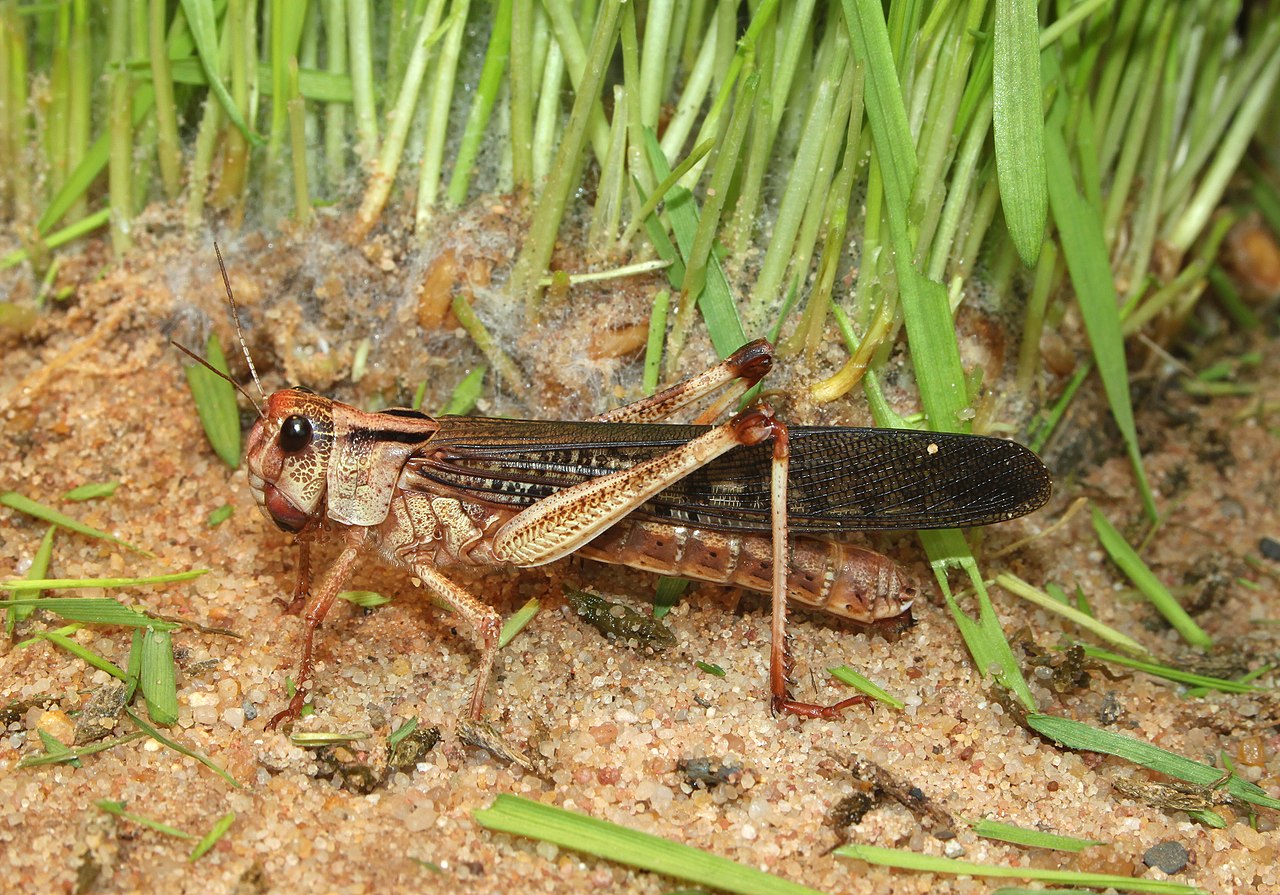
Locusts are a type of short-horned grasshopper known for their ability to form large swarms that migrate, causing significant ecological and agricultural impact.
Select reading age
Locust Facts For Kids
Videos & Quizzesincluded
About this topic
Locusts are fascinating insects that belong to the family Acrididae! 🦗They are short-horned grasshoppers and can be found in many places around the world. Some locust species can change their behavior and color when they form large groups called swarms. When locusts swarm, they can travel long distances, sometimes up to 100 miles in a day! 🌍There are about 30 different locust species, including the well-known desert locust, which can be found in Africa, Asia, and the Middle East. Locusts can be found in many colors, usually green or brown, helping them to blend in with their surroundings! 🍃
Explore with ChatDinoKey Points
The life cycle of locusts is quite interesting!
Locusts play an important role in their ecosystems!
One of the most exciting things about locusts is their swarming behavior!
Locusts have some unique features that help them survive and thrive!
Throughout history, locusts have held cultural significance in many societies!
Locust plagues have created significant impacts in history, causing widespread destruction!
Locusts can have a big impact on agriculture!
Many countries have strategies to manage locust populations and protect crops!
Locusts can be found in many different habitats, including deserts, grasslands, and agricultural fields.
Locusts have made their way into popular culture, appearing in movies, books, and even cartoons!
Photos of Locust

Millions of swarming Australian plague locusts on the move

Desert locusts in copulation

Solitaria (grasshopper) and gregaria (swarming) phases of the desert locust

Locust — photo 4


Locust detail from a hunt mural in the grave-chamber of Horemhab, Ancient Egypt, circa 1422–1411 BC

Locusts which swarmed over England in 1748: Drawing by De la Cour; engraved by R. White, in Thomas Pennant's A Tour in Wales, 1781

Eugenio Morales Agacino on expedition monitoring locusts in the desert of Spanish Sahara, 1942

Locust — photo 9
🐜 Life Cycle
The life cycle of locusts is quite interesting! 🐜It starts when a female locust lays eggs in the ground. These eggs hatch into tiny, wingless nymphs, called hoppers. Hoppers go through several molts, shedding their exoskeleton as they grow bigger. 🌱After about 4-6 weeks, they eventually develop wings and become adults. Adult locusts are called imago and are ready to mate and lay eggs. The entire life cycle from egg to adult takes around 2-3 months, depending on the species and surrounding conditions. So, locusts grow up pretty fast! ⚡
Go deeper🌍 Ecological Role
Locusts play an important role in their ecosystems! 🌍When locusts eat plants, they help control plant growth, which allows other species a chance to thrive. Their droppings also enrich the soil, returning nutrients to the earth and helping new plants grow. 🌱While they can be destructive, locusts are part of the food chain. Many animals, like birds and small mammals, rely on locusts as a food source. So, although locusts may seem like trouble, they actually have a vital part to play in keeping nature in balance! ⚖️
Go deeper😮 Swarming Behavior
One of the most exciting things about locusts is their swarming behavior! 😮When conditions are right—like after heavy rains—locusts can gather in massive groups, sometimes millions strong! When these locusts gather, they change color and become more social. 🟡🟢 They can travel long distances in search of food, which is why they can be so destructive! Swarms can eat everything in their path, including plants, crops, and fields. This behavior helps locusts find food during difficult times, but it can also lead to significant agricultural damage. 🌽Let's hope they don’t come to dinner! 🍽️
Go deeper🦗 Biology And Anatomy
Locusts have some unique features that help them survive and thrive! 🦗They possess long antennae that can be twice the length of their bodies. These sensitive antennae help locusts smell and navigate their environment. Locusts also have strong hind legs, which allow them to jump up to 20 times their body length! 🎉Did you know that locusts have a pair of large compound eyes? These eyes help them see in all directions, making it easier to spot danger. Locusts have a hard outer shell called an exoskeleton, which protects their bodies and keeps them safe. 🛡️
Go deeper📖 Cultural Significance
Throughout history, locusts have held cultural significance in many societies! 📖In biblical texts, locusts are often seen as a sign of destruction, appearing as one of the ten plagues of Egypt. Various cultures use locusts in their cuisine; some people even consider them a delicacy! In countries like Mexico and Thailand, roasted and seasoned locusts are enjoyed as a snack. 🌮Many art pieces, stories, and songs feature locusts, symbolizing both destruction and abundance. This means that locusts have inspired creativity while also cautioning against their swarming effects! 🎨
Go deeper🌪️ Famous Locust Plagues
Locust plagues have created significant impacts in history, causing widespread destruction! 🌪️ One of the most famous plagues occurred in 1930s Australia when the New South Wales region was swarmed by billions of locusts! This event ruined many crops and prompted the government to create special policies for locust management. 🌍Another notable plague occurred in 1950s Africa, impacting farmers across the continent. These historical plagues often impacted food supply and local economies, emphasizing the need for awareness and cooperation in managing locust populations. 📉
Go deeper🌱 Impact On Agriculture
Locusts can have a big impact on agriculture! 🌱When a swarm of locusts arrives, they can eat all the crops and plants in an area very quickly. Farmers can lose their harvests and income, which can be devastating, especially in countries that rely on these crops for food. In 2020, a severe outbreak of desert locusts hit East Africa, causing food shortages in places like Kenya and Ethiopia. 📉It’s estimated that a swarm of locusts can consume the same amount of food as 2,500 people in just one day! This makes it essential for farmers to stay alert to protect their precious crops! 🚜
Go deeper🌾 Control And Management
Many countries have strategies to manage locust populations and protect crops! 🌾Scientists and farmers work together to monitor locust activity and predict when swarms might occur. There are various methods to control locusts, such as using special insecticides that target swarms. However, some countries also prefer natural methods, like introducing natural predators, such as birds. 🦅It’s essential to find the right balance, so locusts stay part of the ecosystem while minimizing damage to agriculture. With the help of technology and teamwork, managing locusts can be more effective now than ever! 🤝
Go deeper🌾 Habitat And Distribution
Locusts can be found in many different habitats, including deserts, grasslands, and agricultural fields. 🌾Most locusts prefer warm climates with plenty of vegetation to munch on. They can be found on every continent except Antarctica! 🗺️ The desert locust primarily lives in North Africa, parts of the Middle East, and South Asia. In contrast, the migratory locust can be spotted mainly in Africa, Europe, and Australia. Farmers often worry about locust swarms because they can destroy crops, but locusts also play essential roles in their ecosystems. 🌍
Go deeper🎬 Locusts In Popular Culture
Locusts have made their way into popular culture, appearing in movies, books, and even cartoons! 🎬In the 1998 animated film "A Bug's Life," the character Hopper is a grasshopper resembling a locust and the antagonist in the story. Some stories talk about locusts swarming as a spooky event, and their unique appearance has inspired games and toys too! 🎲While they may not always be portrayed positively, locusts capture our imagination and remind us of nature’s power! Whether in stories or on screen, locusts continue to be intriguing creatures! ✨
Go deeper