Little Tern Facts For Kids
The little tern is a small seabird known for its elegant flight and distinctive black cap, thriving in coastal habitats and feeding primarily on small fish.
Select reading age

Little Tern Facts For Kids
Videos & Quizzesincluded
About this topic
The little tern (Sternula albifrons) is a small, graceful bird with a tiny body and a bright white belly. These birds are often found along coastal areas in Europe, Asia, and Africa. They are expert fliers, known for their quick movements and agility! 🌊Little terns like to be near sandy beaches, estuaries, and lakes, where they can catch their favorite food—the little fish they love to eat. These birds are about the size of a kitten, measuring only around 24-26 cm (9-10 inches) long, making them easy to spot along the shore! 🐦
Explore with ChatDinoKey Points
Little terns live in several regions worldwide.
Did you know that little terns can fly at speeds of up to 60 km/h (about 37 mph)?
Currently, the little tern is listed as "Least Concern" on the IUCN Red List, which means their population is stable globally.
Little terns usually breed between May and July.
In many cultures, little terns are seen as symbols of grace and agility.
Little terns face a few challenges in their lives.
Little terns are charming and small birds.
Little terns are fish lovers!
Photos of Little Tern
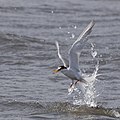
Little Tern — photo 1

Little Tern — photo 2

Little Tern — photo 3

Little Tern — photo 4

🏖️ Habitat And Range
Little terns live in several regions worldwide. They favor coastal areas and sandy beaches, where they can nest safely. 🏖️ In Europe, you can spot them in countries like England, France, and Spain! They also visit places like South Asia and parts of Africa during their migratory journey. In winter, some of them travel south to warmer areas in Africa and Asia, making it a long-distance trip! ✈️ These birds particularly love shallow waters where they can hunt for small fish.
Go deeper⚡ Interesting Facts
Did you know that little terns can fly at speeds of up to 60 km/h (about 37 mph)? That's super speedy! ⚡They can also use their sharp beaks to fish while hovering above the water! Additionally, little terns are migratory birds, so they travel long distances and can navigate using the sun and stars! 🌟When they're in a group, they often work together while hunting, which makes them great team players. Lastly, they’re known for their loud and cheerful calls that can be recognized easily while they fly around! 📢
Go deeper🌍 Conservation Status
Currently, the little tern is listed as "Least Concern" on the IUCN Red List, which means their population is stable globally. 🌍However, in some areas, their numbers are decreasing due to habitat loss. They depend on clean and safe beaches for nesting, so protecting these areas is crucial. Organizations are working hard to monitor their populations and ensure that little terns continue to thrive for future generations! 🕊️ Protecting their habitats requires teamwork and support from local communities as well!
Go deeper🌼 Breeding And Nesting
Little terns usually breed between May and July. 🌼They like to nest on sandy beaches where there are not too many plants. Both parents help build the nest by creating a small scrape in the sand, where they lay about 2 to 3 eggs. These eggs are often spotted with brown and gray colors, helping them blend in with the sand. 🥚After about 21 days, the eggs hatch, and the little chicks are super cute but helpless! The parents take care of their chicks by feeding them small fish until they can fly.
Go deeper🌊 Cultural Significance
In many cultures, little terns are seen as symbols of grace and agility. 🌊Some regions celebrate their arrival during migration season as a sign of changing weather! Little terns are often featured in art and children’s stories, representing a beautiful connection between nature and creativity. 🖼️ Local communities sometimes hold activities to raise awareness about these birds and encourage actions that help protect their habitats. The little tern teaches us about the importance of caring for nature and the creatures living within it! 🕊️
Go deeper🚧 Threats And Challenges
Little terns face a few challenges in their lives. 🚧One major threat is habitat loss, caused by beach construction and pollution. When humans build hotels or roads near beaches, it takes away their nesting places. 🏗️ Moreover, they often get disturbed by pets like dogs and even too many people on the beach! Natural predators, such as gulls and crows, also pose a risk to little tern eggs and chicks. It’s important for everyone to help protect these tiny birds and their homes to ensure they survive and thrive! 🏞️
Go deeper🌟 Physical Characteristics
Little terns are charming and small birds. They have short, pointed wings and a slender body, making them look very sleek in the air. Their heads are mostly white, with a black cap that makes them easy to identify! 🌟In summer, they have a beautiful yellow bill. However, in winter, they change color, making it harder to recognize them. These birds have long, slender legs that help them wade through shallow water. Little terns are great at catching fish with their sharp beaks, which can be seen when they dive to hunt! 🎣
Go deeper🎣 Diet And Feeding Behavior
Little terns are fish lovers! Their favorite meals include small fish like sand eels and sprats. 🎣They are skilled hunters and often hunt by flying low over the water and diving headfirst to catch their prey. They have excellent eyesight to spot fish from above. When fishing, they can dive from heights of about 10 meters (33 feet) to snatch a fish quickly! 🌊They sometimes hunt in groups, working together to find the best spots to catch their meals. Eating fish not only keeps them healthy, but it also helps them build energy for their busy day!
Go deeper