Limusaurus is a theropod dinosaur from the Late Jurassic period, known for its unique blend of herbivorous and carnivorous traits, highlighting a crucial evolutionary phase.
Set reading age
View for Kids
Easy to read and understand
View for Students
Clear, detailed explanations
View for Scholars
Deep dives and big ideas
Limusaurus was a cool dinosaur that lived in the late Jurassic period, about 160 million years ago! 🌍This dinosaur roamed what is now China. Limusaurus was a small, fast dinosaur that could grow to about 10 feet long! It belonged to a group called theropods, which also includes famous friends like Tyrannosaurus rex and Velociraptor. Limusaurus is special because it had some unique features, like being one of the earliest dinosaurs to show signs of losing its teeth! 🦷Knowing about dinosaurs like Limusaurus helps scientists understand how dinosaurs evolved over time.
Limusaurus was discovered in 2009 by a team of paleontologists in the Shishigou Formation of Xinjiang, China. 🇨🇳 The name "Limusaurus" means "marsh lizard," and it was named because its fossils were found in a wetland area. The first fossils included a partial skeleton, which was very important for learning about its characteristics. The name was chosen to reflect the dinosaur's environment, showing that Limusaurus lived near water! 💧Later discoveries helped scientists learn even more about this fascinating dinosaur, making it clearer how it lived and what it looked like!
Limusaurus lived in ancient marshlands and wetlands in what is now northwestern China. 🌾It preferred environments near lakes and rivers, where it could find food and stay safe. The Shishigou Formation was a lush area with plenty of water and plants. This environment was ideal for Limusaurus to thrive. 🌊Marshes are perfect for hiding from big predators! By studying where Limusaurus lived, scientists can learn more about how dinosaurs adapted to their surroundings many millions of years ago!
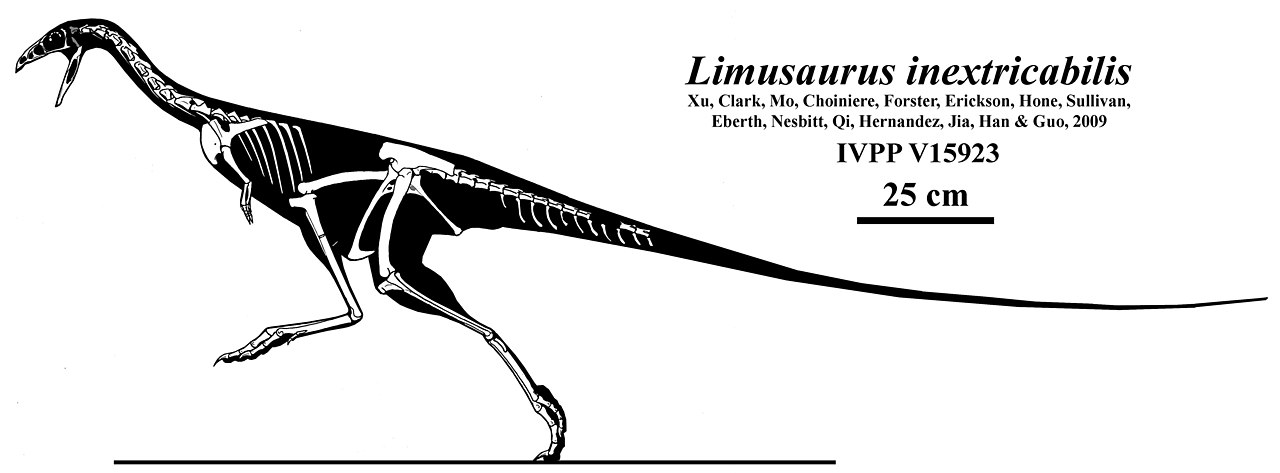
Limusaurus had a unique look! It stood on two legs and had a long neck with a small head. Its arms were also quite different; they could be much shorter than in other theropods. 🦵Limusaurus was special because it had fewer teeth than its relatives, making it easier to eat softer food, like plants! 🌿It had long, slender legs that helped it run quickly. Some scientists think Limusaurus may have even had a beak-like mouth, similar to modern birds! Just imagine a dinosaur that could run fast with an awesome bird-like look!
Limusaurus was an herbivore, which means it enjoyed munching on plants! 🥬Unlike some of its sharp-toothed dinosaur cousins, Limusaurus developed special adaptations for eating softer vegetation. Scientists believe it may have used its beak-like mouth to pull leaves and other tasty plants right off. 🌳Its diet likely included ferns and other low-growing plants around marshes. This unique feeding behavior helps us understand how dinosaurs adapted to find food in their environments, which is vital for their survival!
The fossils of Limusaurus provide lots of clues about this dinosaur's life! Paleontologists found bones that show it had special adaptations for living in marshy areas. 🔍By studying the structure of its bones and teeth, scientists learned how Limusaurus might have moved and what it ate. The discovery of nearly complete skeletons allows researchers to piece together a picture of how Limusaurus lived. Fossil evidence helps us understand the changes in dinosaurs over millions of years, fueling our fascination with their history! 🥳
The discovery of Limusaurus has changed the way scientists think about dinosaur evolution! This dinosaur is considered a 'missing link' in understanding how theropods changed over time. 🔄Its unique features, like losing teeth and adapting to a herbivorous lifestyle, give us insights into how some dinosaurs may have evolved into modern birds! 🐦By studying Limusaurus, paleontologists can better understand how different dinosaurs interacted with their environments and how they survived in their ecosystems. This makes Limusaurus an essential part of the dinosaur family tree! 🎉
While we don't know everything about how Limusaurus behaved, some evidence suggests that it may have lived in groups, just like some modern animals! 🦙Herding together can help protect animals from predators and make it easier to find food. Scientists think Limusaurus might have been social, using vocalizations to communicate and keep together. 🗣️ Possibly, they would go foraging in groups, eating plants and staying safe from larger dinosaurs. Learning about the social behaviors of dinosaurs helps us take a peek into their daily lives!
Limusaurus is often compared to other theropods like Velociraptor and the famous T. rex. 🦖While Velociraptor was nifty and quick, hunting small prey, Limusaurus was more of a gentle giant, focusing on plants. Limusaurus’s shorter arms and beak-like mouth set it apart from its carnivorous cousins, showing how different dinosaurs could be! ✨Understanding these differences helps scientists learn how many types of dinosaurs evolved to adapt to their environments and lifestyles!


DIY is a creative community where kids draw, build, explore ideas, and share.
No credit card required