Lightning Facts For Kids

Lightning is a natural electrical discharge caused by the buildup of static electricity in clouds.
Select reading age
Go deeper More articles
Lightning
Lightning Facts For Kids
Videos & Quizzesincluded
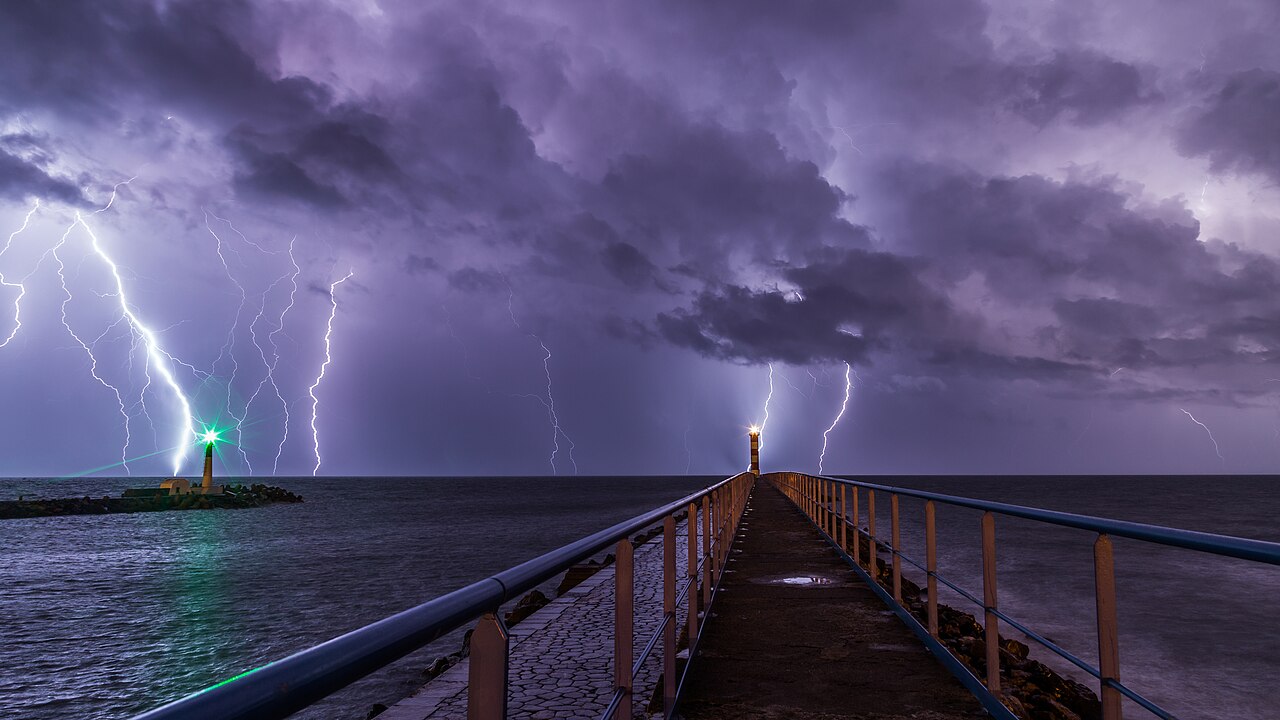
Image by Maxime Raynal from France, licensed under Creative Commons Attribution 2.0

About this topic

Lightning is a bright flash of light that happens during thunderstorms! ⚡It's like nature's way of showing off. While lightning can look cool, it's also very powerful and can cause damage. It can travel at speeds of up to 60,000 miles per hour! 🌩️ In fact, each strike can be hotter than the surface of the sun. Lightning occurs all over the world, but it's more common in places like Florida, USA, which has more thunderstorms than anywhere else in the U.S.! 🌍Let's explore this amazing natural phenomenon together!
Explore with ChatDino

Key Points

There are several types of lightning!
Lightning is a giant spark of electricity in the sky.
Lightning forms when clouds build up with electricity.
Staying safe during a lightning storm is very important!
Thunder is the sound that follows lightning.
One of the most famous lightning strikes happened in 212 B.C. when lightning hit the Temple of Jupiter in ancient Rome!
Did you know that lightning can be affected by climate change?
Lightning has captured the imagination of many cultures around the world!

Photos of Lightning

Lightning — photo 1Image by CharlesC, licensed under Creative Commons Attribution-Share Alike 3.0

Lightning — photo 1

A bolt from the blue lightning strike which appears to initiate from the clear, but[clarification needed] the turbulent sky above the anvil cloud and drive a bolt of plasma through the cloud directly to the ground. They are commonly referred to as positive flashes, despite the fact that they are usually negative in polarity.Image by Bidgee, licensed under Creative Commons Attribution 3.0

A bolt from the blue lightning strike which appears to initiate from the clear, but[clarification needed] the turbulent sky above the anvil cloud and drive a bolt of plasma through the cloud directly to the ground. They are commonly referred to as positive flashes, despite the fact that they are usually negative in polarity.

Lightning — photo 3Image by Karthik Easvur, licensed under Creative Commons Attribution-Share Alike 3.0

Lightning — photo 3

Lightning — photo 4

Lightning — photo 4

Lightning — photo 5Image by Lukas Schmidt, licensed under Creative Commons Attribution-Share Alike 2.0

Lightning — photo 5

Lightning — photo 6Image by Thennicke, licensed under Creative Commons Attribution-Share Alike 4.0

Lightning — photo 6

(Figure 1) The main charging area in a thunderstorm occurs in the central part of the storm where the air is moving upward rapidly (updraft) and temperatures range from −15 to −25 °C (5 to −13 °F).

(Figure 1) The main charging area in a thunderstorm occurs in the central part of the storm where the air is moving upward rapidly (updraft) and temperatures range from −15 to −25 °C (5 to −13 °F).

(Figure 2) When the rising ice crystals collide with graupel, the ice crystals become positively charged and the graupel becomes negatively charged.

(Figure 2) When the rising ice crystals collide with graupel, the ice crystals become positively charged and the graupel becomes negatively charged.

The upper part of the thunderstorm cloud becomes positively charged while the middle to the lower part of the thunderstorm cloud becomes negatively charged.

The upper part of the thunderstorm cloud becomes positively charged while the middle to the lower part of the thunderstorm cloud becomes negatively charged.

🌈 Types Of Lightning

There are several types of lightning! The most common is cloud-to-ground lightning, which strikes from the clouds down to Earth. 🌈There’s also intra-cloud lightning that happens between different parts of the same cloud. Ever heard of forked lightning? That’s when it branches out like tree limbs. 🌳And let’s not forget sheet lightning, which lights up the entire sky! Then there's ball lightning, which is rare and looks like a glowing ball floating in the air! ⚽Each type of lightning is special, making storms even more exciting!
Go deeper

🌧️ What Is Lightning?

Lightning is a giant spark of electricity in the sky. It usually happens during rainstorms when clouds rub together, creating static electricity. 🌧️ Think of it like the spark you feel when you touch a doorknob after shuffling your feet on a carpet! There are two main parts of lightning: the flash itself and the sound called thunder that follows. Did you know lightning can strike the ground from a cloud miles away? That's called a "cloud-to-ground" strike! Lightning strikes can be super fast, lasting only about a second! ⚡
Go deeper

☁️ How Lightning Forms

Lightning forms when clouds build up with electricity. ☁️ Inside storm clouds, tiny drops of water freeze into ice. 🥶As these ice particles bump into each other, they create static electricity. When the amount of electricity gets high enough, it needs to escape! This is when lightning strikes occur. The electrical charge travels from the cloud to the ground, creating that bright flash we see. 🌩️ It happens so fast that it's sometimes hard for our eyes to catch all the details! Lightning can strike during thunderstorms, but it can also happen in volcanic eruptions! 🌋
Go deeper

⚠️ Lightning Safety Tips

Staying safe during a lightning storm is very important! ⚠️ If you hear thunder or see lightning, go indoors immediately! Buildings and cars are safe places to be. Do not stand under trees because lightning can strike them! 🌳If you're outside and can't get inside, crouch low, keep away from metal objects, and avoid standing in open spaces. If you’re at the beach or swimming, get out of the water! 🌊Lightning can travel through water, and safety should always come first. Remember, it’s better to be safe than sorry! 😃
Go deeper

💥 The Science Of Thunder

Thunder is the sound that follows lightning. When lightning strikes, it heats the air around it so quickly that the air expands and creates a loud boom! 💥This happens almost instantly, but since sound travels slower than light, we see the lightning before we hear the thunder. That’s why you can count the seconds between a lightning flash and the boom; every five seconds equals about one mile! 🌌So, if you count to 15 after seeing lightning, that means the storm is about 3 miles away. Thunder can be louder than a jet plane! ✈️
Go deeper

⚡ Famous Lightning Strikes

One of the most famous lightning strikes happened in 212 B.C. when lightning hit the Temple of Jupiter in ancient Rome! ⚡It destroyed the roof of the temple and was considered a bad omen! Another well-known event was the tallest building in the world, the Burj Khalifa in Dubai, which gets hit by lightning about 25 times a year! 🌆And who could forget the *Great Storm of 1987* in England? It caused a record amount of lightning strikes! ⚡These stories show how powerful lightning can be and how it has shaped history!
Go deeper

🌡️ Lightning And Climate Change

Did you know that lightning can be affected by climate change? 🌡️ As the Earth warms up, storms get heavier, and lightning strikes may become more frequent! Scientists recently found that lightning strikes have increased by 12% over the past few decades. More storms can lead to more lightning and can even make it harder for firefighters when they try to put out wildfires caused by lightning! 🌲🔥 Understanding these changes helps us protect our homes and the environment. We all can help, like planting trees and recycling, to make our planet healthier for everyone!
Go deeper

⚡ Lightning In Culture And Mythology

Lightning has captured the imagination of many cultures around the world! ⚡In Greek mythology, Zeus was the king of the gods and was often depicted throwing lightning bolts! 🌩️ In Norse mythology, Thor wielded a mighty hammer called Mjölnir that could create thunder and lightning! 🌩️ Different cultures have lived in awe and fear of lightning, seeing it as a sign from the gods. Some Native American tribes believed that lightning was a powerful spirit protecting the land. Lightning sparks creativity and stories, connecting cultures through history! 🌍✨
Go deeper

🧠 Take the Quiz about Lightning

Question 1 of 10

What is the typical voltage of a lightning bolt?

Question 2 of 10

What is the hottest temperature a lightning bolt can reach?

Question 3 of 10

What type of lightning is most common during thunderstorms?

Question 4 of 10

How many times does lightning strike the Earth each year?

Question 5 of 10

What natural phenomenon can cause electrical surges?

Question 6 of 10

What is the estimated chance of a person being struck by lightning in a year?

Question 7 of 10

What phenomenon causes thunder?

Question 8 of 10

In which region is lightning most common?

Question 9 of 10

What is the speed of a lightning flash?

Question 10 of 10

Which of the following influences the frequency of lightning strikes?

🔒

Your results

Answer all 10 questions to see how you did.

Kid-safe AI powered by AstroSafe

DIY.org

Kid-safe AI for discovery and learning. Ask anything, explore everything, learn with confidence.

Product

  • Pricing
  • App
  • All Apps

Resources

  • Blog
  • Kids Wikipedia
  • Worksheets
  • Activities for Kids
  • Build a Hacker Simulator
  • SafeTube

Company

  • About
  • Terms & Conditions
  • Privacy Policy
  • AstroSafe
TwitterInstagramYouTube

© 2026 DIY.org. All rights reserved. · Powered by AstroSafe