Lhotse Facts For Kids
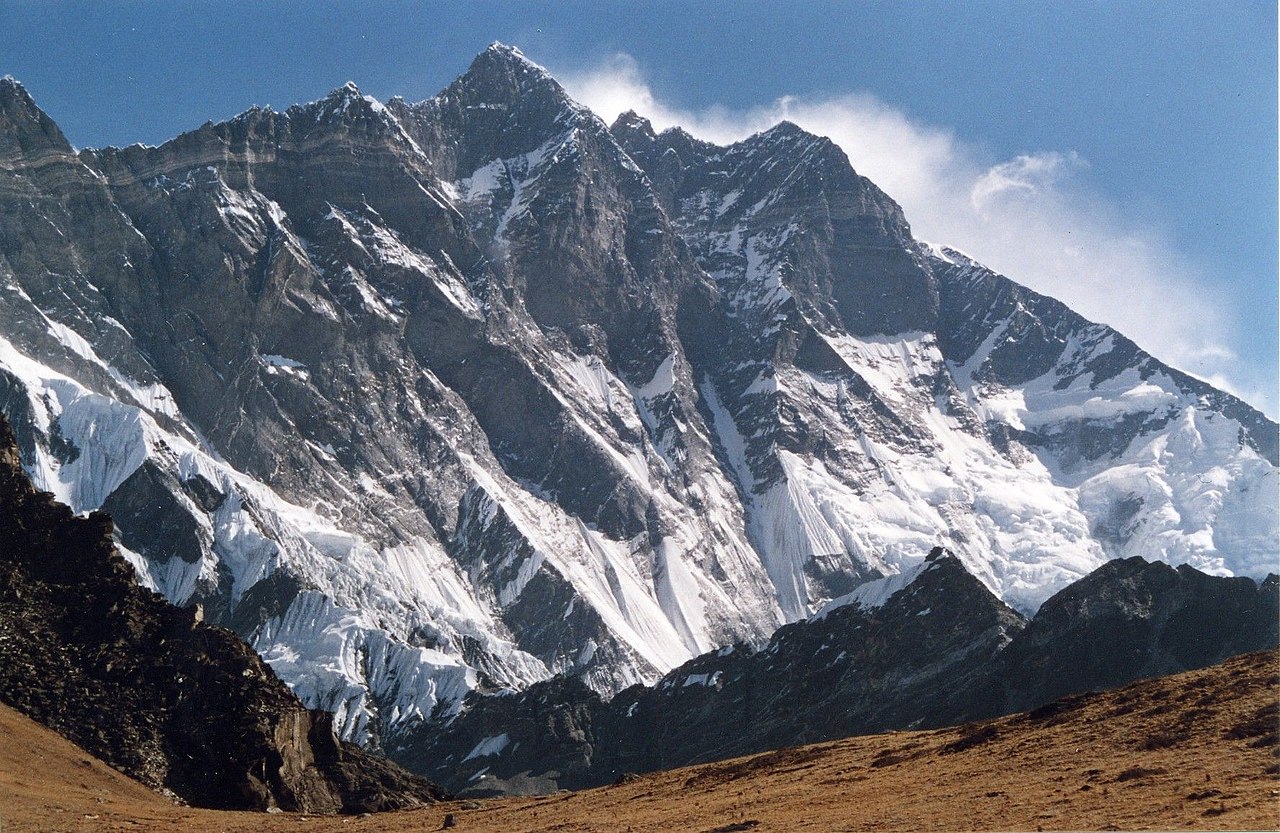
Lhotse is a prominent peak in the Himalayas, known for its challenging climbs and as a neighboring mountain to the famous Everest.
Select reading age
Lhotse Facts For Kids
Videos & Quizzesincluded
About this topic
Lhotse is the world's fourth-highest mountain, standing tall at 8,848.86 meters (29,029 feet)! 🏔️ It is part of the Himalayan mountain range, located in Nepal, near Mount Everest, which is the highest mountain. The name "Lhotse" means "South Peak" in Tibetan. Climbing Lhotse is a challenging adventure, and hundreds of climbers try to reach its summit every year. The mountain is famous for its dramatic cliffs and stunning views. 🥾Lhotse has three main summits, with the highest one being the most known.
Explore with ChatDinoKey Points
The first successful ascent of Lhotse took place on May 18, 1956!
Climbers usually take the Lhotse Face route to reach the summit.
Many brave climbers have conquered Lhotse!
Lhotse's weather can be extremely cold and unpredictable.
Lhotse isn't just a mountain; it holds great importance in Nepalese culture.
Lhotse is situated in the Khumbu region of Nepal, close to Mount Everest!
Lhotse faces environmental challenges, just like many other mountains.
Lhotse is one of the highest peaks in the world, but how does it compare with others?
Photos of Lhotse

Kangshung Face as seen from the ISS

Nuptse Ridge, Everest, Lhotse, and Lhotse Shar peaks

The Western Cwm. The Lhotse Face (centre right) is connected to Mount Everest (centre left) by the South Col (centre, lowest point on horizon).

Lhotse — photo 4

Views towards Nirekha peak and its prominent neighbors. Location of the camera on Gokyo Ri.
🎉 First Ascent
The first successful ascent of Lhotse took place on May 18, 1956! 🎉The climbers, Fritz Luchsinger and Ernst Reiss from Switzerland, made history that day. They were part of an expedition that aimed to conquer Lhotse. Their journey was tough, filled with dangers like avalanches and extreme cold. The Lhotse expedition included many brave climbers from different countries. Their achievement inspired many adventurers to take on high-altitude climbing. Today, Lhotse remains a favorite among climbers! 🏅
Go deeper🧗♂️ Climbing Routes
Climbers usually take the Lhotse Face route to reach the summit. 🧗♂️ This route is known for its steep, icy face that requires climbers to use special gear like crampons and ice axes. The climb begins from Base Camp, where climbers prepare and acclimatize. The journey from Base Camp to the summit is about 1,200 meters (3,937 feet) straight up! The Lhotse route is challenging but offers amazing views of the surrounding peaks. Less common though more difficult routes are also available, like the "Lhotse Middle," and "Lhotse Shar." Each route has different challenges to conquer! 🌄
Go deeper🏅 Notable Climbers
Many brave climbers have conquered Lhotse! 🏅One of the most famous is the renowned mountaineer Reinhold Messner, who summited without supplemental oxygen in 1981! Another notable climber is Apa Sherpa, who has reached the Lhotse summit several times. Many climbers are drawn to this impressive peak, and their stories inspire others. Several women have also climbed Lhotse, like Junko Tabei, the first woman to reach the summit of Everest and Lhotse. These adventurers demonstrate great courage in challenging conditions! 💪
Go deeper❄️ Weather And Climate
Lhotse's weather can be extremely cold and unpredictable. ❄️ In the climbing season, which is usually April to May, temperatures can be as low as -30°C (-22°F) at the summit! High winds, heavy snowfall, and sudden storms can make climbing dangerous. In winter, temperatures drop even lower, and snow can cover the mountain. 🌨️ The best time to climb is during spring when the weather is a bit more stable. Climbers need to be prepared for high-altitude conditions, making proper clothing and equipment essential! 🌬️
Go deeper🕉️ Cultural Significance
Lhotse isn't just a mountain; it holds great importance in Nepalese culture. 🕉️ Many people in the region, including Sherpas, view Lhotse as a sacred peak. The mountain is a symbol of strength and perseverance. It has been featured in many expeditions, documentaries, and books. Local communities value the mountain for its beauty and the connections it creates among climbers and nature lovers. Lhotse also attracts trekkers who want to experience the culture that surrounds it, including colorful festivals, traditional food, and beautiful monasteries. 🎊
Go deeper🏞️ Geography And Location
Lhotse is situated in the Khumbu region of Nepal, close to Mount Everest! 🏞️ It stands on the border between Nepal and the Tibet Autonomous Region of China. The mountain is part of the Himalayan range, which spans five countries: India, Nepal, Bhutan, China, and Pakistan. Lhotse's location is extraordinary, surrounded by spectacular glaciers like the Lhotse Glacier, which feeds into the Khumbu Icefall. It connects to Everest through a high, rocky pass called the Lhotse Face. The mountain is part of Sagarmatha National Park, a UNESCO World Heritage Site. 🌍
Go deeper🌍 Environmental Challenges
Lhotse faces environmental challenges, just like many other mountains. 🌍With more climbers visiting the area, waste management has become a big issue, leading to pollution. Many organizations work to clean up trash left by climbers. Global warming is also causing glaciers to melt, affecting the water sources in the region and changing the landscape rapidly. Animals and plants native to this area are also affected by climate change. It is important to protect this beautiful mountain environment for future generations to enjoy! 🐾
Go deeper🏔️ Comparison With Other Peaks
Lhotse is one of the highest peaks in the world, but how does it compare with others? 🏔️ Mount Everest, its neighbor, is the tallest mountain at 8,848.86 meters (29,029 feet). Lhotse is just a little shorter at 8,516 meters (27,940 feet) but offers equally breathtaking views. K2, located in Pakistan, is the second highest at 8,611 meters (28,251 feet). While Lhotse may be lower than Everest, it is known for its steep climbs and stunning beauty that attracts brave climbers from all over the globe! 🌏
Go deeper