Lemuriformes Facts For Kids
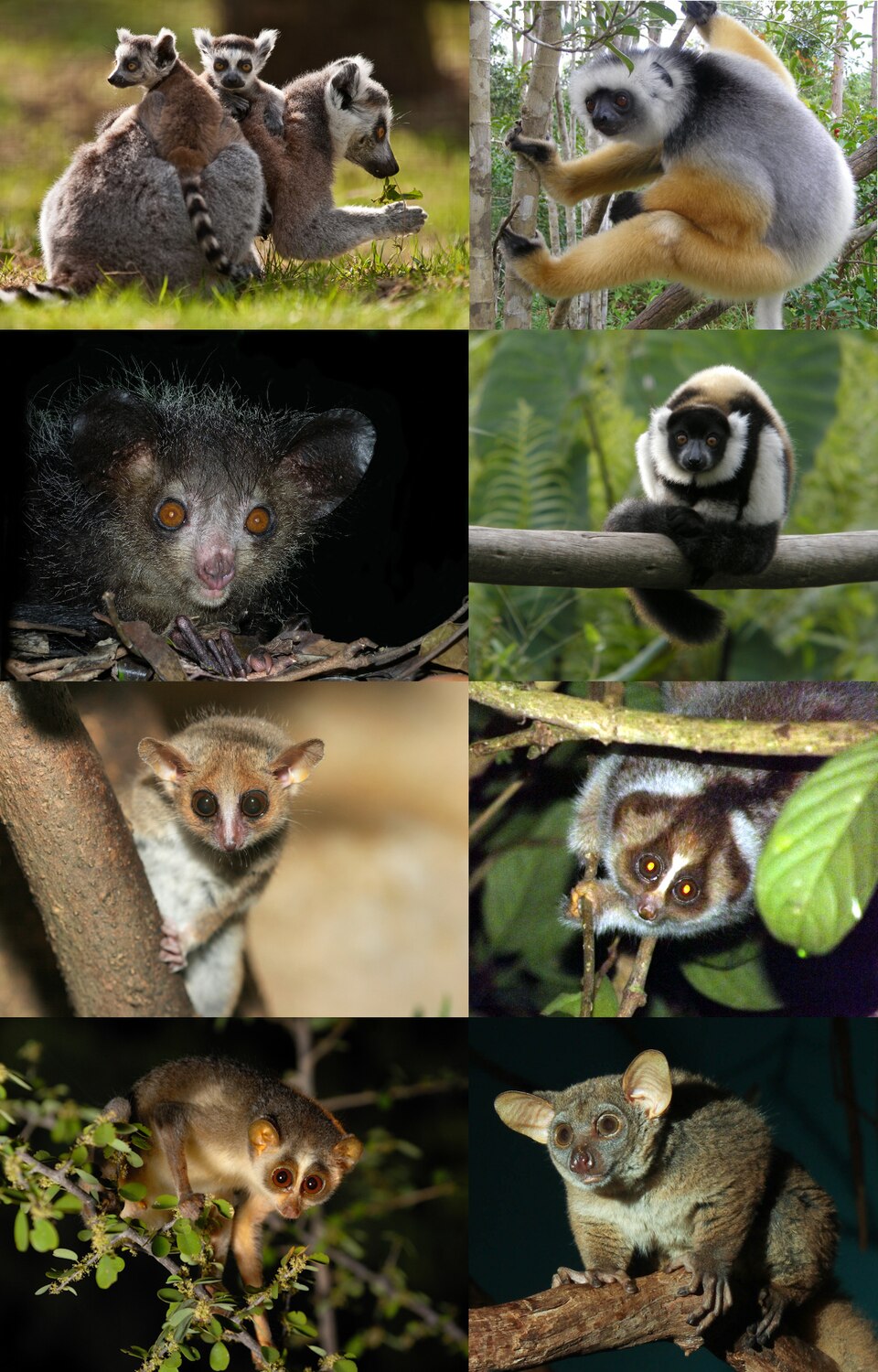
Lemuriformes is the only existing group of primates in the suborder Strepsirrhini, known for their unique smells, large eyes, and social behavior, primarily found in Madagascar.
Select reading age
Lemuriformes Facts For Kids
Videos & Quizzesincluded
About this topic
Lemuriformes is a group of cool primates that includes lemurs! 🐒They live only on the beautiful island of Madagascar, which is located off the coast of Africa. There are around 100 different types of lemurs, and they come in many sizes and colors! Some are as small as a mouse, while others can be as big as a house cat. Lemurs have special traits that help them survive in their unique forests. They are social creatures that love to play and live together in groups called troops! 🌳
Explore with ChatDinoKey Points
Lemurs have some really special adaptations!
Many lemur species are at risk of extinction.
Lemurs are very important to the culture of Madagascar.
Lemurs are primarily herbivores, which means they mostly eat plants!
Lemurs live only on Madagascar and the nearby Comoros Islands.
Lemurs are really special!
Lemuriformes belong to a larger group of animals called Strepsirrhini.
Lemur babies are called "infants," and they are super cute!
Lemurs are super social and love to hang out with their friends!
🦋 Unique Adaptations
Lemurs have some really special adaptations! 🦋For example, their large eyes are great for nighttime vision, allowing them to easily find food in dim light. They also have strong legs and feet, which help them climb trees and leap great distances, up to 10 times their body length! Some
Go deeper😢 Conservation Status
Many lemur species are at risk of extinction. 😢Habitat loss is a big problem because people are cutting down forests for farming and building. The International Union for Conservation of Nature (IUCN) has listed several lemur species as endangered or critically endangered. Conservation efforts are in place to protect their habitats, which helps keep these amazing creatures safe for future generations. 🌱Organizations are working hard to educate people about the importance of saving lemurs and their homes!
Go deeper🌺 Cultural Significance
Lemurs are very important to the culture of Madagascar. 🌺People tell stories and legends about lemurs, viewing them as symbols of their island. Lemurs also play a role in attracting tourists, which helps Madagascar’s economy. Many local communities are working to preserve the forests where lemurs live, understanding that their future is tied to the survival of these unique animals. Lemurs remind us of the beauty of nature and the importance of protecting our planet! 🌍
Go deeper🌱 Diet And Feeding Habits
Lemurs are primarily herbivores, which means they mostly eat plants! 🌱They enjoy fruits, leaves, flowers, and even gum from trees. One of their favorites is the beloved fruit known as the mango! Some lemurs, like the crowned lemur, have a special diet that includes insects too! 🐜Lemurs use their keen sense of smell to find ripe fruit and delicious food. They often eat together as a troop, which helps them discover more food and stay safe in their group!
Go deeper🌍 Habitat And Distribution
Lemurs live only on Madagascar and the nearby Comoros Islands. 🌍Madagascar is known for its unique rainforests, dry forests, and spiny forests. These different environments provide homes for various lemur species. While some lemurs prefer the lush rainforests, others enjoy dry areas with lots of sunlight. Because they are only found in Madagascar, lemurs are considered endemic, which means they are special animals that are found nowhere else in the world! 🏝️
Go deeper🦙 Physical Characteristics
Lemurs are really special! 🦙They have big, round eyes that help them see well in the dark, allowing them to be active at night. Most lemurs have soft, fluffy fur that helps them stay warm. Some lemurs, like the ring-tailed lemur, have striking black and white stripes on their tails. They also have strong back legs that allow them to jump skillfully from branch to branch. Depending on the type of lemur, their size can vary a lot, from just 10 inches to over 30 inches!
Go deeper🌿 Classification And Taxonomy
Lemuriformes belong to a larger group of animals called Strepsirrhini. 🌿This means they have wet noses, which is different from most primates! Lemuriformes are further divided into categories called families. The most famous family is the Lemuridae, which includes the ring-tailed lemur. Another family is the Indriidae, home to the largest lemur, the Indri, which can be over three feet long! These families help scientists study the unique characteristics of each lemur type.
Go deeper🍼 Reproduction And Life Cycle
Lemur babies are called "infants," and they are super cute! 🍼Female lemurs usually give birth to one baby during the rainy season, which is around October to December. The infant clings to its mother's belly for safety and food. As it grows, it will start to explore but always stays close to mom. After a few months, infants begin to eat solid food and learn how to jump around. Lemurs usually live for 15 to 20 years in the wild! 🎉
Go deeper🌈 Behavior And Social Structure
Lemurs are super social and love to hang out with their friends! 🌈They live in troops, which usually have around 10 to 20 members. These troops have a matriarch, who is the leading female. Lemurs communicate using different sounds, like loud calls or soft chirps, to talk to each other. When lemurs groom one another, it helps them bond and stay clean! They enjoy playing together and can often be seen leaping through the trees or sunbathing! 🌞
Go deeper