Laughing Gull Facts For Kids
The laughing gull is a seabird known for its distinctive calls and striking black-headed appearance during breeding season.
Select reading age

Laughing Gull Facts For Kids
Videos & Quizzesincluded
About this topic
The Laughing Gull is a fun and lively bird known for its unique call that sounds like laughter! 🎶These birds can be found mainly along the coast of North America, especially in places like the Atlantic Ocean from Maine to Florida. During winter, many Laughing Gulls travel to warmer areas in the Caribbean and Central America. They can be easily identified by their black heads, gray wings, and white bodies. Their scientific name is *Leucophaeus atricilla*. Get ready to learn more about these cheerful birds!
Explore with ChatDinoKey Points
1.
Laughing Gulls are currently classified as a species of "Least Concern" by the IUCN, which means they are not at immediate risk of extinction.
Laughing Gulls usually start to breed in the spring, around April.
In many coastal areas, Laughing Gulls are an important part of the local culture.
Laughing Gulls love to live near water!
Laughing Gulls are medium-sized birds, measuring around 14 to 15 inches (36-38 cm) in length.
Laughing Gulls are opportunistic feeders, which means they eat a variety of foods!
The Laughing Gull is famous for its loud, distinctive call that sounds like "laughter," which is how it got its name!
Photos of Laughing Gull

Laughing Gull — photo 1

Laughing Gull — photo 2
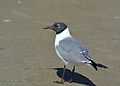
Laughing Gull — photo 3

Laughing Gull — photo 4
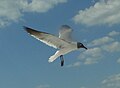
Laughing Gull — photo 5
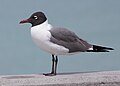
Laughing Gull Leucophaeus atricilla , breeding plumage. On a pier at Wrightsville Beach, North Carolina.

Laughing Gull — photo 7

Laughing Gull — photo 8

🛩️ Fun Facts
1. Laughing Gulls are great at flying! They can soar over long distances without flapping their wings much! 🛩️
2. They often "steal" food from each other. If one gull finds something tasty, others might try to snatch it away! 🤭
3. Young Laughing Gulls can look a bit different! They have mottled brown and white feathers before their adult plumage appears. 🌟
4. These birds are super social, often seen in large flocks at the beach, playing and squawking together! 👯♀️
5. Their laughter-like call can carry for quite a distance, adding to the joyful sounds of coastal areas! 🌊
Go deeper2. They often "steal" food from each other. If one gull finds something tasty, others might try to snatch it away! 🤭
3. Young Laughing Gulls can look a bit different! They have mottled brown and white feathers before their adult plumage appears. 🌟
4. These birds are super social, often seen in large flocks at the beach, playing and squawking together! 👯♀️
5. Their laughter-like call can carry for quite a distance, adding to the joyful sounds of coastal areas! 🌊
✅ Conservation Status
Laughing Gulls are currently classified as a species of "Least Concern" by the IUCN, which means they are not at immediate risk of extinction. ✅Their population is stable due to their adaptability and wide range across North America. However, habitat loss and pollution can threaten their breeding areas. Protecting beaches and coastal habitats is essential for keeping Laughing Gulls safe. Many environmental organizations work to educate people about protecting their habitats so that future generations can enjoy these fantastic, laughing birds! 🌍
Go deeper🏖️ Breeding And Nesting
Laughing Gulls usually start to breed in the spring, around April. They build their nests on the ground in sandy areas, often in colonies with many other gulls. 🏖️ The female lays 2 to 4 eggs, which are usually speckled to help hide them from predators. Both parents take turns sitting on the eggs for about 25 days until they hatch! After the chicks are born, they grow quickly and can often fly by 4 to 5 weeks old. Their parents look after them by bringing food until they can feed themselves! 👩👦
Go deeper🌊 Cultural Significance
In many coastal areas, Laughing Gulls are an important part of the local culture. 🌊They are often seen as symbols of summer, fun, and beach days. People enjoy watching them fly over the ocean and gather on the sand. In literature, these birds are sometimes featured, representing freedom and the seaside. Some coastal towns even host events to celebrate these joyful birds, encouraging people to appreciate the natural beauty around them. Just like their call, Laughing Gulls bring happiness to those who encounter them! 🎉
Go deeper🌊 Habitat And Distribution
Laughing Gulls love to live near water! 🌊You can find them along sandy beaches, marshes, and coastal areas. They also enjoy visiting bays, estuaries, and even garbage dumps where they can find tasty snacks. During the summer, they nest in colonies on islands or beaches along the Atlantic coast. Locations include places like the Gulf of Mexico, Florida, and the Carolinas. In winter, they migrate to warmer areas like the Bahamas and Mexico, seeking cozy spots to escape the cold! ⛱️
Go deeper🐦 Physical Characteristics
Laughing Gulls are medium-sized birds, measuring around 14 to 15 inches (36-38 cm) in length. They weigh about 12 to 15 ounces (340-425 grams) and have a wingspan of 38 to 44 inches (96-112 cm). Their most striking feature is their black head during the breeding season, which turns white in the winter! They have a sharp, slightly curved beak that helps them catch food. Their legs are long and gray, perfect for walking along the shoreline or running from waves. With their cheerful appearance, they're a delightful sight to see! 🐦
Go deeper🦐 Diet And Feeding Behavior
Laughing Gulls are opportunistic feeders, which means they eat a variety of foods! Their diet mostly consists of fish, crustaceans, and insects. 🦐They are skilled hunters and often catch small fish by diving into the water from the air. Surprisingly, they also scavenge for food! This means they're often seen stealing snacks from picnics or following fishing boats to grab leftover catches. Laughing Gulls can even be seen hunting for tiny insects on the beach, making them talented foragers in various habitats! 🍽️
Go deeper😆 Vocalizations And Communication
The Laughing Gull is famous for its loud, distinctive call that sounds like "laughter," which is how it got its name! 😆They make this sound to communicate with one another, especially during breeding season when they're trying to attract mates or warn off other birds. Besides calling, they also use body language, like wing flapping and specific movements, to show how they feel. These vocalizations and gestures help them stay connected with their flock and manage their territory. The laughter can be heard all along the beach! 🌴
Go deeper