Lamia Facts For Kids
Lamia is a tragic figure in Greek mythology, known for her beauty, the curse she suffered, and her role as a child-eating demon, representing despair and vengeance.
Select reading age
Lamia Facts For Kids
Videos & Quizzesincluded
About this topic
Lamia is a fascinating creature from Greek mythology. 🏛️ She was said to be a beautiful woman, but things changed for her when she faced a tragic fate. According to stories, Lamia was a queen of Libya who lost her children to the goddess Hera. In her grief, she transformed into a monster! 🌊Lamia would hunt children, often being depicted as half-woman, half-serpent. While she might sound scary, her story teaches lessons about loss and revenge. Greek mythology is full of incredible tales like Lamia's, which help us understand ancient beliefs and emotions. 📖✨
Explore with ChatDinoKey Points
Many authors have been inspired by Lamia throughout history.
Lamia first appeared in Greek mythology as a queen of Libya, a country in North Africa.
Lamia had a unique and unusual look!
Lamia symbolizes several important themes in her story.
Lamia shares similarities with other myths around the world.
Today, Lamia is often seen in a new light.
In ancient Greece, stories about Lamia and other creatures helped people understand their world better.
Lamia’s story has been shared in various ways throughout history.
Photos of Lamia
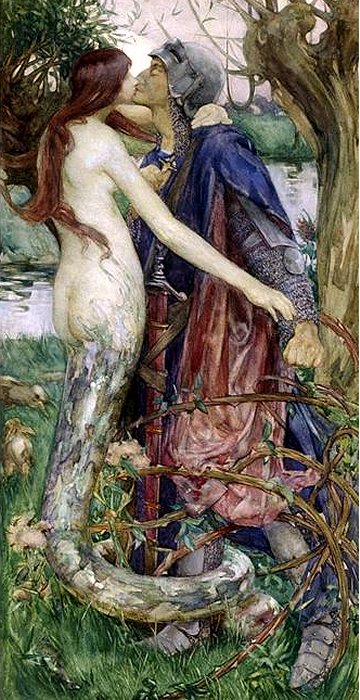
![Lamia (first version) by John William Waterhouse (1905).[q]](https://upload.wikimedia.org/wikipedia/commons/thumb/4/4e/Lamia_and_the_Soldier.jpg/960px-Lamia_and_the_Soldier.jpg)
Lamia (first version) by John William Waterhouse (1905).[q]

Lamia (second version), with snakeskin on her lap, John William Waterhouse (1909)

A lamia-like creature on the cover of Other Worlds, November 1949.

A 17th-century depiction of Lamia from Edward Topsell's The History of Four-Footed Beasts
![The Lamia (1909),[r] a painting by Herbert James Draper](https://upload.wikimedia.org/wikipedia/commons/thumb/0/00/Draper-Lamia.jpg/960px-Draper-Lamia.jpg)
The Lamia (1909),[r] a painting by Herbert James Draper
🖋️ Lamia In Literature
Many authors have been inspired by Lamia throughout history. 🖋️ One interesting retelling is Shelley's poem, where Lamia tries to find love after her transformation. It shows her struggle and desire for happiness. 📖Other stories also explore her as a misunderstood character rather than a monster. Some books make her a hero instead! 🤩By looking at different versions of her tale, we learn that stories can change depending on who tells them. Lamia has been part of many stories that teach lessons about love, loss, and being true to oneself. 🌈
Go deeper🌍 Mythological Origins
Lamia first appeared in Greek mythology as a queen of Libya, a country in North Africa. 🌍She caught the eye of Zeus, the king of the gods. However, when Zeus's wife, Hera, found out, she became very jealous. To punish Lamia, Hera took her children away. 😢In her sorrow, Lamia transformed into a monster that roamed the earth. Some stories say she could even take out her eyes and place them in a jar, so she wouldn’t feel sad when she wasn’t hunting! Her tale shows how jealousy and grief can change someone forever. 💔
Go deeper🐍 Physical Description
Lamia had a unique and unusual look! She was described as having the head and upper body of a woman, while her lower half was like a serpent or dragon. 🐍This combination made her both beautiful and frightening. Many artists depicted her with long flowing hair and very sharp fangs. 💀Sometimes, she was shown holding her lost children or hiding in dark caves. Her eyes were said to glow brightly at night, making her even more mysterious. 🌙Lamia is a perfect example of how myths blend human qualities with the magical and the monstrous.
Go deeper💔 Symbolism And Themes
Lamia symbolizes several important themes in her story. The most powerful themes are loss, love, and jealousy. 💔Her transformation from a queen to a monster represents how pain can change a person. 🐉Lamia's tale also teaches about the consequences of jealousy, like Hera's actions which led to Lamia's curse. This can remind us of the importance of compassion and understanding. 🌈Many stories use Lamia to discuss how we cope with grief and pain, showing that even monsters can be the result of deep sorrow. Let's learn from her story and spread kindness! 🌞
Go deeper🌎 Comparative Mythology
Lamia shares similarities with other myths around the world. 🌎For example, many cultures have tales of beautiful women who become monsters, like the European "Vampires" or "Banshees." 🧛♀️ These figures often have tragic backstories and represent deep emotions like sadness or vengeance. In Japanese culture, there’s a creature called "Yuki-onna," a snow woman who appears beautiful but can be dangerous. ❄️ By comparing these stories, we can better understand how different cultures express similar feelings and experiences, showing how connected we all are in our storytelling! 🤝
Go deeper🌟 Modern Interpretations
Today, Lamia is often seen in a new light. 🌟Modern tales portray her as a misunderstood figure rather than just a villain. Movies and shows often give her a backstory that emphasizes her sadness and longing for companionship. 💘In some stories, she seeks redemption or even becomes friends with humans. This transformation reflects how people want to understand why someone turns dark or monstrous. Lamia's character is evolving, showing that even scary figures can have a story worth telling! 🎬
Go deeper🌿 Historical Significance
In ancient Greece, stories about Lamia and other creatures helped people understand their world better. 🌿They believed that these myths explained natural events, like storms or diseases. Lamia's story was often a cautionary tale, warning children to be careful of strange happenings or people. It highlighted important human emotions like loss and jealousy, which everyone can feel. 📚As Greece moved into the time of philosophers, Lamia became a symbol of deeper meaning, evoking discussions about fate and morality. Overall, her tale is an essential part of Greek mythology's rich history! ⏳
Go deeper🎭 Cultural Representations
Lamia’s story has been shared in various ways throughout history. She can be found in poems, paintings, and even plays! 🎭One famous poet, Percy Bysshe Shelley, wrote a poem called "Lamia" which explores her tragic story. 🎶In modern times, Lamia appears in movies and video games, showing how tales from ancient Greece still inspire people today. 🌌Many authors use her character to speak about themes like sadness, love, and the consequences of jealousy. Lamia reminds us how stories evolve over time, but the emotions behind them often stay the same. ❤️
Go deeper