All Articles

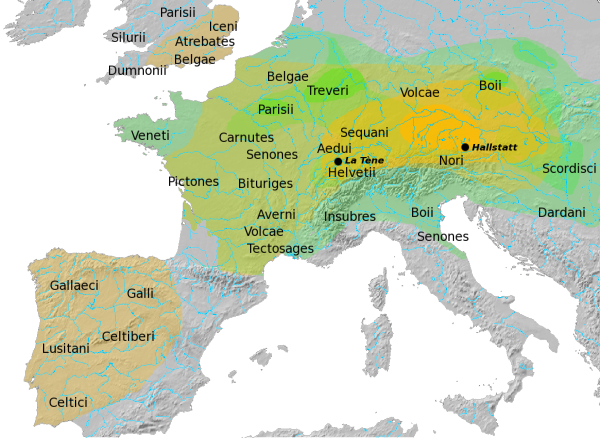
La Tène Culture

La Tène Culture Facts For Kids

La Tène culture was a vibrant Iron Age civilization in Europe known for its art, craftsmanship, social organization, and trade, particularly associated with Celtic tribes.
🎨 Reading age for 6-8
Background blob
La Tène Culture
Facts for Kids!
Image by Dbachmann, licensed under Creative Commons Attribution-Share Alike 3.0

Do more with AI

Introduction

The La Tène culture was a group of people who lived in Europe during the Iron Age, roughly from 450 BCE to the Roman conquest. 🌍They were known for their amazing metalwork, art, and unique farming practices. The name "La Tène" comes from a place in Switzerland called Lake Neuchâtel, where archaeologists found many cool artifacts! 🏺The La Tène people spoke Celtic languages and are part of the larger group known as Celts. They lived in what is today France, Switzerland, Austria, and parts of Germany, making them important in Europe’s ancient history! 📜

Images of La Tène Culture

Celtic expansion in Europe and Anatolia: .mw-parser-output .legend{page-break-inside:avoid;break-inside:avoid-column}.mw-parser-output .legend-color{display:inline-block;min-width:1.25em;height:1.25em;line-height:1.25;margin:1px 0;text-align:center;border:1px solid black;background-color:transparent;color:black}.mw-parser-output .legend-text{} Core Hallstatt territory, 8th–6th century BC Maximal Celtic expansion by 275 BC Uncertain or disputed Celtic presence in Iberia (Lusitanians and Vettones) Celtic nations with significant numbers of Celtic speakers in the Early Modern period Areas where Celtic languages remain widely spoken todayImage by QuartierLatin1968,The Ogre,Dbachmann, licensed under Creative Commons Attribution-Share Alike 3.0

Celtic expansion in Europe and Anatolia: .mw-parser-output .legend{page-break-inside:avoid;break-inside:avoid-column}.mw-parser-output .legend-color{display:inline-block;min-width:1.25em;height:1.25em;line-height:1.25;margin:1px 0;text-align:center;border:1px solid black;background-color:transparent;color:black}.mw-parser-output .legend-text{} Core Hallstatt territory, 8th–6th century BC Maximal Celtic expansion by 275 BC Uncertain or disputed Celtic presence in Iberia (Lusitanians and Vettones) Celtic nations with significant numbers of Celtic speakers in the Early Modern period Areas where Celtic languages remain widely spoken today

Agris Helmet, France, c. 350 BCImage by Rosemania, licensed under Creative Commons Attribution 2.0

Agris Helmet, France, c. 350 BC

Swords and helmets from Hallein, Austria, 4th century BCImage by Tyssil, licensed under Creative Commons Attribution-Share Alike 3.0

Swords and helmets from Hallein, Austria, 4th century BC

Bronze chariot fitting from Roissy, France, 3rd century BCImage by BastienM, licensed under Creative Commons Attribution-Share Alike 3.0

Bronze chariot fitting from Roissy, France, 3rd century BC

Model of the main gate at the Manching oppidum, Germany, 3rd century BC[26]Image by Heinrich Stürzl, licensed under Creative Commons Attribution-Share Alike 4.0

Model of the main gate at the Manching oppidum, Germany, 3rd century BC[26]

Distribution of fortified oppida, 2nd-1st century BCImage by Fernández-Götz, M. (2018), licensed under Creative Commons Attribution-Share Alike 4.0

Distribution of fortified oppida, 2nd-1st century BC

Partly reconstructed fortification walls at the oppidum of Bibracte, central FranceImage by Bibracte_EPCC, licensed under Creative Commons Attribution-Share Alike 4.0

Partly reconstructed fortification walls at the oppidum of Bibracte, central France

Grave with trade goods from the Titelberg oppidum, Luxembourg, 1st century BCImage by TimeTravelRome, licensed under Creative Commons Attribution 2.0

Grave with trade goods from the Titelberg oppidum, Luxembourg, 1st century BC

Gold coin of the Parisii, France, with a stylised depiction of a horse on the reverse side (right)Image by No machine-readable author provided. World Imaging assumed (based on copyright claims)., licensed under Creative Commons Attribution-Share Alike 3.0

Gold coin of the Parisii, France, with a stylised depiction of a horse on the reverse side (right)

Burial Customs

When someone in the La Tène culture passed away, their burial was a special event. ⚰️ They believed in honoring the dead with elaborate rituals. Families often buried their loved ones in graves along with everyday items, like tools and jewelry, which could help them in the afterlife. These burial goods showed how much they cared for the deceased! ⚱️ Some graves were even lined with stones or made into mounds. Archaeologists have discovered many impressive burial sites, revealing the La Tène people's beliefs and customs. Each grave tells a story about the lives of people long ago! 🌟

Trade And Economy

The La Tène economy was based on agriculture, but trade was super important too! 🌾People traded goods like metalwork, pottery, and even food with nearby cultures. 📦They used rivers as highways to transport products over long distances. La Tène artisans created special items that were highly valued, like tools, jewelry, and weapons, which they exchanged for things they didn’t have, like salt and spices. Salt was very precious because it helped preserve food! 💰As they traded, they also shared ideas and cultures, helping the La Tène people connect with others in Europe. Trade helped them thrive! 🌍

Religious Practices

The La Tène culture had fascinating religious beliefs! 🌌They practiced polytheism, meaning they believed in many gods. They worshiped deities connected to nature, like the sky, rivers, and forests. 🌲Sacred places, like groves and springs, were important for their rituals. They also built small temples to honor their gods. Offerings, such as food or objects, were made to please the gods and seek blessings. The La Tène people believed in an afterlife, and some rituals involved sacrifices to ensure the well-being of their loved ones. This deep connection to spirituality shaped their community and culture! ✨

Military And Warfare

The La Tène culture was known for being brave warriors! ⚔️ They fought to protect their homes and territories from invaders. They used iron weapons like swords, spears, and shields, which made them strong in battle. 🛡️ Their warriors trained hard and would often go into battle in groups, defending their clans. They also utilized chariots, which were like fancy carts pulled by horses, to move quickly during warfare. The La Tène people respected their warriors, and they often shared stories about their battles and victories. ⚔️ The military strategies they used influenced later cultures in Europe, including the Romans! 💪

Art And Craftsmanship

La Tène art is known for its intricate designs and impressive craftsmanship! 🎨They created beautiful metalwork, including gold and bronze jewelry, weapons, and decorative items. The designs often included swirling patterns, animals, and nature. ⚡Remarkable pieces, like the famous silver 'Celtic Torc' necklace, showed their artistic brilliance. The La Tène people also enjoyed pottery and textiles, weaving colorful cloth for clothing. Their artwork is not only pretty but also tells us about their lives, beliefs, and skills. Each artifact has a story to share about the creativity and imagination of the La Tène culture! 🌟

Origins And Development

The La Tène culture began after the Hallstatt culture, which existed before it. 👣Historians believe that the La Tène people evolved from the Hallstatt communities around 450 BCE. They spread across Europe and became very skilled metalworkers. They made items like swords, jewelry, and tools from iron and bronze. ⚔️ The La Tène culture was also influenced by their neighbors, such as the Mediterranean civilizations. Trade helped them improve their crafts! By 300-100 BCE, their influence grew strong, and they lived in large settlements or villages, showing how advanced they had become. 🌱

Geographical Distribution

The La Tène culture spread across many countries in Europe, including France, Switzerland, Germany, and Austria. 🗺️ Their people lived near rivers and lakes, which helped them with farming and trading. Important rivers like the Seine, Rhine, and Danube provided transportation and fertile land. 🌊The culture was most influential in France, particularly in the regions of Burgundy and Champagne. In Switzerland, places like Lake Neuchâtel are vital for understanding La Tène artifacts. The La Tène culture eventually reached places as far as England and Ireland, showing how widespread their influence was! 🇪🇺

Influence On Celtic Identity

The La Tène culture played a big part in shaping Celtic identity! 🌟As the Celts spread across Europe, their traditions, art, and language helped create a unique cultural heritage. The La Tène style of art can be seen in Celtic designs even today. Their lifestyle didn't just focus on survival; it also celebrated creativity and community. As the Romans began to invade, the La Tène culture blended with other cultures, spreading Celtic influence far and wide. 🎉This legacy remains in today’s art, festivals, and even languages in places like Ireland and Wales! The La Tène people are still remembered fondly! ☘️

Social Structure And Lifestyle

The La Tène people had a structured society with different roles! 👨‍🌾 They were mainly farmers, growing crops like wheat, barley, and oats. Some were skilled artisans who made tools and beautiful items. Others were warriors who protected their communities! 🛡️ The leader of a village was usually a chieftain, and communities worked together to defend against invaders. Families lived in round or rectangular houses made of wood and thatched roofs. They enjoyed storytelling, music, and festivals! 🎶Their lifestyle was connected to nature, and they respected their surroundings, hunting animals and growing food to survive. 🦊

La Tène Culture Quiz

Q1
Question 1 of 10

Learn more about La Tène Culture

Ready to create?

Drop Files here
Make

To create a safe space for kid creators worldwide!

Create

Vibe Coding

ChatDino

All Tools

Kibu

Resources

Worksheets

SafeTube

Blog

FAQ

Account

Pricing

Log-in

Sign-up

Data Deletion

Company

About

Community Guidelines

Privacy Policy

Terms of Service

2025, URSOR LIMITED. All rights reserved. DIY is in no way affiliated with Minecraft™, Mojang, Microsoft, Roblox™ or YouTube. LEGO® is a trademark of the LEGO® Group which does not sponsor, endorse or authorize this website or event. Made with love in San Francisco.