Kepler-22b Facts For Kids
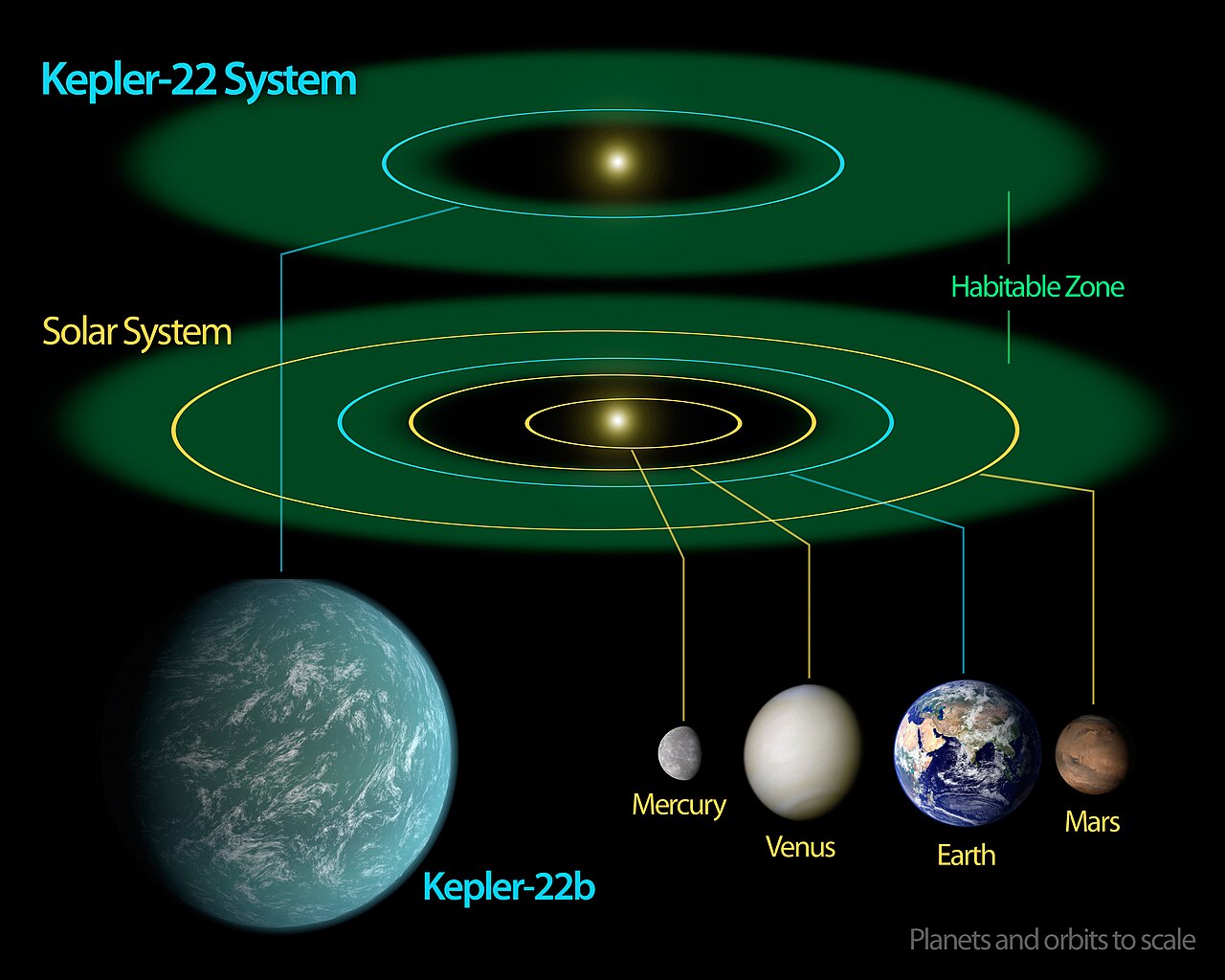
Kepler-22b is an exoplanet located in the habitable zone of the star Kepler-22, making it a subject of interest for potential habitability and life beyond Earth.
Select reading age
Kepler-22b Facts For Kids
Videos & Quizzesincluded
About this topic
Kepler-22b is a special planet that scientists discovered in 2011! 🎉It is located about 620 light-years away in the constellation Cygnus, which is named after a swan. The planet is part of a star system that also includes Kepler-22, a star similar to our Sun. Kepler-22b is one of the first planets found in the "habitable zone," where conditions might be right for life. This exciting discovery helps us learn more about the universe! 🌌✨
Explore with ChatDinoKey Points
Kepler-22b orbits its star, Kepler-22, at a distance similar to Earth's distance from the Sun!
Scientists are intrigued by Kepler-22b because it’s in the “habitable zone”!
While Kepler-22b is much bigger than Earth, scientists compare the two to learn more about this distant planet.
Kepler-22b has an atmosphere, which is the layer of gases surrounding the planet.
The discovery of Kepler-22b was made using the Kepler Space Telescope, which was launched by NASA in 2009.
Kepler-22b is about 2.4 times the size of Earth!
Scientists are excited about the possibilities of exploring Kepler-22b in the future.
Kepler-22b is important because it was one of the first planets found in the habitable zone, sparking the interest of scientists everywhere!
Photos of Kepler-22b

Size comparison of Kepler-22b (artistic simulation) with Earth, rendered in Celestia

Artist's concept of an oceanic exoplanet in the habitable zone of its host star, possibly compatible with Kepler-22b's known data.
☀️ Orbital Parameters
Kepler-22b orbits its star, Kepler-22, at a distance similar to Earth's distance from the Sun! ☀️ It takes about 290 days for Kepler-22b to complete one full orbit. This means a year on Kepler-22b is almost like our own year! 📅The star it orbits is slightly cooler than our Sun, which could allow for a different kind of climate. Understanding these orbital patterns can teach us how other planets develop and survive within their star systems! 🌌🚀
Go deeper🌱 Potential For Life
Scientists are intrigued by Kepler-22b because it’s in the “habitable zone”! 🌱💧 The habitable zone is the area around a star where liquid water could exist, which is important for life as we know it. Researchers think if there are oceans on Kepler-22b, they could consist of water, making the possibility for living things like plants and animals possible. 🌊🐠 But right now, we haven’t found any concrete evidence of life there. Searching for life beyond Earth is one of the exciting challenges for future scientists! 🔭✨
Go deeper🌍 Comparison With Earth
While Kepler-22b is much bigger than Earth, scientists compare the two to learn more about this distant planet. 🌍🤔 Earth is about 12,742 km in diameter, while Kepler-22b is about 30,000 km! This size can mean different conditions on the planet, like how gravity feels different. If Kepler-22b has water, it could have a similar ecosystem to Earth, but we need to keep exploring to find out more! Understanding these differences helps us realize how unique our own planet is! 🌏💖
Go deeper🌫️ Atmospheric Conditions
Kepler-22b has an atmosphere, which is the layer of gases surrounding the planet. 🌫️ Scientists think that this atmosphere might be thick enough to keep it warm, making it an interesting place for life! Some theories suggest that it could be made of nitrogen and carbon dioxide, like Earth. 🌬️☁️ However, without actual photos or samples from the planet, we still have many questions. Atmospheres can help protect planets from harmful radiation from space, just like the Earth's atmosphere does for us! 🌏🔒
Go deeper📡 Discovery Of Kepler-22b
The discovery of Kepler-22b was made using the Kepler Space Telescope, which was launched by NASA in 2009. 📡The telescope looked for planets by noticing if a star's light dimmed when a planet passed in front of it. Scientists noticed this dimming around Kepler-22, leading them to think there might be planets nearby. After studying the data, they found Kepler-22b! This amazing planet set off a wave of curiosity about finding other worlds like Earth. 🌍🔭
Go deeper🌍 Physical Characteristics
Kepler-22b is about 2.4 times the size of Earth! 🌍✌️ This larger size suggests it might be a “super-Earth.” It’s likely that the surface is rocky and may have liquid water. Scientists believe the planet has mountains, oceans, and possibly even gentle land! 🌊🗻 However, we don't know exactly what it looks like since we can't directly see it. The planet orbits its star once every 290 days, similar to our own year. 📅✨
Go deeper🚀 Future Exploration Opportunities
Scientists are excited about the possibilities of exploring Kepler-22b in the future. 🚀✨ New technology and telescopes might allow researchers to learn more about this mysterious planet! Future missions may involve sending space probes or using advanced space telescopes to gather more data. 🌌These explorations could help us discover its surface, atmosphere, and even if there is life! Every new mission brings us closer to understanding our universe. What secrets do you think Kepler-22b might hold? 🤔🔍
Go deeper🎇 Significance In Exoplanet Studies
Kepler-22b is important because it was one of the first planets found in the habitable zone, sparking the interest of scientists everywhere! 🎇Using this discovery, researchers can focus on finding more planets that could support life. The study of exoplanets—which are planets outside our solar system—helps us figure out how many planets in the universe might be like Earth. This can make us think about our own planet and the importance of protecting it! 🌍🌟
Go deeper