Karl Marx was a German thinker who developed the theories of communism and socialism, influencing political, economic, and social thought even today.

Set reading age
View for Kids
Easy to read and understand
View for Students
Clear, detailed explanations
View for Scholars
Deep dives and big ideas
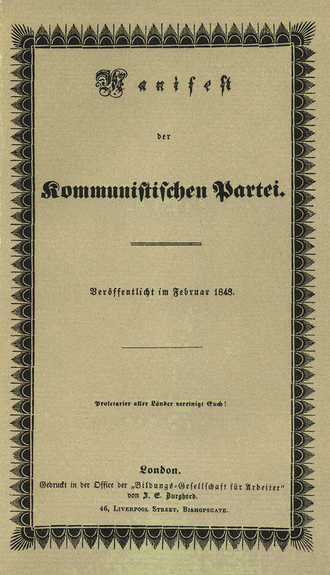
Karl Marx was born on May 5, 1818, in Germany 🇩🇪. He is best known for his ideas about economics, politics, and society. Marx believed that everyone should share what they have equally. He thought that the rich and poor should be treated fairly. Marx's ideas inspired many movements around the world 🌍. His famous book, "The Communist Manifesto," was written in 1848. This book explained his thoughts about capitalism and how society can change! Karl Marx's ideas are still discussed today, making him one of the most important thinkers in history! 📚
Karl Marx wrote many important books and articles! His most famous works include "The Communist Manifesto" (1848) and "Das Kapital" (1867). In "The Communist Manifesto," he explained that history is about struggles between classes, like the workers and the factory owners ⚙️. In "Das Kapital," he discussed how money and goods are made and traded in society. He wanted to show how some people suffer under capitalism. His works were challenging but encouraged others to think about unfairness in the world. Many people read them to learn about economics and society! 📖
Marx introduced some important ideas called key concepts! One is "class struggle," which means that different social classes (like workers and owners) have conflicts because of their interests 🌐. Another concept is "historical materialism," which says that society changes based on how we produce things, like food or technology 🏭. Lastly, there's "alienation," meaning that workers feel separated from the products they create because they don't own them. These concepts help us understand how society works and highlight problems in our systems. Marx's ideas encourage us to think about equality! ✊
Karl Marx's economic theories challenge how people see money and goods! He believed in something called "capitalism," which means people own businesses to make profits. However, Marx thought this system was unfair because it often made the rich richer and the poor poorer 🤑. He argued for a different system called "communism." In a communist society, everyone shares resources equally, and there are no rich or poor. These ideas sparked debates around how economies should work, and many still discuss Marx's theories when thinking about modern economics and creating fairer systems! 💵
Karl Marx's legacy is significant; his ideas have changed the world! Many countries adopted Marxist principles, such as the Soviet Union in the 20th century. His work inspired many workers to fight for better wages and conditions. Marxism still influences political movements and discussions on social justice today ⚖️. Schools and universities often teach his theories, encouraging students to think critically about equality and fairness. Marx's writings continue to be read and debated, showcasing how one person's thoughts can shape ideas for generations to come! 🌟
Karl Marx's ideas have influenced art, literature, and pop culture! Many authors and filmmakers have used his concepts to create stories about social justice and class struggle 🎭. For example, the famous novel "Les Misérables" by Victor Hugo explores themes similar to Marx's ideas. Artists often express their views on inequality and capitalism in their works, inspired by Marx's beliefs. Even music, like protest songs, can echo his thoughts! His impact on culture encourages discussions about fairness and inspires people to work for a better society today 🎶.
Marx's political ideas focused on equality and fairness! He believed in fighting for the workers' rights and overthrowing the ruling class. This led to the creation of various political movements and ideologies that aimed to create a more equal society 🌍. One of those movements is called "Marxism," which focuses on class struggle and the fight against capitalism. People around the world have used Marx's ideas to inspire political parties and revolutions. Although some of his ideas have changed over time, the emphasis on workers' rights remains vital in many societies today! ✊
Karl Marx greatly influenced sociology, a study of how people interact in groups. Sociologists look at people's relationships in society 🤝. Marx's ideas about class, power, and inequality helped shape this field. His belief that society's structure is based on the economy and class conflict encourages sociologists to explore why some communities thrive while others struggle. Marx's perspective guides researchers to ask important questions about fairness and justice in our society. Many contemporary sociologists build on his ideas to understand issues like poverty and discrimination ⚖️, continuing his legacy in the modern world!
Karl Marx's family was Jewish but converted to Christianity when he was a child. He studied at the University of Bonn and later at the University of Berlin 🎓. He loved to read about philosophy, history, and economics. Marx married Jenny von Westphalen in 1843, and they had seven children, but sadly, some of them did not survive. They lived in different countries, including Germany, France, and England 🏴☠️. Marx faced many challenges, including poverty and disagreements with other people. Even so, he never stopped sharing his ideas! His passion for social justice remains significant today. ❤️
Today, some people still embrace Marxism and its ideas! Activists and groups advocate for workers' rights and social fairness. They promote ideas like universal healthcare, living wages, and environmental protections based on Marx's principles 🌱. Various social movements, such as labor unions, fight for equal opportunities and wages for all. Although many societies have different political systems now, Marx's ideas provide a foundation for ongoing debates about how to create a better, fairer world. People continue to discuss how his thoughts apply to our modern economy and social challenges! ✊
Not everyone agrees with Karl Marx's ideas! Some critics argue that his theories may lead to authoritarian governments, which means one person or group has too much power ⚔️. They believe that Marx's ideas about communism can sometimes result in failure and hardship. Additionally, some people think his economic theories oversimplify complex issues. These criticisms have led to debates among scholars, politicians, and everyday people. It’s important to discuss both sides of the argument to understand why some like Marx's ideas while others do not. 🧐


DIY is a creative community where kids draw, build, explore ideas, and share.
No credit card required