Kara Sea Facts For Kids
The Kara Sea is a cold, Arctic marginal sea located off the northern coast of Russia, bordered by islands and known for its unique ecosystems and rich natural resources.
Select reading age
Kara Sea Facts For Kids
Videos & Quizzesincluded
About this topic
The Kara Sea is a special part of the Arctic Ocean located in northern Russia! 🧊It measures about 1.4 million square kilometers (540,000 square miles) and is surrounded by land on three sides. This sea is important for shipping and is home to many cool animals. The Kara Sea is named after the Kara River, which flows into it. People also enjoy studying the sea because of its unique environment. Many scientists explore it to learn about climate change, wildlife, and ocean currents. So, the Kara Sea is not just a big body of water; it’s full of adventures! 🚤
Explore with ChatDinoKey Points
The Kara Sea has important economic activities!
The Kara Sea faces some environmental challenges!
The Kara Sea is found between some fascinating landforms!
The Kara Sea is steeped in history!
The Kara Sea has unique physical features!
The Kara Sea is home to many amazing plants and animals!
The Kara Sea has a chilly Arctic climate!
The Kara Sea is an important area for navigation!
Marine research in the Kara Sea is exciting!
The Kara Sea is important to the indigenous peoples of northern Russia!
Photos of Kara Sea

Main islands and island groups in the central and eastern regions of the Kara Sea.

Kara Sea structural map

Hovercraft on Kara Sea shore
🚢 Economic Activities
The Kara Sea has important economic activities! 🚢Fishing is a major industry in the area, providing jobs and food for many people. Fish like cod, haddock, and various types of crustaceans are caught here. The sea is also valuable for shipping routes because it connects different parts of the Arctic and can help transport goods. Additionally, the region has potential resources like oil and gas, which many companies are exploring. This sea plays a big role in supporting the local economy of northern Russia! 💰
Go deeper🌏 Environmental Concerns
The Kara Sea faces some environmental challenges! 🌏Climate change is causing ice to melt faster, which can affect sea life and habitats. The warmer waters also lead to changes in fish populations, which can impact fishermen. Pollution from ships and oil drilling can further harm the delicate ecosystems in the sea. 🛢️ Marine scientists are concerned about plastic waste and oil spills, which can threaten wildlife like seals and polar bears. To protect the Kara Sea, it is crucial to take action to preserve its unique environment! ♻️
Go deeper🌍 Geography And Location
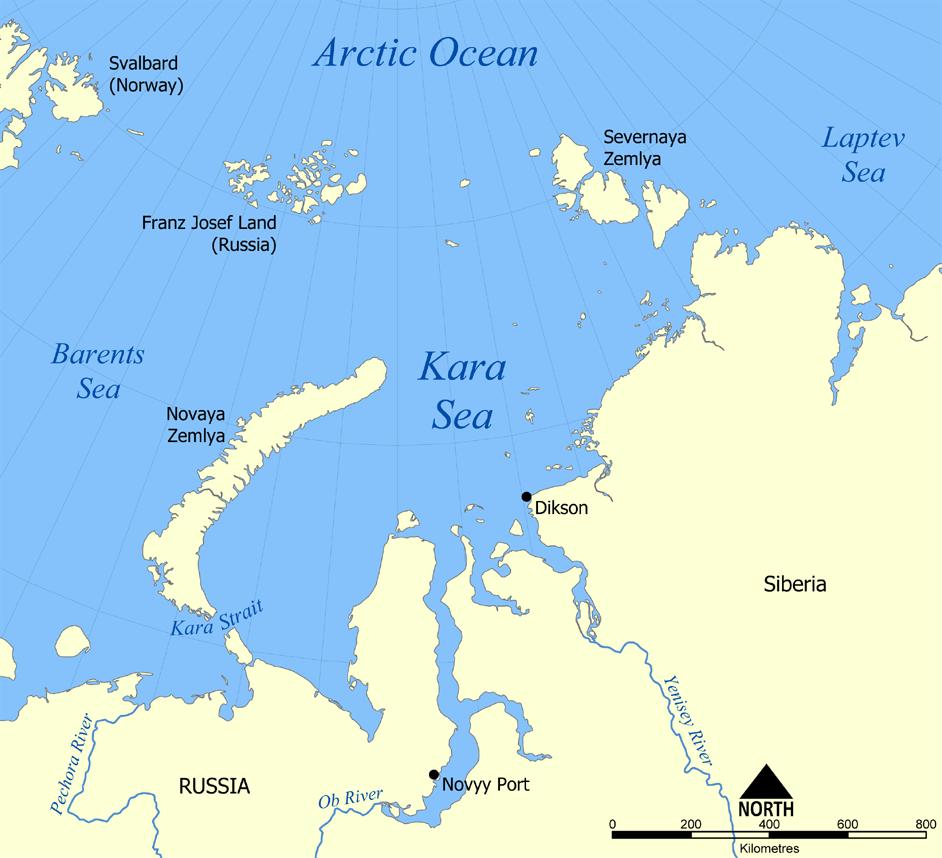
The Kara Sea is found between some fascinating landforms! 🌍To the west, it's separated from the Barents Sea by the Kara Strait and Novaya Zemlya, an archipelago made of two big islands. To the east, Severnaya Zemlya, another set of islands, helps separate it from the Laptev Sea. This sea lies above the Arctic Circle, so it's very cold! The coordinates of Kara Sea are approximately 75°N to 80°N latitude and 80°E to 95°E longitude. It's surrounded by Russia, which makes it a key area for shipping and fishing! 🐟
Go deeper🌊 Historical Significance
The Kara Sea is steeped in history! 🌊It has been a vital area for explorers and scientists for centuries. Norwegian explorer Fridtjof Nansen was one of the first to sail through the Kara Sea in the 1890s while researching ocean currents. The area has also been used for trading routes, especially through the Arctic. 😮It played a role in World War II, where naval battles and strategic operations took place. Today, the Kara Sea still attracts researchers, interested in the past and changes happening due to climate change! 📚
Go deeper🌊 Physical Characteristics
The Kara Sea has unique physical features! 🌊It is quite shallow compared to other seas, with an average depth of just about 110 meters (360 feet). During winter, its surface can freeze, creating a thick layer of ice that can last until summer! ❄️ The sea is also home to many underwater shelves, which are shallow areas where sea creatures live. The sea's bottom is made of sand, mud, and rocky formations. All these features make it perfect for marine life to thrive and for scientists to study! 🦈
Go deeper🐋 Biodiversity And Ecosystems
The Kara Sea is home to many amazing plants and animals! 🐋Tiny creatures called plankton live in the water, and they are the base of the food chain. Fish like cod and herring thrive here. ✨You can also find seals, walruses, and even polar bears on its shores! 🦭The cold waters provide essential habitats for many birds that migrate through the area, including sea gulls and puffins. The underwater ecosystem has coral reefs, which are homes to a variety of fishes. Overall, the Kara Sea supports a diverse range of life! 🌈
Go deeper🥶 Climate And Weather Patterns
The Kara Sea has a chilly Arctic climate! 🥶Winters can be extremely cold, with temperatures sometimes dropping below -30°C (-22°F). Summer is short, lasting only a few months, where temperatures can reach a mild 10°C (50°F)! The sea experiences long periods of darkness in winter and endless sunlight in summer, known as polar night and midnight sun! ☀️ Winds are common, creating rough seas. Additionally, the sea can experience fog and storms due to the temperature differences between the water and the air. Weather in the Kara Sea is definitely unique! 🌨️
Go deeper🚢 Navigation And Shipping Routes
The Kara Sea is an important area for navigation! 🚢During the summer, when ice melts, it becomes more accessible for ships. The Northeast Passage is a sailing route that connects Europe to Asia and passes through the Kara Sea. This shortcut saves time and fuel compared to traditional routes. However, navigating in this area can be tricky due to changing weather conditions and icebergs! 🥶Many countries are now interested in shipping through the Kara Sea, leading to increased travel and trade in the Arctic region. Navigation is essential for the economies near this beautiful sea! ☀️
Go deeper🧪 Marine Research And Exploration
Marine research in the Kara Sea is exciting! 🧪Scientists from around the world come here to learn more about the ecosystem and how it’s changing. They study the ice coverage, water temperature, and pollution levels. Some researchers even explore the ocean floor using submarines! 🧜♂️ In recent years, many studies have focused on the impacts of climate change, as the melting ice reveals new habitats and increases shipping traffic. These discoveries help us understand how to protect the marine environment and support healthy ecosystems for future generations! 🌍
Go deeper🧑🤝🧑 Cultural Impact On Indigenous Peoples
The Kara Sea is important to the indigenous peoples of northern Russia! 🧑🤝🧑 The Sámi and Nenets tribes have lived along its shores for thousands of years. They depend on the sea for food, using traditional fishing techniques passed down through generations. 🐟The land and sea provide materials for clothes, shelter, and tools. Cultural traditions, songs, and stories often reflect their experiences and connections to nature. As climate change affects their environment, these communities are working hard to preserve their cultures while adapting to the changes happening around them! 🎶
Go deeper