Joseph Erlanger Facts For Kids
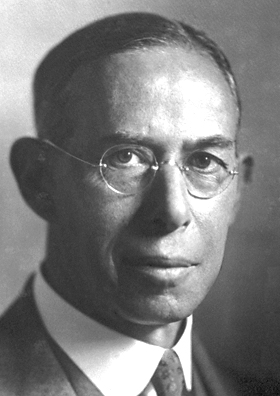
Joseph Erlanger was an American physiologist known for his key contributions to neuroscience, particularly in understanding how nerves work.
Select reading age
Joseph Erlanger Facts For Kids
Videos & Quizzesincluded
About this topic
Joseph Erlanger was a brilliant American physiologist born on February 5, 1874, in San Francisco, California. 🏙️ He is known for studying how nerves work and how they send messages in our bodies! His discoveries have helped doctors understand the nervous system better. Erlanger, along with his friend, created special devices to measure nerve activity. 🧪This work laid the foundation for advancements in medicine and has helped many people! He won a Nobel Prize for his findings, proving that scientists can change the world by understanding the human body.
Explore with ChatDinoKey Points
Joseph Erlanger was married to his wife, Marguerite, and had four children!
Throughout his life, Joseph Erlanger received many awards for his incredible work in science.
Joseph Erlanger focused on understanding the nervous system, including the study of nerves, muscles, and how they work together.
Joseph Erlanger showed a curiosity for science from an early age.
After many years of hard work, Joseph Erlanger retired in the 1940s.
Joseph Erlanger's legacy continues to influence medicine today.
In 1900, Joseph Erlanger took a position as a professor at Washington University in St.
In 1944, Joseph Erlanger and his friend Herbert Gasser received the prestigious Nobel Prize in Physiology or Medicine!
Joseph Erlanger's contributions have had a fantastic impact on neurology and electrophysiology!
👶 Personal Life
Joseph Erlanger was married to his wife, Marguerite, and had four children! 👶👦👧👦 They lived a happy family life, enjoying time together. Erlanger loved spending time outdoors, hiking, and appreciating nature. 🌳His family supported his work in science and shared in his excitement for discoveries. Joseph instilled a sense of curiosity in his children, encouraging them to explore the world around them. His strong family bonds were essential, showcasing the importance of love and support in both his personal and professional life.
Go deeper🏆 Awards And Honors
Throughout his life, Joseph Erlanger received many awards for his incredible work in science. 🏆Besides the Nobel Prize, he was elected to prestigious organizations like the National Academy of Sciences and the American Academy of Arts and Sciences. These honors recognized his groundbreaking contributions to physiology and medicine. Erlanger also received various honorary degrees from universities, showcasing his influence in academia and research. 🎓His commitment to understanding how our bodies work has left a lasting mark on science and medicine, ensuring people will always remember his achievements!
Go deeper⚡ Research In Physiology
Joseph Erlanger focused on understanding the nervous system, including the study of nerves, muscles, and how they work together. ⚡His research showed how different types of nerves react to various signals. He discovered that there are special fibers responsible for different sensations, like touch and temperature! 🥵❄️ Erlanger shared his findings with other scientists, helping them learn how our bodies react to injury or touch. His work has been vital in teaching us about how signals move through our body and how we respond to the world!
Go deeper🎓 Early Life And Education
Joseph Erlanger showed a curiosity for science from an early age. 🎓As a child, he loved reading about the body and nature. He graduated from the University of California, Berkeley, and later studied at Johns Hopkins University. During his time at Johns Hopkins, Erlanger learned more about physiology, which is the study of how living things work. He earned his doctorate degree, which made him a doctor of science! 🧠He was a hard worker and loved learning, which helped him become an important scientist.
Go deeper🌼 Later Life And Retirement
After many years of hard work, Joseph Erlanger retired in the 1940s. 🌼He continued to share his knowledge with young scientists and students. Erlanger cherished his time passing on his wisdom while still being involved in research. During his retirement, he wrote many papers about his discoveries, ensuring future generations would benefit from his work! He enjoyed spending time with his family and friends, sharing stories of his fascinating career. 🎉Erlanger’s passion for science never faded, proving that learning is a lifelong journey!
Go deeper🧬 Legacy And Influence On Medicine
Joseph Erlanger's legacy continues to influence medicine today. His groundbreaking research opened up new ideas about how our bodies work! 🧬His discoveries helped other scientists understand conditions like nerve injuries, paralysis, and how to treat these problems. Many medical schools teach his findings, keeping his memory alive in the training of new doctors. Erlanger’s work in electrophysiology, the study of electrical properties of cells, is still important. 💡Future generations of scientists are inspired by his dedication to helping others, making him a true trailblazer in the field!
Go deeper🏥 Medical Career And Contributions
In 1900, Joseph Erlanger took a position as a professor at Washington University in St. Louis, Missouri. 🏥There, he conducted groundbreaking research in physiology. Erlanger worked with another scientist, Herbert Gasser, to study how nerves communicate with muscles. They invented a cool tool called an “oscilloscope” that recorded nerve signals, helping them see how quickly and accurately nerves send messages. 📊Their teamwork and discoveries opened new doors in understanding how our bodies move and react to the world around us.
Go deeper🏅 Nobel Prize In Physiology Or Medicine
In 1944, Joseph Erlanger and his friend Herbert Gasser received the prestigious Nobel Prize in Physiology or Medicine! 🏅They were honored for their amazing work in understanding how nerves function. Their research has helped doctors and scientists make important discoveries in medicine. The Nobel Prize is one of the highest awards a scientist can receive, showing how much their work mattered. Erlanger's contributions were recognized around the world, inspiring future doctors and researchers. 🌍He demonstrated that hard work and curiosity could make a huge difference in science!
Go deeper⚡ Impact On Neurology And Electrophysiology
Joseph Erlanger's contributions have had a fantastic impact on neurology and electrophysiology! ⚡He was one of the pioneers who helped scientists understand how electrical signals travel through nerves. His research laid the groundwork for advanced medical equipment, like EEG machines that measure brain activity. These machines are crucial for diagnosing conditions like epilepsy! 🧠Erlanger’s work has influenced many medical fields, helping doctors find new ways to treat patients. His discoveries have changed how we understand the nervous system, making the world of medicine a better place for everyone! 🌈
Go deeper