John Couch Adams Facts For Kids
John Couch Adams was a British mathematician and astronomer known for his crucial role in discovering the planet Neptune.
Select reading age
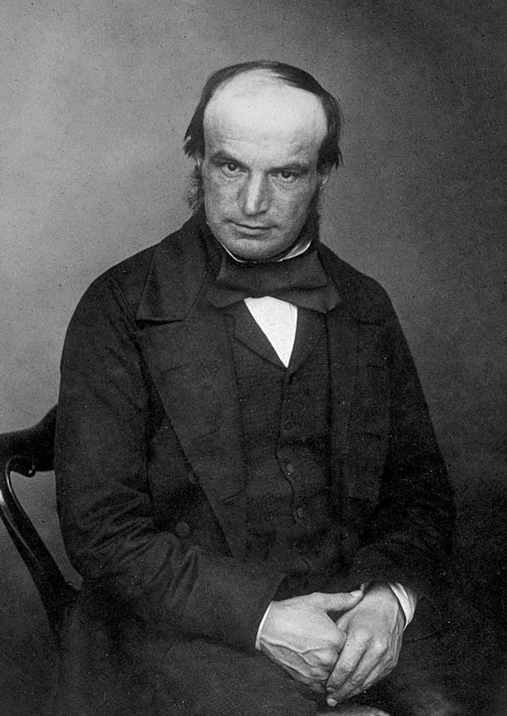
John Couch Adams Facts For Kids
Videos & Quizzesincluded
About this topic
John Couch Adams was a famous British mathematician and astronomer who helped discover a new planet called Neptune! 🌌He was born on June 5, 1819, in a small town called Launceston, in Cornwall, England. Adams loved studying the stars and planets from a young age and showed a great talent for math! With a mixture of hard work and curiosity, he became one of the most important astronomers of his time. His discoveries helped scientists understand more about our solar system and inspired many young minds to look up at the night sky with wonder! 🌠
Explore with ChatDinoKey Points
Here's some fun facts about John Couch Adams!
Adams had a lovely family life.
John Couch Adams left behind a wonderful legacy after his discoveries!
Adams became a well-known astronomer after finishing his studies at Cambridge.
The discovery of Neptune was a thrilling adventure!
John Couch Adams even made an impact on popular culture!
John Couch Adams was born in Cornwall, where he loved looking at the stars!
John Couch Adams' discoveries are still important today!
John Couch Adams worked with many scientists during his career.
John Couch Adams published many papers sharing his discoveries with others.
Photos of John Couch Adams

John Couch Adams

Neptune as seen by Voyager 2 in 1989

The great Leonid shower storm of 1833

Portrait of John Couch Adams by Hubert von Herkomer, c. 1888

Memorial to John Couch Adams in St Sidwell Church, Laneast, Cornwall.
🎉 Fun Facts
Here's some fun facts about John Couch Adams! 🎉Did you know he was only 27 years old when he discovered Neptune? That's very young for such an important discovery! He also had a nickname: "the father of Neptune." 🌊 Adams loved mathematics so much that he sometimes calculated in his head! He was also very close to his family and shared his love for astronomy with his children. The first image we have of Neptune was taken by a spacecraft called Voyager 2 in 1989, many years after Adams predicted its location! Isn’t that cool? 🚀
Go deeper👨👩👧👦 Personal Life
Adams had a lovely family life. 👨👩👧👦 He married his wife, Mary, in 1846, the same year Neptune was discovered! They had a happy family with five children. Adams loved teaching and sharing his knowledge with his students, which made him a popular teacher. As a professor at Cambridge, he inspired many young minds to pursue careers in science. Even after retiring, he continued to enjoy astronomy and dreaming about the mysteries of the universe. His love for science extended from the classroom to his kids, encouraging them to explore the stars, just like he did! 🌌
Go deeper🏅 Legacy And Honors
John Couch Adams left behind a wonderful legacy after his discoveries! 🏅He is remembered as one of the greatest astronomers in British history. Many places and things bear his name, including the Adams Observatory in Australia, where people study the stars. In the UK, there is also a street named after him called Adams Road. 🌌His works in mathematics and astronomy still inspire students around the world to explore the wonders of the universe and dream big! Adams taught us that through hard work and curiosity, we can achieve amazing things! 🚀
Go deeper📚 Career In Astronomy
Adams became a well-known astronomer after finishing his studies at Cambridge. He worked at the university and loved sharing his ideas with others. 📚He thought about how planets moved and started to calculate where Neptune might be located! In 1845, Adams began sharing his ideas about this new planet with his fellow scientists. He carefully crafted mathematical equations to help predict its position in the sky. His work caught the attention of important people, showing how powerful math could be in understanding the universe! 🌌
Go deeper🌊 Discovery Of Neptune
The discovery of Neptune was a thrilling adventure! 🌊In the 1840s, astronomers noticed that Uranus, the seventh planet, wasn't following its usual path. Adams used his math skills to predict the location of another planet. On September 23, 1846, another astronomer named Johann Galle, who was looking at the sky in Germany, found Neptune exactly where Adams said it would be! 🎉Adams had successfully predicted the existence of a planet, making him a hero in the world of astronomy. Neptune became the eighth planet in our solar system! 🪐
Go deeper🎭 Adams In Popular Culture
John Couch Adams even made an impact on popular culture! 🎭His life and work have inspired books and documentaries about astronomy and scientific discovery. You can find children's books telling his story and why he is important for the world we live in today! 📚Sometimes, you can see names of characters or places inspired by him in science fiction films and shows, which show how imagination and science can work together. 🚀His contributions to astronomy are celebrated in various movies and educational programs, encouraging kids to look up at the stars and dream about exploration! 🌌
Go deeper✨ Early Life And Education
John Couch Adams was born in Cornwall, where he loved looking at the stars! ✨When he was a boy, he went to a school in Launceston before moving to a grammar school in nearby Truro. He was very good at mathematics, which was the beginning of his journey into astronomy! At the age of 16, he went to the University of Cambridge, where he studied hard and impressed his teachers. Cambridge is a famous university with a long history of great discoveries. While there, he learned about calculations that would help him find new planets in the night sky! 🌍
Go deeper🌠 Influence On Modern Astronomy
John Couch Adams' discoveries are still important today! 🌠His work on Neptune helped shape modern astronomy and revolutionized how we explore our solar system. Because of his findings, scientists learned how to predict the positions of planets more accurately using math. Adams also helped inspire new telescopes with better technology to observe distant stars and planets. Today, astronomers use powerful telescopes and computers to continue exploring the universe, building off the foundation Adams laid with his exciting discoveries in the 19th century! 🌌
Go deeper🤝 Collaboration With Other Scientists
John Couch Adams worked with many scientists during his career. 🤝One of his most important collaborations was with astronomers like Sir George Airy, who was the Astronomer Royal of Britain. Adams shared his calculations for Neptune with Airy, who helped confirm its existence. They both worked together to collect observations of the new planet! This collaboration showed how scientists can support each other to make amazing discoveries. Adams' teamwork in astronomy paved the way for future scientists to work together to explore our universe even more! 🌟
Go deeper📖 Publications And Research Contributions
John Couch Adams published many papers sharing his discoveries with others. 📖He explained his equations and theories about Neptune's position in the night sky for everyone to learn. His most famous paper was published in 1846, which outlined his calculations leading to Neptune's discovery. 🌊Adams's work helped others understand the science behind celestial bodies, making astronomy an exciting field of study! His research still contributes to our understanding of gravity, the motion of planets, and how we observe the stars. Young astronomers today can learn from his writings to continue exploring the universe! 🌟
Go deeper