James Monroe was a prominent American statesman and the fifth President of the United States, known for his influential policies and the Monroe Doctrine.
β¨πΊπΈ James Monroe was the fifth President of the United States, serving from 1817 to 1825.
βοΈHe is known for the Monroe Doctrine, a pivotal policy that warned European powers against further colonization in the Americas.
πMonroe was a founding figure of the Democratic-Republican Party.
πHe served as Secretary of State under President James Madison during the War of 1812.
ποΈMonroe was the last President who was also a Founding Father of the United States.
βοΈHe fought in the American Revolutionary War at a young age, participating in the Battle of Trenton.
ποΈMonroe was instrumental in the acquisition of Florida from Spain in 1819.
π°He was also involved in negotiations for the Louisiana Purchase.
πMonroe graduated from the College of William & Mary, where he studied law.
β¨His presidency is often referred to as the 'Era of Good Feelings,' a period marked by national unity and political peace.
Key Points
Did you know that James Monroe was a fan of music and art?
During Monroe's presidency, the United States experienced a time of peace and prosperity, known as the "Era of Good Feelings."
One of James Monroe's most important contributions was the Monroe Doctrine, announced in 1823.
Before becoming president, Monroe held many important positions!
Monroe focused on building a strong economy and improving the countryβs infrastructure during his presidency.
Monroe's presidency was marked by strong efforts in foreign relations.
James Monroe's impact is still felt today!
James Monroe grew up on a plantation in Virginia.
Photos of James Monroe
Elizabeth Kortright
Marker designating the site of James Monroe's birthplace in Monroe Hall, Virginia
The Capture of the Hessians at Trenton, December 26, 1776, by John Trumbull, showing Captain William Washington, with a wounded hand, on the right and Lt. Monroe, severely wounded and helped by Dr. John Riker, left of center, behind the mortally wounded Hessian Colonel Johann Gottlieb Rall. Rall is being helped by American Major William Stephens Smith
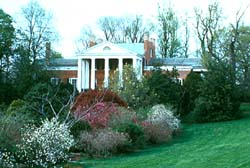
Oak Hill Mansion
The earliest preserved portrait of James Monroe as Minister Plenipotentiary to France in 1794
Portrait of Secretary Monroe by John Vanderlyn, c. 1816
Map showing the results of the AdamsβOnΓs Treaty of 1819
Portrait of President Monroe by Gilbert Stuart, c. 1820β1822
James Monroe β photo 9
πΌ Fun Facts
Did you know that James Monroe was a fan of music and art? πΌHe loved attending plays and concerts! He was also the last President of the Founding Fathers, meaning he helped create the U.S. government as we know it. Monroeβs wife, Elizabeth, was known for her beautiful White House receptions, making the place a fun gathering spot for important people! ποΈ Monroe also enjoyed gardening. He planted tomato and other fruit vines at his home after his presidency. He even had a pet parrot that could talk! What a fascinating man Monroe was! π¦
During Monroe's presidency, the United States experienced a time of peace and prosperity, known as the "Era of Good Feelings." π He focused on uniting the country and bringing people together. Monroe traveled throughout the United States to meet citizens and learn about their needs. His presidency saw the admission of several new states, including Mississippi and Alabama. Monroe also oversaw the expansion of the nation's borders, helping America grow and become a stronger nation. His leadership was marked by optimism and hope for a bright future for everyone! π
One of James Monroe's most important contributions was the Monroe Doctrine, announced in 1823. π£οΈ This policy stated that European countries should no longer interfere in the Americas. Monroe believed that the United States needed to protect its neighbors in North and South America from foreign control. It signaled that the U.S. would defend freedom and independence for all nations in the region. The Monroe Doctrine helped shape America's foreign policy for many years, making it clear that the U.S. would stay strong and fight for democracy in the Americas! π
Before becoming president, Monroe held many important positions! He served as a member of the Continental Congress and helped draft the U.S. Constitution. ποΈ He was also the governor of Virginia and ambassador to France and Britain. Monroe worked closely with President Jefferson, helping to purchase the Louisiana Territory in 1803, which doubled the size of the United States. In 1811, he became Secretary of State, where he was responsible for foreign affairs. Monroe's career was all about serving his country and making it a better place for all Americans! πΊπΈ
Monroe focused on building a strong economy and improving the countryβs infrastructure during his presidency. π§He supported projects like roads and canals to help people travel and trade more easily. He also believed in American nationalism, which meant supporting the growth of American businesses, like factories and farms. Monroe encouraged the development of a national bank to help manage money better. His policies aimed to create a sense of unity among the states and ensure the country could grow and thrive. This helped America become a more cohesive and prosperous nation. πͺ
Monroe's presidency was marked by strong efforts in foreign relations. He believed in good relationships with other countries. He worked hard to improve connections with countries like France and Britain, promoting peace and trade. π€Monroeβs foreign policy aimed to strengthen democracy in the Americas while protecting the country from European conflicts. Under his leadership, the U.S. also acquired Florida from Spain in 1819. This expansion made the U.S. a stronger nation, especially in its relations with neighbors. Monroe wanted the U.S. to be respected and a leader on the world stage! π
James Monroe's impact is still felt today! His name is remembered in the Monroe Doctrine and the era of unity he helped create. πHistorians view him as a leader who promoted American growth and security. He is honored for expanding the U.S. territory and advocating for freedom. Many schools, cities, and even the Monroe Community College are named after him. Today, people learn about his contributions and how they shaped America. His passion for democracy and territorial integrity continues to inspire politicians and citizens alike! πΊπΈβ€οΈ
James Monroe grew up on a plantation in Virginia. βοΈ He studied at the College of William & Mary but left to join the American Revolution. He fought bravely at the Battle of Trenton and later studied law under Thomas Jefferson. Monroe loved learning about government and the rights of people. As a young man, he believed in freedom and independence, which inspired him throughout his life. His early experiences, especially in the Revolutionary War, taught him about leadership and making important decisions that would later help him as a diplomat and president. π