James Chadwick Facts For Kids

James Chadwick was a British physicist best known for his discovery of the neutron, a fundamental particle in the atom, for which he received the Nobel Prize in Physics in 1935.

Select reading age
Go deeper More articles
James Chadwick
James Chadwick Facts For Kids
Videos & Quizzesincluded

About this topic

James Chadwick was a famous scientist from England! πŸ‡¬πŸ‡§ He was born on October 20, 1891, in a small town called Bollington. Chadwick is best known for discovering the neutron, a tiny particle inside atoms πŸ§ͺ. Atoms are the building blocks of everything around us! His discovery was super important because it helped us understand how atoms work, and it changed the way we think about science. He won the Nobel Prize in Physics in 1935 for his amazing work. Chadwick continues to inspire many scientists even today! 🌟
Explore with ChatDino

Key Points

For his incredible work, James Chadwick received many awards!
Did you know that James Chadwick was a great athlete too?
After World War II, James Chadwick continued his work in science and education.
In 1932, James Chadwick made a groundbreaking discovery: he found the neutron!
James Chadwick grew up in England, where he enjoyed learning about science and math πŸ“š.
James Chadwick's discovery of the neutron greatly impacted modern science!
James Chadwick published many important research papers throughout his career!
James Chadwick's discovery of the neutron helped the field of nuclear physics grow!
During World War II, James Chadwick played a vital role in the Manhattan Project, a secret U.S. project to build the first atomic bomb!

Photos of James Chadwick

James Chadwick β€” photo 1Image by Jorge LΓ‘scar, licensed under Creative Commons Attribution 2.0

James Chadwick β€” photo 1

The original building of the Cavendish Laboratory was the home of some of the great discoveries in physics. It was founded in 1874 by the Duke of Devonshire (whose family name was Cavendish), and its first professor was James Clerk Maxwell. The Laboratory has since moved to West Cambridge.[25]Image by RichTea, licensed under Creative Commons Attribution-Share Alike 2.0

The original building of the Cavendish Laboratory was the home of some of the great discoveries in physics. It was founded in 1874 by the Duke of Devonshire (whose family name was Cavendish), and its first professor was James Clerk Maxwell. The Laboratory has since moved to West Cambridge.[25]

Sir Ernest Rutherford's laboratoryImage by Science Museum London / Science and Society Picture Library, licensed under Creative Commons Attribution-Share Alike 2.0

Sir Ernest Rutherford's laboratory

"Red brick" Victoria Building at the University of Liverpool

"Red brick" Victoria Building at the University of Liverpool

Key British physicists. Left to right: William Penney, Otto Robert Frisch, Rudolf Peierls and John Cockcroft. They are wearing the American Medal of Freedom.
Key British physicists. Left to right: William Penney, Otto Robert Frisch, Rudolf Peierls and John Cockcroft. They are wearing the American Medal of Freedom.

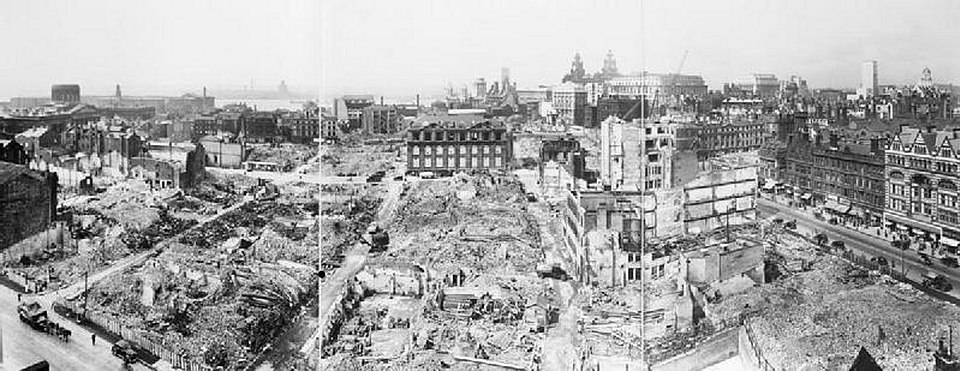
Part of Liverpool devastated by the Blitz

Part of Liverpool devastated by the Blitz

Mackenzie King, Franklin D. Roosevelt and Winston Churchill at the first Quebec Conference in 1943

Mackenzie King, Franklin D. Roosevelt and Winston Churchill at the first Quebec Conference in 1943

Chadwick (left) with Major General Leslie R. Groves, Jr., the director of the Manhattan Project

Chadwick (left) with Major General Leslie R. Groves, Jr., the director of the Manhattan Project

πŸŽ–οΈ Awards And Honors

For his incredible work, James Chadwick received many awards! πŸŽ–οΈ In 1935, he won the Nobel Prize in Physics, one of the highest honors a scientist can get. He was recognized for his discovery of the neutron, which changed the science world forever! Chadwick also became a Fellow of the Royal Society, a prestigious organization for scientists in the UK. After this, he received medals and honors from different countries, celebrating his contribution to physics and our understanding of atoms! 🌍
Go deeper

πŸƒβ€β™‚οΈ Interesting Facts

Did you know that James Chadwick was a great athlete too? πŸƒβ€β™‚οΈ He enjoyed playing sports, especially rugby! Also, he worked in many countries, including the United States and Canada, sharing his knowledge of neutrons! Chadwick loved to solve problems and encourage teamwork in science. Lastly, he was part of the Institute of Physics, where he helped other scientists. His dedication to science and education continues to inspire many kids today! 🌈
Go deeper

🏫 Later Life And Legacy

After World War II, James Chadwick continued his work in science and education. He became the first Director of the Atomic Energy Research Establishment in the UK, where he worked until his retirement in 1959. 🏫He taught many future scientists about atomic theory and helped them develop new ideas in nuclear physics! Chadwick passed away on July 24, 1974, but his legacy still lives on. Today, we remember him as a remarkable scientist whose discoveries changed the way we understand the universe 🌌.
Go deeper

πŸ§ͺ Discovery Of The Neutron

In 1932, James Chadwick made a groundbreaking discovery: he found the neutron! πŸ§ͺ✨ A neutron is a particle with no electric charge, which means it doesn't have a positive or negative side. This was important because neutrons are found in the center of atoms, called the nucleus. Before this discovery, scientists thought atoms only had protons and electrons. Chadwick's work helped explain why some atoms are heavier than others. Understanding neutrons changed how scientists studied elements on the periodic table! πŸ”¬
Go deeper

πŸ“š Early Life And Education

James Chadwick grew up in England, where he enjoyed learning about science and math πŸ“š. As a child, he loved reading books and exploring nature. After finishing school, he went to the University of Manchester πŸŒ†. There, he studied physics and worked with a famous scientist named Ernest Rutherford, who taught him many things about atoms. Chadwick was curious and hardworking, and he earned his degree in 1911. He also worked in different laboratories to learn even more about the universe! 🌌
Go deeper

🧬 Impact On Modern Science

James Chadwick's discovery of the neutron greatly impacted modern science! 🧬His work led to further research in nuclear physics, helping scientists develop nuclear energy and medical technologies like X-rays. Neutrons also play a crucial role in cancer treatment, helping doctors target and destroy cancer cells. Furthermore, because of Chadwick's discoveries, we now understand how elements combine to form new materials, which is essential for inventing new products and technology πŸ› οΈ. His legacy lives on in the inventions and discoveries we have today!
Go deeper

πŸ“ Publications And Research

James Chadwick published many important research papers throughout his career! πŸ“One of his most famous papers is the one announcing his discovery of the neutron in 1932. In it, he explained how he conducted his experiments and what he learned about atoms. Chadwick wrote about nuclear processes and even collaborated with other scientists to share groundbreaking ideas. His work continues to inspire many young scientists who want to understand the wonders of the universe! 🌟
Go deeper

πŸ”­ Contributions To Nuclear Physics

James Chadwick's discovery of the neutron helped the field of nuclear physics grow! πŸ”­He worked on different projects, including studying how atoms split apart. This knowledge led to the development of nuclear energy, which powers many things today, like electricity ⚑. Chadwick also researched atomic bombs during World War II, showing how powerful science can be. His contributions helped scientists develop better ways to use atoms for energy instead of just bombs. Chadwick's work opened doors to new technologies that we benefit from now! πŸš€
Go deeper

πŸ’£ World War Ii And The Manhattan Project

During World War II, James Chadwick played a vital role in the Manhattan Project, a secret U.S. project to build the first atomic bomb! πŸ’£He consulted and advised scientists working on the project, contributing his knowledge of neutrons and nuclear fission. The Manhattan Project was based in cities like Los Alamos, New Mexico, and it aimed to develop powerful weapons to end the war. Although Chadwick wanted to use nuclear energy for peaceful purposes, his work on the project was crucial for understanding atom splitting! 🌏
Go deeper

🧠 Take the Quiz about James Chadwick

Question 1 of 10

What major particle did James Chadwick discover?

Question 2 of 10

In which year did Chadwick receive the Nobel Prize in Physics?

Question 3 of 10

Which famous physicist did Chadwick study under?

Question 4 of 10

What country was Chadwick born in?

Question 5 of 10

During which global conflict did Chadwick contribute to radar development?

Question 6 of 10

What is one of Chadwick's notable contributions to atomic theory?

Question 7 of 10

Which university did Chadwick serve as a professor?

Question 8 of 10

When was Chadwick born?

Question 9 of 10

James Chadwick was elected to which prestigious society?

Question 10 of 10

Where did Chadwick pass away?

πŸ”’

Your results

Answer all 10 questions to see how you did.

Kid-safe AI powered by AstroSafe

DIY.org

Kid-safe AI for discovery and learning. Ask anything, explore everything, learn with confidence.

Product

  • Pricing
  • App
  • All Apps

Resources

  • Blog
  • Kids Wikipedia
  • Worksheets
  • Activities for Kids
  • Build a Hacker Simulator
  • SafeTube

Company

  • About
  • Terms & Conditions
  • Privacy Policy
  • AstroSafe
TwitterInstagramYouTube

Β© 2026 DIY.org. All rights reserved. Β· Powered by AstroSafe