James Callaghan Facts For Kids
Jim Callaghan was a British statesman who served as Prime Minister from 1976 to 1979 and was known for his leadership during challenging times in British history.
Select reading age

James Callaghan Facts For Kids
Videos & Quizzesincluded
About this topic
James Callaghan, often called Jim Callaghan, was an important British politician. He was born on March 27, 1912, in Cardiff, Wales. 🌍Jim served as Prime Minister of the United Kingdom from 1976 to 1979. He was the leader of the Labour Party, a major political group, during this time. Callaghan worked hard to improve people's lives and tackle tough problems. He is known for his calm and thoughtful nature, which helped him make decisions during difficult times. Jim also held many other important jobs in the government throughout his life. 🏛️
Explore with ChatDinoKey Points
Jim Callaghan married his wife, Audrey, in 1938.
Jim Callaghan was also focused on foreign policy, which means how countries interact with each other.
Jim Callaghan's political career began in 1945 when he became a Member of Parliament (MP) for Cardiff South East.
Throughout his life, Jim Callaghan received several accolades for his hard work and commitment.
Jim Callaghan left a significant legacy in British politics.
During Jim Callaghan's time as Prime Minister, the British economy faced serious problems.
After leaving politics, Jim Callaghan continued to contribute to society.
After becoming Prime Minister, Jim Callaghan also served as the leader of the Labour Party from 1976 to 1980.
Jim Callaghan grew up in a working-class family.
Jim Callaghan became Prime Minister on April 5, 1976.
Photos of James Callaghan

Callaghan in 1947

Callaghan (second left) with finance ministers in The Hague, 1966

Callaghan in 1970 (left), with Prime Minister of Northern Ireland James Chichester-Clark

Callaghan and Dutch foreign minister Max van der Stoel in 1975
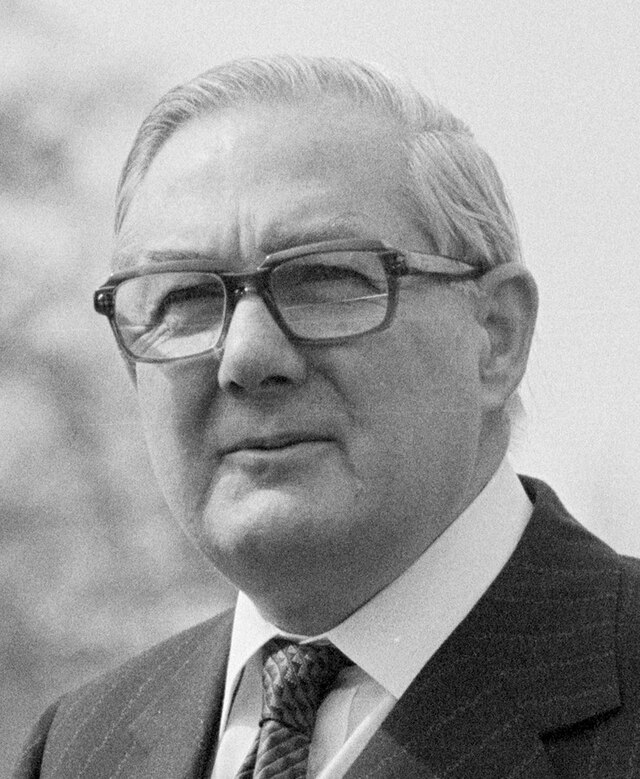
James Callaghan — photo 5

Callaghan (right) with US president Jimmy Carter in 1978

Callaghan visiting The Hague in 1976

Callaghan (right) with Helmut Schmidt, Jimmy Carter and Valéry Giscard d'Estaing in Guadeloupe, 1979

Votes by party in the 1979 vote of no confidence in the Callaghan ministry. The motion passed by one vote.
❤️ Personal Life
Jim Callaghan married his wife, Audrey, in 1938. ❤️ They had three children together: Elizabeth, David, and James. Jim was known for being a loving husband and father! 🏠In his free time, he enjoyed reading, gardening, and spending time with his family. He even liked sailing, recalling his days as a merchant sailor! ⛵️ Throughout his life, Jim valued family time and believed it was important to stay connected with loved ones. His strong family bonds gave him the support he needed during tough times in his political career. 🌻
Go deeper🌐 Foreign Policy
Jim Callaghan was also focused on foreign policy, which means how countries interact with each other. 🌐He believed in maintaining good relationships with other nations. One important event was the signing of the "Anglo-Irish Agreement" in 1977, which aimed to improve relations between Britain and Ireland. 🇬🇧🇮🇪 Callaghan also worked hard to support Europe and built connections with other countries. He believed in peace and cooperation, focusing on resolving conflicts through discussion rather than war. His belief in dialogue helped strengthen Britain's position on the world stage. 🤝
Go deeper🏛️ Political Career
Jim Callaghan's political career began in 1945 when he became a Member of Parliament (MP) for Cardiff South East. 🏛️ He worked really hard to help improve the lives of people in his area. Over the years, he held many important positions in the government. For example, he was the Minister of Transport and later, the Chancellor of the Exchequer, helping to manage the nation's money. 💰In 1974, he even became the Home Secretary, responsible for keeping citizens safe. Jim's experience and dedication to helping others made him a well-respected leader. 🌟
Go deeper🎖️ Awards And Honors
Throughout his life, Jim Callaghan received several accolades for his hard work and commitment. 🎖️ In 1994, he was made a life peer, granting him the title "Baron Callaghan of Cardiff." He received honorary degrees from various universities, acknowledging his contributions to politics. 🎓In 2007, he was awarded the prestigious "Order of the Companion of Honour," given to those who have made significant achievements. His contributions to British society and politics were recognized, and he remains a respected figure in history. Jim Callaghan’s legacy continues to inspire many people today! 🌍
Go deeper🌟 Legacy And Impact
Jim Callaghan left a significant legacy in British politics. 🌟He showed that leaders can solve problems by working together and valuing people's opinions. His time as Prime Minister was marked by challenges, teaching future politicians important lessons about economy and teamwork. 💪Callaghan played a crucial role in the Labour Party and helped shape its future. Today, many remember him for his dedication to public service and his calm approach during tough times. He remains an important figure in British history, inspiring future generations to work for the good of their communities. 🏆
Go deeper💼 Economic Challenges
During Jim Callaghan's time as Prime Minister, the British economy faced serious problems. 💼Inflation soared, and prices of food and goods increased rapidly. Many people lost their jobs, and there were strikes all over the country. For example, the "Winter of Discontent" happened in 1978-1979, when many workers struck for better pay and conditions. ❄️ This made life difficult for many families. Callaghan and his government tried to negotiate and solve these problems, but they didn't succeed in making everyone happy. 🏚️ This led to a lot of challenges for him as Prime Minister.
Go deeper🌈 Post-political Career
After leaving politics, Jim Callaghan continued to contribute to society. 🌈He became a member of the House of Lords in 1987, where he could share his experience and wisdom. Callaghan also focused on writing, sharing his thoughts about politics and life in autobiography books. 📖He enjoyed speaking at various events, inspiring younger generations with his stories. He championed important issues like community service and helping the less fortunate. Jim Callaghan remained an influential figure in British society and was respected for his contributions to the country. 💬
Go deeper🤔 Labour Party Leadership
After becoming Prime Minister, Jim Callaghan also served as the leader of the Labour Party from 1976 to 1980. During his leadership, he focused on teamwork to tackle the economic and social problems facing Britain. 🤔Unfortunately, many challenges like strikes and inflation made it difficult for him to keep the party united. He worked hard to maintain support, but disagreements arose, especially about how to handle the economy. In 1979, after losing the general election, Callaghan stepped down as leader. 👥His time as Labour leader helped shape the future of the party!
Go deeper🏠 Early Life And Education
Jim Callaghan grew up in a working-class family. His father was a carpenter, and his mother was a housewife. 🏠He didn't do very well in school since he often played football instead of studying! ⚽️ But he later learned a lot by becoming a merchant sailor. In 1929, he began as a sailor, exploring the seas. He also joined the Labour Party, which helped him understand how to help people in his community. Callaghan was a good reader and loved to learn about politics, which led him to become a great leader. 📚
Go deeper🚧 Prime Ministership (1976-1979)
Jim Callaghan became Prime Minister on April 5, 1976. He took over after another Labour leader, Harold Wilson. During his time in charge, he faced many tough challenges. One of the biggest was dealing with strikes, when workers stopped working to protest. 🚧Callaghan's government tried to create peace between workers and companies. He also focused on solving problems with the economy and controlling inflation (when prices go up). 📉His leadership style was calm and aimed at finding solutions together, which made him popular with some people, but others were not so happy.
Go deeper