All Articles

Irritator

Irritator Facts For Kids

Irritator was a large theropod dinosaur from the Early Cretaceous period known for its long snout and piscivorous diet.
🎨 Reading age for 6-8
Background blob
Irritator
Irritator
Facts for Kids!
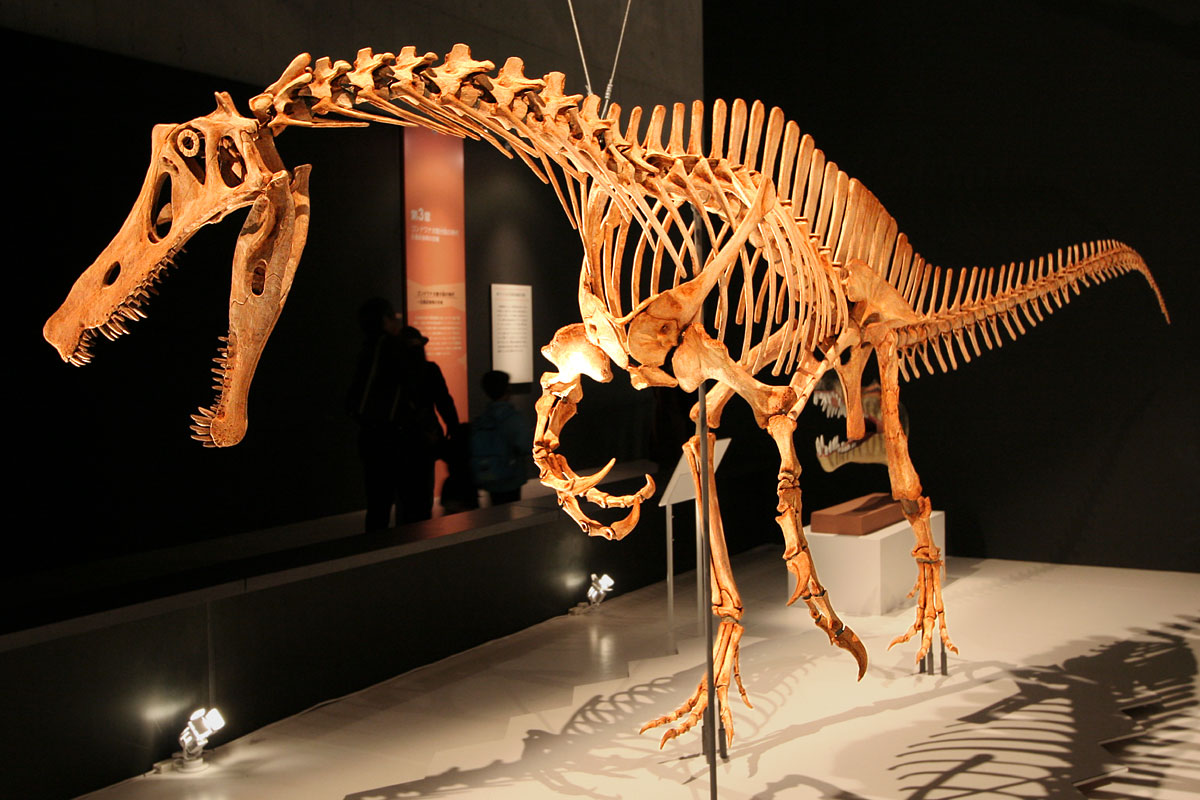
Image by Kabacchi, licensed under Creative Commons Attribution 2.0

Do more with AI

Introduction

Irritator was a fast and fierce dinosaur that roamed the Earth about 110 million years ago! 🌍This dinosaur was a member of a group called spinosaurids, known for their long snouts and sharp teeth, which made them excellent fish hunters. Found in Brazil, its name means "irritating," because early researchers had a hard time figuring out its fossils! The first Irritator bones were discovered in 1996 by a team led by paleontologist Alexander Kellner. Though it looked a bit like a crocodile, it was actually a dinosaur that could grow up to around 30 feet long! 🐉

Images of Irritator

Map showing the Northeast Region of Brazil, with the discovery sites of three spinosaurine fossil specimens in the Araripe and São Luís-Grajaú Basins marked. From top to bottom: Oxalaia, Irritator, and AngaturamaImage by Marcos A. F. Sales, Cesar L. Schultz, licensed under Creative Commons Attribution 4.0

Map showing the Northeast Region of Brazil, with the discovery sites of three spinosaurine fossil specimens in the Araripe and São Luís-Grajaú Basins marked. From top to bottom: Oxalaia, Irritator, and Angaturama

Outdated reconstruction of the holotype skull (top) based on the interpretations of Martill and colleagues in 1996.[1] Depictions (similar to the one at the bottom) based on this reconstruction were later featured in many dinosaur books and encyclopedias.[3][4][5][6]Image by PaleoGeekSquared, licensed under Creative Commons Attribution-Share Alike 4.0

Outdated reconstruction of the holotype skull (top) based on the interpretations of Martill and colleagues in 1996.[1] Depictions (similar to the one at the bottom) based on this reconstruction were later featured in many dinosaur books and encyclopedias.[3][4][5][6]

Known skull elements of Irritator as interpreted by paleontologist Jaime A. Headden; the snout tip is from the Angaturama specimen.Image by Jaime A. Headden, licensed under Creative Commons Attribution 3.0

Known skull elements of Irritator as interpreted by paleontologist Jaime A. Headden; the snout tip is from the Angaturama specimen.

Holotypes of Irritator challengeri and Angaturama limai in place, showing the latter's larger skull size and overlapping third left maxillary tooth, as proposed by Sales and Schultz in 2017Image by Marcos A. F. Sales, Cesar L. Schultz, licensed under Creative Commons Attribution 4.0

Holotypes of Irritator challengeri and Angaturama limai in place, showing the latter's larger skull size and overlapping third left maxillary tooth, as proposed by Sales and Schultz in 2017

Spinosaurine pelvis and sacral vertebrae (specimen MN 4819-V), National Museum of Rio de JaneiroImage by JorgeBRAZIL, licensed under Creative Commons Attribution 2.0

Spinosaurine pelvis and sacral vertebrae (specimen MN 4819-V), National Museum of Rio de Janeiro

Estimated size of Irritator (light green) and Angaturama's (dark green) holotype specimens with a human

Estimated size of Irritator (light green) and Angaturama's (dark green) holotype specimens with a human

Holotype skull of Irritator challengeri from left (top) and right side viewsImage by Marcos A. F. Sales, Cesar L. Schultz, licensed under Creative Commons Attribution 2.5

Holotype skull of Irritator challengeri from left (top) and right side views

Life restoration of IrritatorImage by PaleoGeekSquared, licensed under Creative Commons Attribution-Share Alike 4.0

Life restoration of Irritator

Closeup of Irritator's upper jaw and dentitionImage by Sales MAF, Schultz CL (2017), licensed under Creative Commons Attribution 4.0

Closeup of Irritator's upper jaw and dentition

Map showing the Northeast Region of Brazil, with the discovery sites of three spinosaurine fossil specimens in the Araripe and São Luís-Grajaú Basins marked. From top to bottom: Oxalaia, Irritator, and AngaturamaImage by Marcos A. F. Sales, Cesar L. Schultz, licensed under Creative Commons Attribution 4.0

Map showing the Northeast Region of Brazil, with the discovery sites of three spinosaurine fossil specimens in the Araripe and São Luís-Grajaú Basins marked. From top to bottom: Oxalaia, Irritator, and Angaturama

Outdated reconstruction of the holotype skull (top) based on the interpretations of Martill and colleagues in 1996.[1] Depictions (similar to the one at the bottom) based on this reconstruction were later featured in many dinosaur books and encyclopedias.[3][4][5][6]Image by PaleoGeekSquared, licensed under Creative Commons Attribution-Share Alike 4.0

Outdated reconstruction of the holotype skull (top) based on the interpretations of Martill and colleagues in 1996.[1] Depictions (similar to the one at the bottom) based on this reconstruction were later featured in many dinosaur books and encyclopedias.[3][4][5][6]

Known skull elements of Irritator as interpreted by paleontologist Jaime A. Headden; the snout tip is from the Angaturama specimen.Image by Jaime A. Headden, licensed under Creative Commons Attribution 3.0

Known skull elements of Irritator as interpreted by paleontologist Jaime A. Headden; the snout tip is from the Angaturama specimen.

Holotypes of Irritator challengeri and Angaturama limai in place, showing the latter's larger skull size and overlapping third left maxillary tooth, as proposed by Sales and Schultz in 2017Image by Marcos A. F. Sales, Cesar L. Schultz, licensed under Creative Commons Attribution 4.0

Holotypes of Irritator challengeri and Angaturama limai in place, showing the latter's larger skull size and overlapping third left maxillary tooth, as proposed by Sales and Schultz in 2017

Spinosaurine pelvis and sacral vertebrae (specimen MN 4819-V), National Museum of Rio de JaneiroImage by JorgeBRAZIL, licensed under Creative Commons Attribution 2.0

Spinosaurine pelvis and sacral vertebrae (specimen MN 4819-V), National Museum of Rio de Janeiro

Estimated size of Irritator (light green) and Angaturama's (dark green) holotype specimens with a human

Estimated size of Irritator (light green) and Angaturama's (dark green) holotype specimens with a human

Holotype skull of Irritator challengeri from left (top) and right side viewsImage by Marcos A. F. Sales, Cesar L. Schultz, licensed under Creative Commons Attribution 2.5

Holotype skull of Irritator challengeri from left (top) and right side views

Life restoration of IrritatorImage by PaleoGeekSquared, licensed under Creative Commons Attribution-Share Alike 4.0

Life restoration of Irritator

Closeup of Irritator's upper jaw and dentitionImage by Sales MAF, Schultz CL (2017), licensed under Creative Commons Attribution 4.0

Closeup of Irritator's upper jaw and dentition

Habitat And Range

Irritator lived in what is now known as South America, especially in a region called Brazil. 🌎During the Cretaceous period, about 110 million years ago, this area was hot and humid with rivers and lakes. Irritator likely enjoyed the lush, tropical environment, hunting for fish by the water's edge. Fossils have uncovered that this dinosaur lived among other big creatures, like large herbivores and scary predators. Imagine a world filled with giant dinosaurs swimming and walking around, all in the green jungles of ancient Brazil! 🌳

Fossil Discoveries

The first Irritator fossils were discovered in 1996 in Brazil. 🦴These fossils included parts of the skull and jaw, which helped scientists learn about this dinosaur's appearance and behavior. Paleontologists like Alexander Kellner dug deep to find more fossils, revealing clues about how Irritator lived. Some fossils were confused with those of other dinosaurs, adding to the mystery. But thanks to modern technology, researchers can now study these bones and understand how this fascinating dinosaur moved through its environment. Fossil discoveries help us unlock the secrets of the distant past! 🔍

Diet And Feeding Habits

Irritator was a carnivore, which means it ate meat! 🦈It primarily feasted on fish, thanks to its long, toothy snout that made it easy to catch slippery swimmers in the water. It might have also hunted small dinosaurs or scavenged on other dead animals when fish was scarce. Picture this: Irritator standing quietly by a river, waiting patiently like an expert fisherman, and then—swoosh! It lunges into the water to grasp its dinner. Yum! 🐠Eating fish kept Irritator strong and healthy, ready to swim and hunt!

Physical Characteristics

Irritator was a unique dinosaur! Its long, narrow snout resembled that of a crocodile, which helped it catch slippery fish in the rivers. 🐟It had sharp, pointed teeth to grip its prey and powerful arms with long claws for swimming. The body was large and muscular, making it a great swimmer and runner, too! Its legs were strong, allowing it to move swiftly on land. One cool feature was a sail-like structure on its back, formed by elongated spines that might have helped with balance and temperature regulation. Can you imagine a dinosaur with a sail? ⛵️

Evolutionary Significance

Irritator is special because it shows us how dinosaurs evolved over millions of years. 🦖This dinosaur shares characteristics with both carnivorous dinosaurs and its fish-eating relatives, which helps scientists understand how they adapted to their surroundings. Its long snout and sharp teeth suggest that it was perfectly designed for catching fish! By studying dinosaurs like Irritator, paleontologists gather information about how these creatures changed and evolved to survive. This is important because the story of dinosaurs helps us understand how animals adapt and thrive in different environments! 🌱

Conservation Of Fossil Sites

Conserving fossil sites is super important for learning about dinosaurs like Irritator! 🏺Many fossil-rich locations around the world need protection to preserve their history. Researchers work hard to prevent damage from construction, pollution, or other activities that can harm these precious sites. By protecting places where fossils are found, we allow future scientists to continue studying and discovering fascinating information about ancient life! 🦕Together, we can learn how to care for our planet and its history, so generations to come can enjoy the wonders of dinosaurs! 🌎

Comparison With Other Dinosaurs

Irritator can be compared to its fellow spinosaurids, like Spinosaurus and Baryonyx. 🐊While Spinosaurus was larger and even more adapted for life in the water, Irritator was slightly smaller but still an excellent swimmer. Unlike most other dinosaurs, these spinosaurids had long snouts for catching fish! While T. rex had powerful jaws for crushing bones, Irritator used its sharp teeth to grab slippery prey. By comparing these dinosaurs, we learn about their various adaptations and how different species thrived in their environments through millions of years! 🌼

Cultural Impact And Representation

Irritator might not be as famous as T. rex or Velociraptor, but it still captures our imagination! 🎨The dinosaur has appeared in books, documentaries, and educational programs, helping kids learn about prehistoric life. With its interesting looks and unique hunting skills, artists and writers love to share the story of Irritator. Although you may not find toys or movies dedicated to it, the fascination with this dinosaur helps inspire a new generation of dinosaur enthusiasts. Who knows? Maybe you'll write a story or draw a picture of Irritator one day! ✏️

Irritator Quiz

Q1
Question 1 of 10

Learn more about Irritator

Ready to create?

Make

To create a safe space for kid creators worldwide!

Create

Vibe Coding

Kids GPT

All Tools

Kibu

Learn

Worksheets

Courses

Skills

Resources

SafeTube

Blog

FAQ

Pricing

Account

Log-in

Sign-up

Data Deletion

Company

About

Community Guidelines

Privacy Policy

Terms of Service

2025, URSOR LIMITED. All rights reserved. DIY is in no way affiliated with Minecraft™, Mojang, Microsoft, Roblox™ or YouTube. LEGO® is a trademark of the LEGO® Group which does not sponsor, endorse or authorize this website or event. Made with love in San Francisco.