Invisible Cities Facts For Kids
Invisible Cities is a fictional exploration of imaginative realms that serve as metaphors for human experience and emotion, brought to life through the eyes of Marco Polo in Italo Calvino's celebrated novel.
Select reading age
Invisible Cities Facts For Kids
Videos & Quizzesincluded
About this topic
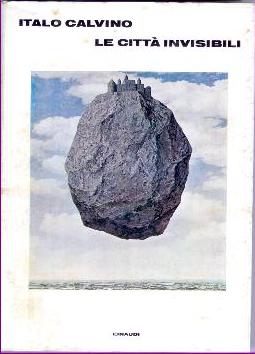
"Invisible Cities" is a fascinating book written by Italian author Italo Calvino in 1974. 📚The story introduces imaginative cities that a traveler named Marco Polo describes to the great Khan, Kublai Khan. These cities aren't real places you can't visit on a map; instead, they represent ideas and dreams! The cities often highlight human emotions, like love, fear, and beauty. The book has several colorful illustrations and encourages readers to think about what a city really is. 🌆With each city described, we explore feelings and experiences, making us think about our own homes and communities.
Explore with ChatDinoKey Points
The book explores many exciting themes!
Calvino drew inspiration from real cities around the world!
"Invisible Cities" is often compared to other imaginative books, such as "The Little Prince" by Antoine de Saint-Exupéry.
The "Invisible Cities" aren't just regular towns; they're like magical places made of dreams!
"Invisible Cities" is considered a classic in literature and has inspired many artists and writers around the world!
Calvino’s writing style is very special!
Illustrators have brought the cities from "Invisible Cities" to life with their artwork!
The ideas in "Invisible Cities" are also related to city planning and how we build our towns!
🌟 Themes And Motifs
The book explores many exciting themes! 🌟One big theme is the idea of memory. Just like we remember special moments, the cities remind us of important feelings and experiences in life. Another theme is the connection between people and places. For example, how a city can reflect the dreams and thoughts of its people. 👫The cities also explore themes like time, love, and the beauty of imagination. Each time you read the book, you might discover something new about these themes, and that makes it even more magical! 🦄
Go deeper🌏 Real-world Inspirations
Calvino drew inspiration from real cities around the world! 🌏Some of the cities in "Invisible Cities" might remind you of locations like Venice, Italy, with its canals and bridges, or even bustling cities like New York and Tokyo! 🗽The blending of reality and fantasy makes these places fascinating. Additionally, the themes of culture and people living together are important in all cities. Calvino encourages readers to think about how their own cities might hold hidden wonders, waiting to be discovered. Every street corner can inspire a fantastic story! 🌄
Go deeper🌟 Comparison With Other Works
"Invisible Cities" is often compared to other imaginative books, such as "The Little Prince" by Antoine de Saint-Exupéry. 🌟Both stories play with the concepts of imagination and understanding the world through unique perspectives. For example, "The Little Prince" has a young prince exploring planets, while Marco Polo explores the meanings of cities! 🪐Another example is "The Phantom Tollbooth" by Norton Juster. Both books encourage creative thinking and offer lessons disguised as playful stories. 🎠These stories help us see our everyday world in a new way, showing that adventure and discovery are everywhere! 🌍
Go deeper🌈 Concept Of Invisible Cities
The "Invisible Cities" aren't just regular towns; they're like magical places made of dreams! 🌈Each city is a mix of creativity, imagination, and important messages. For example, one city might represent happiness while another represents sadness. Calvino uses descriptions filled with poetic words to paint pictures in our minds, making us feel like we're actually visiting these cities! ✨Some cities even disappear or change shape, reminding us that our thoughts and feelings can change too. So, even though we can't see these cities with our eyes, we can experience them in our hearts and minds! 💖
Go deeper🌎 Cultural Impact And Reception
"Invisible Cities" is considered a classic in literature and has inspired many artists and writers around the world! 🌎People love the book because of its unique style and dream-like cities. It has been translated into many languages, allowing more children to enjoy Calvino’s magic! ✈️ Kids and adults alike have shared their favorite cities and how they felt about them, creating discussions and art inspired by the book. It has won awards and can be found in schools as an example of creative writing. This shows how Calvino’s work continues to influence culture! 🎨
Go deeper✍️ Literary Techniques And Style
Calvino’s writing style is very special! ✍️ He uses vivid imagery and poetry to make us feel like we're in each city. For example, instead of saying “the city is big,” he might say “the city stretches like the horizon.” 🌅 His use of metaphors and similes gives depth to the story and makes it more colorful! He also offers repetition and dialogue between Marco Polo and Kublai Khan, adding layers to the narrative. 📖This style encourages readers to think deeply about the meanings behind the words, making reading exciting and challenging! 🧠
Go deeper🎨 Art And Visual Interpretations
Illustrators have brought the cities from "Invisible Cities" to life with their artwork! 🎨Many artists create stunning visuals that capture the imagination of Calvino's cities, using different styles and colors to represent emotions. For example, they might show a bright, sunny city representing happiness or a dark, stormy city for mystery! 🌥️ The illustrations help readers visualize the cities and engage with the stories even more. Art inspired by the book encourages kids to make their own interpretations and share what these imaginative cities mean to them! ✏️
Go deeper🏙️ City Planning And Urban Studies
The ideas in "Invisible Cities" are also related to city planning and how we build our towns! 🏙️ Urban studies help us understand how cities work and how people interact within them. Architects and planners think about space, buildings, and nature to create cities that are safe and enjoyable to live in. Calvino’s work teaches us that cities can be more than just places; they can be vibrant with feelings and stories. This makes exploring a city's design and planning very important to help it grow and inspire its residents! 🏡
Go deeper