Indian Ocean Facts For Kids
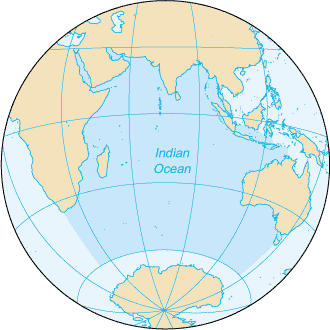
The Indian Ocean is the third-largest ocean, spanning 70,560,000 square kilometers and covering about 20% of Earth's water area, surrounded by diverse countries and rich in marine life.
Select reading age
Indian Ocean Facts For Kids
Videos & Quizzesincluded
About this topic
The Indian Ocean is a huge body of water, covering an area of about 70,560,000 square kilometers! 🌊That's like having a giant swimming pool that makes up 20% of our Earth's water. It is the third-largest ocean in the world, after the Pacific and Atlantic Oceans. The Indian Ocean is surrounded by many countries, including India, Africa, and Australia. 🗺️ It connects to other oceans through the Suez Canal in Egypt and the Strait of Malacca in Malaysia. The name "Indian" comes from the country of India, which is right next to this ocean! 🇮🇳
Explore with ChatDinoKey Points
The Indian Ocean is super important for trade and resources!
The Indian Ocean is a lively place for plants and animals!
The Indian Ocean is not just about water—it's full of exciting cultures!
Long ago, the Indian Ocean was a busy highway for trade!
Scientists are continually exploring the Indian Ocean to learn more!
The weather in the Indian Ocean can change a lot!
The Indian Ocean faces many environmental challenges!
The Indian Ocean is bordered by 38 countries!
The Indian Ocean is home to many famous landmarks!
The Indian Ocean is home to many beautiful island nations!
Photos of Indian Ocean

Indian Ocean — photo 1

Indian Ocean — photo 2

Indian Ocean — photo 3

Indian Ocean — photo 4

During summer, warm continental masses draw moist air from the Indian Ocean hence producing heavy rainfall. The process is reversed during winter, resulting in dry conditions.

Air pollution in South Asia spread over the Bay of Bengal and beyond.

Indian Ocean — photo 7

Indian Ocean — photo 8

Indian Ocean — photo 9
🚢 Economic Importance
The Indian Ocean is super important for trade and resources! 🚢Millions of tons of goods like oil and textiles travel through the ocean every year. The Suez Canal connects it to the Mediterranean Sea, boosting global trade! Many countries rely on fishing for food and jobs, with tuna as a key catch. 🐟There are also resources like oil and natural gas hiding beneath the seafloor. Tourists love to visit islands like the Maldives for fun, bringing lots of money to local economies! 🌺It's like a big treasure chest for the countries surrounding the ocean! 💰
Go deeper🐠 Marine Biodiversity
The Indian Ocean is a lively place for plants and animals! 🐠It is home to over 3,000 species of fish, including the colorful clownfish and the massive whale shark. You can also find beautiful coral reefs, which act like underwater gardens! 🌼Sea turtles and dolphins swim in these waters, while the bountiful plankton attracts all kinds of sea creatures. The Indian Ocean also has a unique mammal called the dugong, which is similar to a manatee. 🌊These animals love seagrass and can be spotted in places like the waters near Australia and the Maldives!
Go deeper🌍 Cultural Significance
The Indian Ocean is not just about water—it's full of exciting cultures! 🌍Many people live along its shores, including in India, Indonesia, and Madagascar. The ocean has influenced the lives of these communities for centuries. Trade routes used to connect different cultures, bringing spices, silk, and precious gems! 🥘Different languages are spoken, like Hindi, Swahili, and Arabic. Festivities and traditions thrive, from colorful festivals in India to vibrant dances in Madagascar. The ocean is part of their identity! It teaches them about history, bonding over its beauty and resources. 🎉
Go deeper🚢 Historical Trade Routes
Long ago, the Indian Ocean was a busy highway for trade! 🚢Ships sailed along its waters, carrying spices, silk, and other goods between distant lands. These trade routes connected India, Africa, the Middle East, and East Asia, creating a mix of cultures. Merchants from places like ancient Egypt traveled to India for treasures like pepper and cotton! 🌾In the 15th century, explorers like Vasco da Gama found new paths, changing the way people traveled across the ocean. These trade routes helped spread ideas, products, and even religion! 🌍Today, they're a big part of history!
Go deeper🔍 Research And Exploration
Scientists are continually exploring the Indian Ocean to learn more! 🔍They study the ocean's secrets, including its marine life, weather, and how it's changing over time. Researchers use underwater robots and submersibles to examine deep-sea creatures and coral reefs! 🐙They are also trying to understand how climate change affects the Indian Ocean. This research is important to keep our ocean healthy and full of life! Many universities and marine organizations around the world join efforts to protect this precious ecosystem. Together, they work to ensure that the Indian Ocean remains a vibrant place for future generations! 🌊
Go deeper🌦️ Climate And Weather Patterns
The weather in the Indian Ocean can change a lot! 🌦️ It is warm and tropical, which means it has sunny skies and plenty of rain. In the summer months, the water can be around 28 degrees Celsius (82°F), perfect for swimming! The ocean has a special wind called the monsoon, which brings heavy rains to India and surrounding areas from June to September. 🌬️ In winter, the winds change, creating cooler weather. Sometimes, there are storms like cyclones, which can be dangerous. 📉But don't worry—many scientists study these weather patterns to help keep people safe!
Go deeper🌊 Current Environmental Issues
The Indian Ocean faces many environmental challenges! 🌊Pollution is a big problem, with plastic waste harming animals and coral reefs. Overfishing makes it hard for fish populations to recover, causing imbalances in ocean life. Also, climate change is affecting the ocean's temperature, which can harm marine biodiversity. 🌡️ Coral reefs are especially vulnerable and are losing color and life. Scientists and activists are working hard to protect this beautiful ocean and restore its health, ensuring future generations can enjoy it too! They want to keep the Indian Ocean vibrant and full of life! 🌱
Go deeper🌏 Geography Of The Indian Ocean
The Indian Ocean is bordered by 38 countries! 🌏On the east, you can find Australia, while to the west lies Africa. India is to the north, and Madagascar, the world's fourth-largest island, is located to the southeast! 🌴The ocean has many smaller seas, like the Arabian Sea and the Andaman Sea. It is also home to numerous islands, such as the Maldives and Seychelles. The ocean is about 7,300 kilometers long, and its deepest point, called the Java Trench, is 7,450 meters deep. That's like stacking over 20 Eiffel Towers on top of each other! 🗼
Go deeper🏞️ Famous Landmarks And Locations
The Indian Ocean is home to many famous landmarks! 🏞️ The Maldives is known for its overwater bungalows and stunning coral reefs. The historic city of Zanzibar in Tanzania is famous for its spices and beautiful beaches. 🌺The Great Barrier Reef near Australia is the world's largest coral reef system! 🌊There's also the sprawling island of Madagascar, where you can find unique wildlife like lemurs! The scenic beaches of Seychelles attract tourists from all over the world! 🌍Each of these places showcases the beauty of the Indian Ocean and its rich cultural history!
Go deeper🏝️ Island Nations In The Indian Ocean
The Indian Ocean is home to many beautiful island nations! 🏝️ Some of the most famous ones are the Maldives, Mauritius, and Seychelles. The Maldives has over 1,000 coral islands, making it a paradise for beach lovers! 🏖️ Mauritius features lush forests and unique animals like the extinct dodo bird! 🦩Meanwhile, the Seychelles is known for its stunning beaches and rare giant tortoises. Each island has its own special culture, delicious food, and friendly people. These islands rely on tourism and fishing, making them important parts of the Indian Ocean family! 🌊
Go deeper