Hydrangea Facts For Kids
Hydrangea, commonly called hortensia, is a genus of over 70 species of flowering plants native to Asia and the Americas, cherished for their vibrant blooms and cultural significance.
Select reading age

Hydrangea Facts For Kids
Videos & Quizzesincluded
About this topic
Hydrangeas 🌸 are beautiful flowers that come in many colors like blue, pink, and white. 🌼They belong to a group of plants called "genus," which includes over 70 different types! 🌿These colorful blooms can be found in places like Asia 🌏, especially Japan, and the Americas, including the United States 🇺🇸. Hydrangeas love moist soil and grow best in gardens or parks where they can soak up sunlight ☀️. They are popular for making gardens vibrant and can be found in many homes, adding beauty to outdoor spaces.
Explore with ChatDinoKey Points
There are many beautiful hydrangea varieties to choose from!
If you want more hydrangeas, you can grow new ones in two main ways: cuttings and layering!
There are many types of hydrangeas, and they all look a bit different!
To grow a healthy hydrangea, 🌸 it needs the right care!
Hydrangeas have special meanings in different cultures!
Hydrangeas can grow quite large!
Hydrangeas can attract some pesky bugs!
Hydrangeas are popular in landscaping design!
Hydrangeas belong to the genus called "Hydrangea" and the family "Hydrangeaceae."
Hydrangeas inspire many artists and writers!
Photos of Hydrangea

Hydrangea flower color changes based on the pH in soil. As the graph depicts, soil with a pH of 5.5 or lower will produce blue flowers, a pH of 6.5 or higher will produce pink hydrangeas, and soil in between 5.5 and 6.5 will have purple hydrangeas.

Hydrangea paniculata

Hydrangea knowltoni

Hydrangea macrophylla
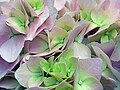

Hydrangea — photo 6
from en.wiki
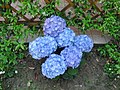
Hydrangea — photo 8

Hydrangea — photo 9
🌸 Hydrangea Varieties
There are many beautiful hydrangea varieties to choose from! Some of the most famous ones include the 'Annabelle' hydrangea, known for its huge white blooms 🌸, and the 'Endless Summer' variety, which blooms all summer long in various colors! 🌈The 'PeeGee' hydrangea grows tall and has conical white flowers 🌳, while the 'Lacecap' hydrangea has flat flower clusters that look like lace. Each variety has its special features and colors, making them fun to explore and grow! 🌼
Go deeper🌱 Propagation Methods
If you want more hydrangeas, you can grow new ones in two main ways: cuttings and layering! 🌱Taking cuttings means snipping a piece of a healthy stem and planting it in soil. With the right care, it will grow roots and become a new plant! 🌿Layering involves bending a branch down to the ground, covering it with soil, and letting it grow roots while still attached to the original plant 🌱. Both methods are exciting ways to create more beautiful hydrangeas in your garden! 🌼
Go deeper🌈 Types Of Hydrangeas
There are many types of hydrangeas, and they all look a bit different! 🌈The bigleaf hydrangea has large flowers that can change color, depending on the soil, as we mentioned earlier! 🌸The panicle hydrangea has cone-shaped flower clusters and can be white or light pink. Then there’s the smooth hydrangea that has round flower heads and is very hardy 🌿. Other varieties include the oakleaf hydrangea 🦑 with its unique leaf shape. Each type brings a different beauty to your garden, making hydrangeas special!
Go deeper🌸 Cultivation And Care
To grow a healthy hydrangea, 🌸it needs the right care! First, you should plant it in a sunny or partially shady spot. ☀️ They like their soil to be moist, so water them regularly. But be careful, as too much water can cause their roots to rot 💧! A good layer of mulch can help keep the soil moist. In winter, it’s a good idea to wrap young plants to protect them from the cold ❄️. With a little love and care, your hydrangeas can bloom beautifully every year! 🌼
Go deeper🏮 Cultural Significance
Hydrangeas have special meanings in different cultures! 🏮In Japan, they symbolize gratitude and understanding, making them the perfect gift for friends! 🎁In the United States 🇺🇸, they are often used in weddings and celebrations because of their beauty. In art, hydrangeas bring joy with their bright colors, and in literature, they often symbolize love and emotion. 💖Learning about these meanings helps us understand how flowers connect with people and cultures around the world! 🌍
Go deeper🌳 Physical Characteristics
Hydrangeas can grow quite large! 🌳They can reach up to 10 feet (3 meters) tall, depending on the type. 🌿Their leaves are usually green and can be oval or round. Hydrangeas are adored for their impressive clusters of flowers that can be tiny or very large! 🌼Interestingly, the flower color can change based on the soil's acidity. 🌍For example, in acidic soil, blue flowers bloom, while alkaline soil produces pink flowers. Each hydrangea has a unique appearance, but they all share that stunning flower power! 🌈
Go deeper🐞 Common Pests And Diseases
Hydrangeas can attract some pesky bugs! 🐞Aphids are small insects that love to munch on their leaves, and they can make hydrangeas unhealthy 😟. Gardeners can spray them off with water when they see them. Another pest is the spider mite, which also likes to snack on leaves! 🕷️ As for diseases, overwatering can cause root rot, while powdery mildew shows up as a white powdery coating on leaves. 🌿Keeping an eye on your hydrangeas can help keep them healthy and happy! 🌸
Go deeper🌼 Hydrangeas In Landscaping
Hydrangeas are popular in landscaping design! 🌼They come in various sizes, making them perfect for borders, flower beds, or even as centerpieces in gardens. 🌳You can mix them with other flowers to create beautiful combos of colors! 🌈Some people use them to create hedges that provide privacy. The lovely blooms often attract butterflies 🦋, making gardens feel more alive! Whether planted in front yards, backyards, or parks, hydrangeas add an extra charm to our outdoor spaces! 🌿
Go deeper🌳 Taxonomy And Classification
Hydrangeas belong to the genus called "Hydrangea" and the family "Hydrangeaceae." 🌳 This means they are related to other plants in the same family! There are more than 70 species of hydrangeas, which are divided into different categories. 🌼Popular types include bigleaf, panicle, and smooth hydrangeas. Each species has its unique features, colors, and ways of growing! 🌈For example, the bigleaf hydrangea, found mainly in Japan, produces lovely large blooms. 🌸Exploring the world of hydrangeas helps us learn how plants are grouped in nature!
Go deeper🎨 Hydrangeas In Art And Literature
Hydrangeas inspire many artists and writers! 🎨They often appear in paintings because of their lovely colors and shapes. Famous artists like Vincent van Gogh painted vibrant hydrangeas, showcasing their beauty! In literature, they represent different feelings, such as love, friendship, and even nostalgia. 🌺Books and poems often mention hydrangeas to create vivid imagery! Exploring art and literature featuring hydrangeas allows us to appreciate how these flowers can spark creativity and emotions in many ways! 🌍
Go deeper