All Articles

Homeopathy

Homeopathy Facts For Kids

Homeopathy is a pseudoscientific system of alternative medicine that uses extremely diluted natural substances to treat symptoms, based on the belief that like cures like.

๐ŸŽจ Reading age for 6-8
Background blob
Homeopathy
Homeopathy
Facts for Kids!

Do more with AI

Introduction

Homeopathy is a way of treating sickness using tiny amounts of special medicines made from natural things, like plants and minerals. ๐ŸŒฟ๐Ÿ’ง A doctor who practices homeopathy is called a homeopath. Unlike regular medicine, homeopathy believes that "like cures like," which means that something that causes symptoms in a healthy person can help treat those same symptoms in someone who is sick! ๐ŸŽญThis idea was created by Samuel Hahnemann, a doctor from Germany, in the late 1700s. Homeopathy is popular in many countries, including India and France, where many people use it for common health issues. ๐ŸŒโœจ

Images of Homeopathy

Outline of human male body with glow.

Outline of human male body with glow.

Samuel Hahnemann Monument, Washington, D.C., with the inscription Similia Similibus Curentur โ€“ "Like cures Like"

Samuel Hahnemann Monument, Washington, D.C., with the inscription Similia Similibus Curentur โ€“ "Like cures Like"

Homeopathy Looks at the Horrors of Allopathy, an 1857 painting by Alexander Beydeman, showing historical figures and personifications of homeopathy observing the brutality of medicine of the 19th century

Homeopathy Looks at the Horrors of Allopathy, an 1857 painting by Alexander Beydeman, showing historical figures and personifications of homeopathy observing the brutality of medicine of the 19th century

Homeopathic repertory by James Tyler Kent

Homeopathic repertory by James Tyler Kent

Oscillococcinum, a homeopathic remedy in pill formImage by Bogdan29roman, licensed under Creative Commons Attribution-Share Alike 3.0

Oscillococcinum, a homeopathic remedy in pill form

This bottle is labelled Arnica montana (wolf's bane) D6, i.e. the nominal dilution is one part in a million (10-6).Image by Abalg, licensed under Creative Commons Attribution-Share Alike 3.0

This bottle is labelled Arnica montana (wolf's bane) D6, i.e. the nominal dilution is one part in a million (10-6).

A homeopathic preparation made from marsh tea: the "15C" dilution shown here means the original solution was diluted to 1/1030 of its original strength.
A homeopathic preparation made from marsh tea: the "15C" dilution shown here means the original solution was diluted to 1/1030 of its original strength.

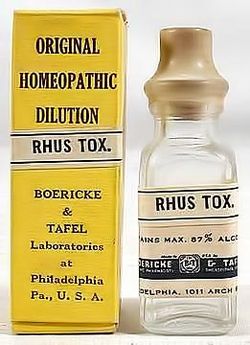
Homeopathic preparation Rhus toxicodendron, derived from poison ivy

Homeopathic preparation Rhus toxicodendron, derived from poison ivy

Old homeopathic belladonna preparation

Old homeopathic belladonna preparation

Principles Of Homeopathy

The main idea behind homeopathy is that โ€œlike cures like.โ€ This means that a substance causing symptoms in a healthy person can be used to treat those same symptoms in a sick person. ๐ŸฉบHomeopaths believe that the body has a way to heal itself, and their remedies help support this process. ๐Ÿ›ก๏ธ They use very tiny doses of medicine to avoid side effects. The remedies are made through a process called "potentization," where the substance is diluted and shaken many times. This makes the remedy more effective, according to homeopaths! ๐ŸคฒItโ€™s all about helping the body heal naturally! ๐ŸŒŸ

Common Homeopathic Remedies

There are many homeopathic remedies used to treat various conditions! Some of the common ones include Arnica montana, which helps reduce bruising and soreness from injuries, and Calendula, which is used for cuts and scrapes. ๐Ÿค•๐Ÿ’‰ Another popular remedy is Nux vomica, which helps with tummy troubles caused by eating too much. ๐Ÿฝ๏ธ Homeopaths may also use Belladonna for fevers and headaches! ๐ŸŒก๏ธ Patients take these remedies in tiny doses, often as sugary pills or liquid. Remember, homeopathic remedies are based on the patient's specific symptoms, not just the illness! So, they are personalized for each person! ๐ŸŒˆ

Global Practices Of Homeopathy

Homeopathy is popular in various countries around the world! ๐ŸŒIn India, many people rely on homeopathic treatments, and there are even homeopathic hospitals! ๐ŸฅIn the UK, homeopathy has been practiced for over 200 years, and some National Health Service (NHS) practitioners offer homeopathic options. France also shows a strong interest in homeopathy, with many pharmacies carrying these remedies! ๐Ÿ’Š๐ŸŒฟ Many other countries, like Brazil and Germany, have their own practices and beliefs around homeopathy. This variety shows how people from different cultures explore alternative medicine to stay healthy! ๐ŸŒโœˆ๏ธ

Historical Background Of Homeopathy

Samuel Hahnemann, a German doctor, started homeopathy in 1796. He wanted to find better ways to help sick people than the methods his time used, which were often harsh. ๐Ÿค•He discovered that if he took a tiny dose of a substance that caused symptoms, it could help others heal! This idea was known as the "Law of Similars." Hahnemann even wrote a book called "Organon of Medicine" in 1810 to explain his ideas better. ๐Ÿ“šOver time, homeopathy spread to other countries, and many people began to believe in its healing powers, making it an exciting part of alternative medicine history! ๐Ÿ“–๐ŸŒŽ

Regulation Of Homeopathic Practices

In many countries, homeopathy is regulated! ๐Ÿ“œFor example, in the United States, homeopathic remedies can be approved by the Food and Drug Administration (FDA). In India, homeopaths must complete a special degree to practice. ๐ŸŽ“However, regulations can vary a lot. In some places, anyone can call themselves a homeopath without any training! This can make it tricky for people to know who to trust. ๐Ÿ˜•It's important for patients to research and find qualified practitioners to ensure they receive safe and effective treatment! Remember to always talk to your doctor before trying new medicines! ๐Ÿฉบโœจ

Homeopathy Vs. Conventional Medicine

Homeopathy and conventional medicine are two different approaches to health. ๐ŸฉบConventional medicine, also called allopathic medicine, uses drugs and surgery to treat diseases, while homeopathy uses tiny amounts of natural substances. ๐Ÿ’ŠDoctors of conventional medicine often focus on the symptoms and the root cause of the illness to make a diagnosis. In contrast, homeopaths look at people's overall health and experiences. Each approach has its benefits! Itโ€™s essential for patients to choose the one that works best for them, and they can even use both methods together! ๐Ÿค๐ŸŒˆ

Patient Experiences And Case Studies

Many people have reported positive experiences with homeopathy! ๐ŸŒŸSome parents choose homeopathic remedies for their kids to treat common issues like colds or fevers. ๐Ÿฅต๐ŸŒฌ๏ธ For instance, someone might share a story about how their child felt better after taking a homeopathic remedy for a stomachache! But there are also stories where homeopathy didn't work for people, showing that not everyone has the same experience. ๐Ÿ“–This is a reminder that every person is different! It's important for those who are interested to gather information and possibly consult with health professionals to make the best choices! ๐Ÿค”๐Ÿ’ฌ

Current Research Trends In Homeopathy

Scientists are still studying homeopathy to understand its effects! ๐Ÿ”ฌSome new studies are looking at how homeopathy might help specific conditions, such as allergies or asthma. ๐ŸŒฌ๏ธ Researchers are also exploring how homeopathy might work, examining the tiny doses used and how they affect the body. A focus is on gathering more high-quality evidence to see if homeopathy can be helpful for patients. ๐ŸงชBy doing this research, scientists aim to find better ways to help sick people, whether through homeopathy or conventional medicine. It's an exciting area with lots of potential for future discoveries! ๐ŸŒŸ๐Ÿ“Š

Scientific Criticism And Controversies

Homeopathy has received mixed reactions from scientists and doctors. Some people believe in its effectiveness, while others are skeptical. ๐Ÿ”Critics argue that many studies show homeopathic remedies work no better than sugar pills, also known as placebos. ๐Ÿฅ„Placebos can help people feel better simply because they think they are receiving treatment! The scientific community often calls homeopathy a pseudoscience, which means it lacks solid scientific evidence. โš–๏ธ However, many people continue to use homeopathy for various health issues, believing it helps them feel better despite the criticism! ๐Ÿค”๐Ÿ’ญ

Homeopathy Quiz

Q1
Question 1 of 10

Learn more about Homeopathy

Ready to create?

Drop Files here
Make

To create a safe space for kid creators worldwide!

Create

Vibe Coding

Kids GPT

All Tools

Kibu

Resources

Worksheets

SafeTube

Blog

FAQ

Account

Pricing

Log-in

Sign-up

Data Deletion

Company

About

Community Guidelines

Privacy Policy

Terms of Service

2025, URSOR LIMITED. All rights reserved. DIY is in no way affiliated with Minecraftโ„ข, Mojang, Microsoft, Robloxโ„ข or YouTube. LEGOยฎ is a trademark of the LEGOยฎ Group which does not sponsor, endorse or authorize this website or event. Made with love in San Francisco.