Homalocephale Facts For Kids
Homalocephale is a distinctive herbivorous dinosaur known for its flattened skull and thickened dome, belonging to the Pachycephalosauria family during the Late Cretaceous period.
Select reading age
Homalocephale Facts For Kids
Videos & Quizzesincluded
About this topic
Homalocephale is a cool dinosaur that lived about 75 million years ago during the Late Cretaceous period! 🦖This dinosaur had a flat head with a bumpy surface, which made it look quite different from other dinosaurs. Scientists think that Homalocephale could have lived in herds, which means they played and moved around together. Fossils of this dinosaur have been discovered in a place called Mongolia, which is in Asia. This creature was small compared to some other dinosaurs, reaching about 6.5 feet (2 meters) in length! 🌏
Explore with ChatDinoKey Points
Homalocephale is closely related to other dinosaur species in the Pachycephalosaur family.
Homalocephale was a herbivore, which means it only ate plants!
Homalocephale was known for its unique head shape, which had a flat top and bumpy texture.
Homalocephale is an important species for scientists studying dinosaur evolution!
Homalocephale lived in what is now modern-day Mongolia!
Homalocephale likely lived in groups, which is called a herd.
The first fossils of Homalocephale were found in 1974 by a team of paleontologists led by Dr.
Homalocephale might not be as famous as T. rex or Triceratops, but it still appears in some dinosaur books and movies!
Photos of Homalocephale

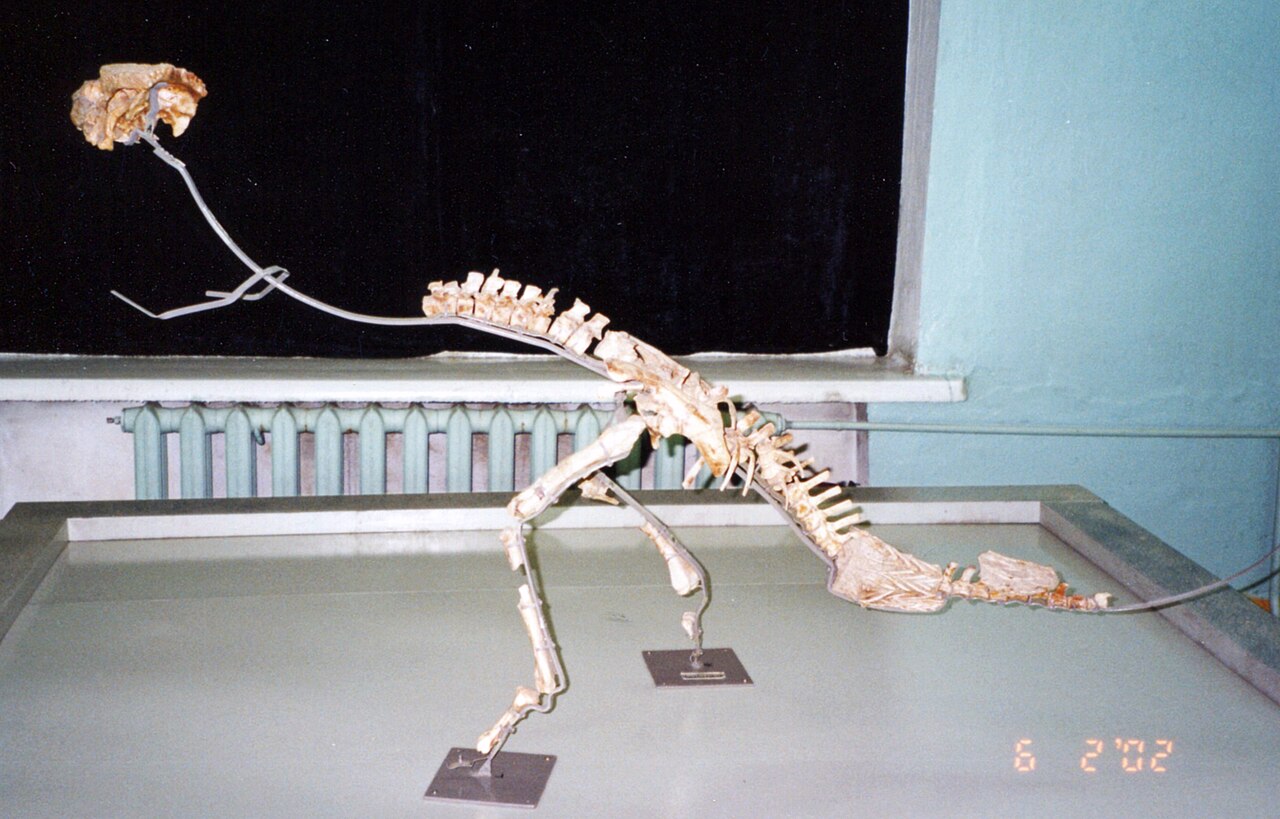
Skeletal diagram of the holotype


Cast of the holotype skull

Two Homalocephale with Saurolophus herd behind
🌟 Related Species
Homalocephale is closely related to other dinosaur species in the Pachycephalosaur family. 🌟Some of its cousins include Stygimoloch and Dracorex! These dinosaurs also had unusual head shapes with bumps and spikes. They lived around the same time as Homalocephale and shared the same habitat in what is now Mongolia. By studying these relatives, scientists can learn more about how they lived and interacted, helping complete the picture of these amazing creatures! 🦖
Go deeper🌿 Diet And Feeding Habits
Homalocephale was a herbivore, which means it only ate plants! 🌿It likely feasted on low-lying plants, ferns, and shrubs, using its beak-like mouth to munch on them. Its flat head helped it reach down and graze easily. Just like cows or sheep today, they spent a lot of time eating! Scientists believe they might have traveled in groups to find the best food spots. Eating in large groups helped them stay safe from hungry predators, ensuring that they always found enough to eat! 🍃
Go deeper🎩 Physical Characteristics
Homalocephale was known for its unique head shape, which had a flat top and bumpy texture. 🎩Its head was wider than many other dinosaurs, and scientists think it might have used this special shape for defense! The body was built like a strong, compact tank with sturdy legs, ideal for running fast. Its legs were likely powerful enough to help it escape from predators. This dinosaur was covered with small bumps and possibly had a body that could change color, like some modern-day lizards! 🌈
Go deeper🦕 Evolutionary Significance
Homalocephale is an important species for scientists studying dinosaur evolution! 🦕It belongs to a group called Pachycephalosaurs, known for their unique head shapes. These dinosaurs show us how they adapted to their environments. Homalocephale's flat bumpy head is thought to be an emergency feature that might have helped it intimidate predators or compete with others for food and mates! Understanding how Homalocephale evolved helps scientists piece together the big story of how dinosaurs changed over millions of years! 📜
Go deeper🏜️ Habitat And Geographic Range
Homalocephale lived in what is now modern-day Mongolia! 🏜️ During the Late Cretaceous, this area was a lush land with rivers and forests. It provided plenty of food and shelter for different dinosaurs. Some of its neighbors included the massive Velociraptor and the long-necked Sauropods! Scientists believe Homalocephale roamed around in herds, searching for grasses and other plants to munch on. It had to be careful, though, because other bigger dinosaurs were also there looking for food! 🦕
Go deeper👥 Behavior And Social Structure
Homalocephale likely lived in groups, which is called a herd. 👥Being in a herd helped protect them from predators like the fierce Tyrannosaurus rex! The bumpy, flat head could have been used for display when interacting with other Homalocephale. Just like some animals today show off their bright colors or sounds to attract friends, Homalocephale might have communicated with each other using their shape! They were social dinosaurs that probably cared for each other, just like you and your friends do! 🤗
Go deeper🏞️ Discovery And Fossil Evidence
The first fossils of Homalocephale were found in 1974 by a team of paleontologists led by Dr. Rinchen Barsbold in Mongolia. 🏞️ They discovered a skull and some of its bones, which helped them learn more about this fascinating dinosaur! Fossils are like time machines, giving us clues about how dinosaurs lived. Scientists use these fossils to understand everything, from their size to their behavior! Over the years, more fossils have been uncovered, making Homalocephale one of the best-studied dinosaurs. 🔍
Go deeper📚 Cultural Impact And Popular Culture
Homalocephale might not be as famous as T. rex or Triceratops, but it still appears in some dinosaur books and movies! 📚It's fascinating to see its unique head portrayed in various shows. Learning about Homalocephale helps kids understand the diversity of dinosaurs that existed millions of years ago! This little dinosaur reminds us that there were many different shapes and sizes of dinosaurs roaming the Earth, and it encourages us to explore and learn more about these magnificent creatures! 🎥
Go deeper