Hera Facts For Kids
Hera is the Greek goddess of marriage and family, known for her role as the queen of the gods and as the wife of Zeus, marked by her beauty, jealousy, and protective nature.
Select reading age
Hera Facts For Kids
Videos & Quizzesincluded
About this topic
Hera is one of the most important gods in ancient Greece! 🌟She is known as the queen of the gods and the goddess of marriage and family. She is the wife of Zeus, the king of the gods, and they lived on Mount Olympus, a real mountain in Greece! 🏔️ Hera is famous for her beauty, but also for her strong personality. People in ancient Greece believed that she protected women and children, and they would pray to her for help with family matters. Many stories about Hera show how powerful she was and how much she cared for her family! ❤️
Explore with ChatDinoKey Points
Hera had many symbols that represented her power!
Hera is a popular character in many ancient stories and artworks!
People in ancient Greece worshipped Hera in many ways!
Hera is the daughter of the Titans Cronus and Rhea, making her part of the oldest gods!
Today, Hera is still a prominent figure!
Hera is unique but shares some similarities with other gods!
Hera was seen by many ancient Greeks as a role model for women!
Hera's story has inspired many discussions in psychology and feminism!
Photos of Hera

Heraion of Samos. A reconstruction of the "Polycrates temple" (front view)

Iris (on the left) with Zeus and Hera, east frieze of the Parthenon, British Museum.

Hera on an antique fresco from Pompeii

The Temple of Hera at Agrigento, Magna Graecia.

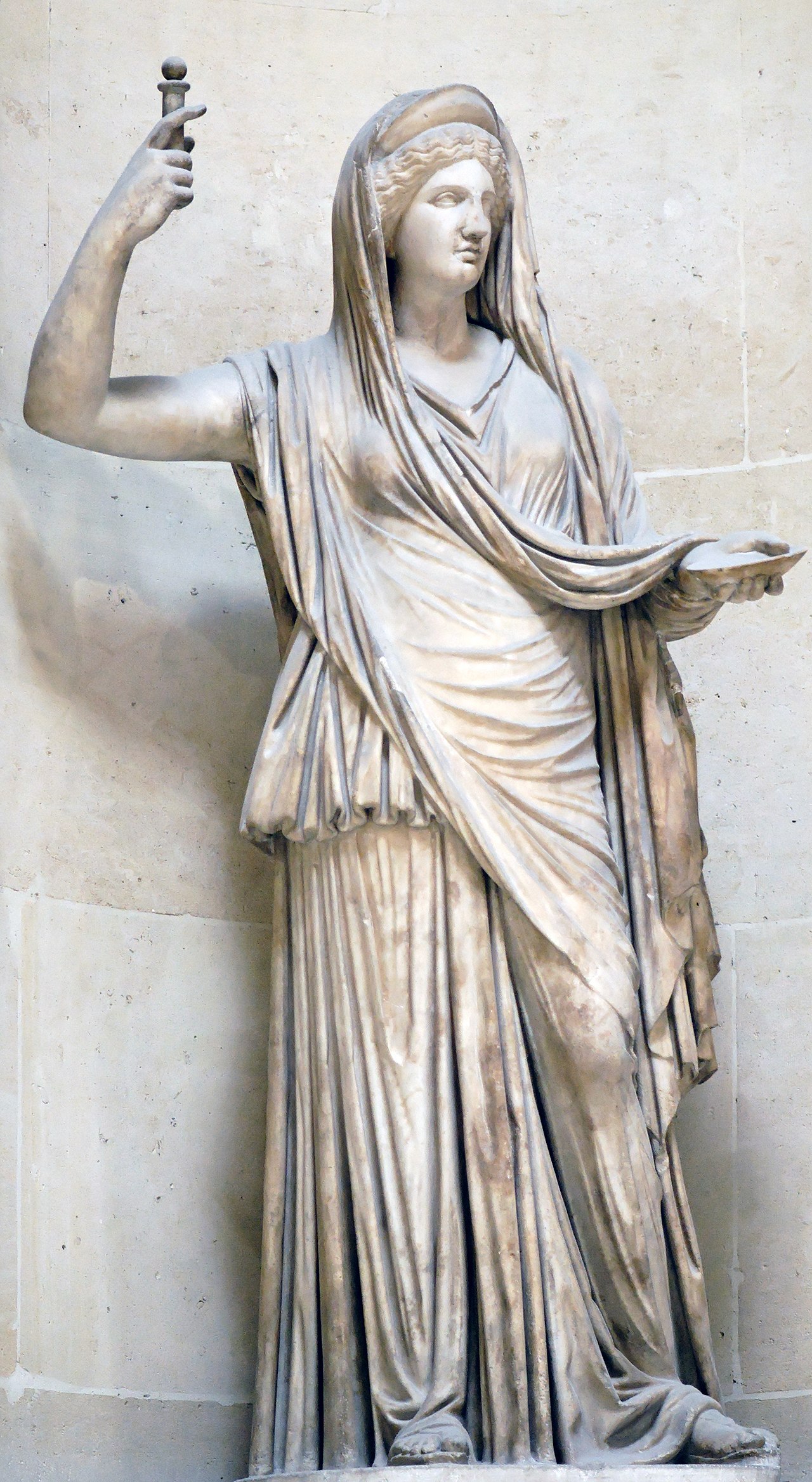
Roman copy of a Greek 5th century Hera of the "Barberini Hera" type, from the Museo Chiaramonti

Jupiter and Juno on Mount Ida by James Barry, 1773 (City Art Galleries, Sheffield)

Plan of the Temple of Hera (Olympia):Heraion

First temple of Hera, Paestum (Basilica)

Selinunte-TempleE- Temple of Hera
🌿 Symbols And Iconography
Hera had many symbols that represented her power! 🌿One of her main symbols is the peacock, known for its beautiful feathers. It was said that the peacock's tail had eyes, which represented Hera's watchfulness! 👁️ Another symbol of hers is the bridal crown, showing her connection to marriage. Many artists in ancient Greece would paint and sculpt her using these symbols, helping people recognize her in stories and temples. 🏛️ She was often depicted holding a scepter, which shows she was a queen. Just looking at these symbols helped people remember how special Hera was!
Go deeper🎨 Hera In Literature And Art
Hera is a popular character in many ancient stories and artworks! 🎨Famous poets like Homer wrote about her in the "Iliad" and "Odyssey." In these tales, she often plays a key role in the adventures of heroes. Artists also loved to portray her, using her symbols like the peacock in paintings and sculptures. People could see her elegance and power through these creations! 🕊️ In some stories, Hera fights bravely to protect her loved ones, showing that she is not just a queen but also a fierce goddess! Her representation in art helped spread her legacy for centuries!
Go deeper🙏 Worship And Cult Practices
People in ancient Greece worshipped Hera in many ways! 🙏They built magnificent temples for her, where they would offer gifts like flowers and food. One of the biggest festivals dedicated to her was called the Heraia, held in Olympia. 🏟️ During this festival, women would race in honor of Hera, demonstrating strength and unity. They believed that by worshipping her, they would receive blessings for happy marriages and healthy families. Men and women would illustrate their love for Hera with stories and songs, keeping her memory lively in their hearts! 🎶💕
Go deeper🌌 Origins And Mythological Background
Hera is the daughter of the Titans Cronus and Rhea, making her part of the oldest gods! 🌌She was swallowed by her father but later rescued by her brother Zeus. Hera’s story is filled with adventures, including her wedding to Zeus, which was celebrated with great joy on Mount Olympus. 🥳But be careful! Hera had a reputation for being jealous, especially towards Zeus's other lovers. Many Greek myths tell about her tricky ways to get back at those who crossed her. Despite her jealousy, Hera always remained a powerful goddess and was respected by the people! 🌺
Go deeper🎬 Modern References And Cultural Impact
Today, Hera is still a prominent figure! She appears in movies, books, and even video games! 🎬In the popular Disney movie "Hercules," she is shown as a caring mother figure. Similarly, many stories are being retold with a modern twist, introducing her character to a new generation. Hera's influence can be seen in discussions about marriage, family, and female empowerment, reminding us how ancient stories can be woven into our lives today! 📖She is a symbol not just of love, but also of strength, making her a relatable figure for many!
Go deeper🌍 Comparative Analysis With Other Deities
Hera is unique but shares some similarities with other gods! 🌍For instance, she is often compared to the Roman goddess Juno, who is also a protector of marriage. Both goddesses are powerful and have a similar role in their respective mythologies. However, Hera is known for her fierce jealousy, which makes her quite different! 🐉Unlike other gods like Athena, who values wisdom and strategy, Hera's primary focus has always been on family and relationships. By comparing Hera to other deities, we see how ancient cultures valued different traits in their gods and goddesses! 📚
Go deeper👩🔬 Hera As A Role Model In Ancient Society
Hera was seen by many ancient Greeks as a role model for women! 👩🔬 She was admired for being a strong and loving wife and for standing up for family values. Hera showed that women could be powerful leaders and make big decisions! 🚀Many women looked up to her as a protector of marriage, which was very important in Greek society. Though she had her challenges, Hera's bravery and loyalty made her an inspiring figure for many! She taught people that love and family mattered, and her stories motivated women to embrace their own strengths. 💪
Go deeper🧠 Hera's Legacy In Psychology And Feminism
Hera's story has inspired many discussions in psychology and feminism! 🧠She represents the struggles and strengths of women, encouraging them to stand up for themselves. Psychologically, Hera's experiences can help us understand emotions like jealousy and protection. By analyzing her actions, we learn about personal relationships and the challenges women face. Feminists often cite Hera as a powerful figure, highlighting that women can be leaders and advocates! 🚺As a result, her legacy continues to live on, empowering people to embrace their individuality and the value of family! 💖
Go deeper