Hadrosaurus Facts For Kids
Hadrosaurus is a genus of duck-billed dinosaurs known for their herbivorous diet and social behavior, living during the late Cretaceous period.
Select reading age
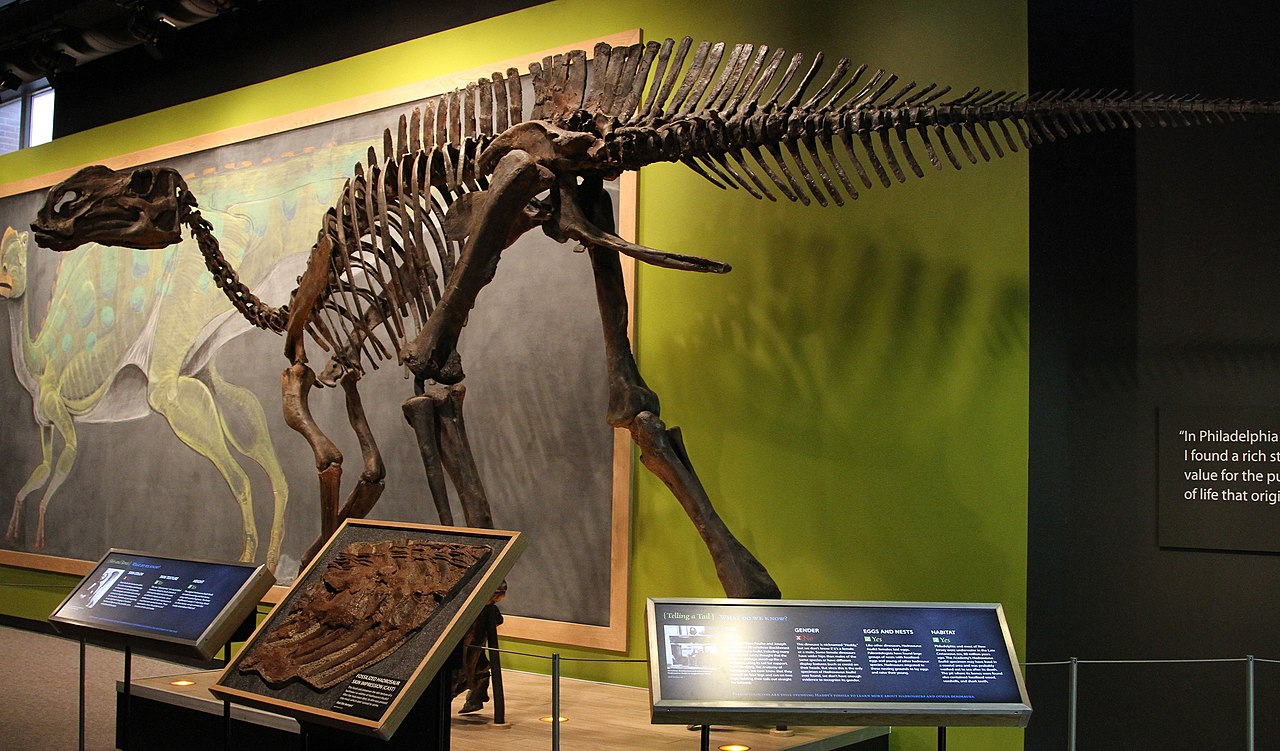
Hadrosaurus Facts For Kids
Videos & Quizzesincluded
About this topic
Hadrosaurus 🦖, known as the "duck-billed dinosaur," roamed the Earth about 75 million years ago during the Late Cretaceous period. This friendly giant was discovered in Haddonfield, New Jersey, in 1858 by a famous paleontologist named John Bell Hatcher. Hadrosaurus could grow to around 30 feet long! 🥳They are popular because their flat, wide beaks resemble a duck's bill, which helped them munch on plant leaves. Their unique features, like their crests, made them special among dinosaurs. Not just a sight to see, Hadrosaurus played a major role in teaching us about dinosaur lives!
Explore with ChatDinoKey Points
Hadrosaurus belongs to the family of dinosaurs called Hadrosauridae, which evolved around 100 million years ago!
Hadrosaurus had a long, sturdy body with a massive, flat head crowned by a characteristic duck-like bill.
Hadrosaurus was a herbivore, which means it loved to eat plants!
Hadrosaurus lived in what is now North America 🌎, especially in regions that were covered with lush vegetation.
Hadrosaurus was a social creature, living in packs that could consist of many dinosaurs.
When comparing Hadrosaurus to other dinosaurs, it stands out for its unique beak and the ability to chew tough plants.
Fossils of Hadrosaurus were first discovered in Haddonfield, New Jersey, and it was one of the first dinosaur skeletons completed in the United States!
Hadrosaurus has made waves not just in science but also in popular culture!
Photos of Hadrosaurus

Benjamin Waterhouse Hawkins mounted Hadrosaurus, the first mounted dinosaur skeleton in the world

Photograph of the site where the fossils were found (2010)

Size of Hadrosaurus compared to a human

Plates from Leidy's description

Displayed casts of the 35 known bones at the Philadelphia Academy of Natural Sciences

Cranial and postcranial elements from the holotype

🦕 Evolutionary History
Hadrosaurus belongs to the family of dinosaurs called Hadrosauridae, which evolved around 100 million years ago! 🦕Scientists believe they arose from smaller herbivorous dinosaurs called iguanodontids. The adaptation of the duck-bill helped them eat better and survive. Hadrosaurus and its relatives are some of the last dinosaurs to thrive before the mass extinction. Their fast evolution gave them special features like strong legs and large herds for protection. Understanding their evolutionary history helps scientists learn how dinosaurs adapted to various habitats over millions of years! 📜
Go deeper🦕 Physical Description
Hadrosaurus had a long, sturdy body with a massive, flat head crowned by a characteristic duck-like bill. With two arms and three toes on each foot, this dinosaur was well-equipped to walk on land. Its strong legs helped it run away from predators 🦕. The average size of Hadrosaurus was about 17 feet tall and 30 feet long including its tail. They also had long, built-in "toilet" teeth that helped grind tough plants 🌿. Some Hadrosauruses had ornamental crests on their heads, which may have been used for communication or attracting mates!
Go deeper🌱 Diet And Feeding Habits
Hadrosaurus was a herbivore, which means it loved to eat plants! 🌱It used its flat, duck-like bill to snip leaves off bushes and trees. Hadrosaurus had hundreds of teeth that worked like a set of natural scissors! It could grind and chew its food easily, breaking it down to swallow. Studies suggest they could eat around 100 pounds of plants each day! 🌿Not only did they munch on ferns, but they also enjoyed fruits and other greens. Their strong jaws helped them feast, making them happy, healthy dinosaurs.
Go deeper🌎 Habitat And Distribution
Hadrosaurus lived in what is now North America 🌎, especially in regions that were covered with lush vegetation. During the Late Cretaceous period, forests and rivers filled the land. These areas provided plenty of food, like ferns and leafy plants. Haddonfield, New Jersey, is where one of the first Hadrosaurus fossils were found. 🗿Dinosaurs like Hadrosaurus often traveled in herds to find food and protect each other from hungry predators like Tyrannosaurus rex! Can you imagine walking with a giant group of duck-billed friends in a stony, prehistoric forest?
Go deeper🦖 Behavior And Social Structure
Hadrosaurus was a social creature, living in packs that could consist of many dinosaurs. This gave them safety in numbers from predators! 🦖They communicated using their different body language and might have made sounds too. Their crests might have helped them signal to each other. These dinosaurs were gentle giants, often seen calmly grazing together. They likely took care of each other, playing like friends do at school! Imagine a group of big Hadrosauruses munching on leaves while chatting like you and your friends on the playground! 😄
Go deeper🦖 Comparison With Other Dinosaurs
When comparing Hadrosaurus to other dinosaurs, it stands out for its unique beak and the ability to chew tough plants. 🦖Unlike the fierce T. rex, which had sharp teeth for hunting, Hadrosaurus was chill and focused on munching leaves. They were also heavier and bigger than smaller dinosaurs like Velociraptor. Another notable feature is their famous crest; not all dinosaurs had this! These adaptations made Hadrosaurus a special part of the dinosaur world, influencing many other dinosaur species and helping shape prehistoric ecosystems! 🌿
Go deeper🦴 Fossil Discovery And Significance
Fossils of Hadrosaurus were first discovered in Haddonfield, New Jersey, and it was one of the first dinosaur skeletons completed in the United States! 🦴This discovery was important because it helped scientists understand dinosaurs better. Like pieces of a puzzle, each bone helped researchers figure out how dinosaurs lived and moved. The Hadrosaurus remains were significant for paleontology, leading to many other findings! This dinosaur was so important that it even became the state dinosaur of New Jersey! It reminds us how fossil discoveries open windows to prehistoric worlds! 🌍
Go deeper🎥 Cultural Impact And Representation
Hadrosaurus has made waves not just in science but also in popular culture! 🎥It has appeared in movies like "The Land Before Time," and in loads of kids' books featuring dinosaurs. Artists like Charles R. Knight helped bring them to life through exciting illustrations! 🌈They show kids how magnificent these creatures were. Hadrosaurus is also the mascot for many Dinosaur Days and kids’ events worldwide! By learning about them, children are invited to explore the mysteries of the prehistoric world and become little paleontologists themselves! 🦖✨
Go deeper