Gustav Iv Adolf Of Sweden Facts For Kids
Gustav IV Adolf was the King of Sweden from 1792 to 1809, known for his young reign, opposition to revolutionary ideas, and eventual deposition after military failures.
Select reading age

Gustav Iv Adolf Of Sweden Facts For Kids
Videos & Quizzesincluded
About this topic
Gustav IV Adolf was the King of Sweden from 1792 to 1809. 👑He was born on November 1, 1778, in Stockholm, Sweden. Gustav IV became king when he was only 14 years old after his father, King Gustav III, was assassinated. He ruled during a thrilling time in history when many countries in Europe were involved in wars. However, his reign faced many challenges, and he was eventually overthrown in a coup. 🏰Gustav IV is remembered for his attempts to keep Sweden neutral during the Napoleonic Wars, but he didn’t always succeed.
Explore with ChatDinoKey Points
In 1809, things took a big turn for Gustav IV Adolf.
When Gustav IV Adolf became king in 1792, he was very young and inexperienced.
Gustav IV Adolf grew up in the royal palace in Stockholm.
Gustav IV Adolf had a family filled with royal connections!
Gustav IV Adolf faced lots of controversies during his reign.
Gustav IV Adolf’s reign is still remembered in Sweden today.
During Gustav IV Adolf's rule, Sweden faced several military campaigns.
Today, Gustav IV Adolf appears in books and stories about Swedish history.
King Gustav IV Adolf was interested in culture and the arts!
Gustav IV Adolf faced many political challenges during his reign.
Photos of Gustav Iv Adolf Of Sweden

Gustav Adolf's parents, King Gustav III and Queen Sophia Magdalena

Gustav Adolf at the age of 7.
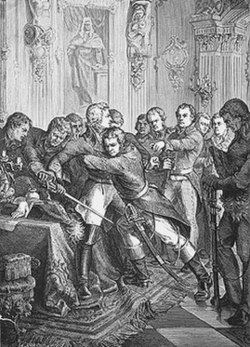
Gustav IV Adolf's arrest

Gustav Adolf's and Frederica's coronation medal of 1800.

Walking with his wife Queen Frederica.
🚪 Deposition And Exile
In 1809, things took a big turn for Gustav IV Adolf. 🚪People were unhappy with his decisions during the wars and how he ruled. On March 13, a coup happened, and he was forced to leave the throne! 😔The leaders of the army and politicians wanted a change, so they took him away from power. After being deposed, Gustav IV went into exile in Germany, where he lived far away from Sweden. Though he was no longer king, he continued making plans for the future and dreamed of returning home one day. 🌟
Go deeper👦 Reign As King Of Sweden
When Gustav IV Adolf became king in 1792, he was very young and inexperienced. 👦His first big challenge was to deal with the war in Europe. He wanted to keep Sweden peaceful, but other countries were fighting. During his reign, he made many important decisions, but not everyone agreed with him. 🎩Gustav IV focused on building Sweden’s army and strengthening the country. He was devoted to his role and worked hard for the people of Sweden. However, his dedication sometimes led to disagreements with important politicians and military leaders. 🗳️
Go deeper👶 Early Life And Education
Gustav IV Adolf grew up in the royal palace in Stockholm. 👶His mother was Queen Sophia Magdalena, and she played an important role in his education. Gustav loved reading, especially about history and cultures from around the world! 📚He learned about government and leadership, which would help him when he became king. Despite being a child, he had to learn about serious issues, like wars and politics, very quickly. He also studied languages, helping him communicate with important leaders from other countries. 🌍By 14, he was ready to take on the responsibility of being a king!
Go deeper👨👩👦 Family And Personal Life
Gustav IV Adolf had a family filled with royal connections! 👨👩👦 He married Princess Fredrika of Baden in 1805, and they had four children together: Charles, Gustav, Sophia, and August. 👶👧 Despite being a ruler, he faced many personal challenges. His family life was not always easy, especially after he was forced to leave Sweden. He missed his country and loved ones while living in exile. Although he was very focused on his duties as king, he always cared deeply about his family and their future. ❤️
Go deeper🧐 Controversies And Criticism
Gustav IV Adolf faced lots of controversies during his reign. 🧐Many people disagreed with his decision to join the wars against Napoleon. They felt it put Sweden at great risk and led to many defeats. Some critics also believed he should have listened more to his advisers and military leaders. His passion for peace sometimes confused others, making his decisions seem stubborn. 🥺These controversies created divisions among the people, which was a big reason for his downfall. His story reminds us of the importance of good communication in leadership.
Go deeper🗳️ Legacy And Historical Impact
Gustav IV Adolf’s reign is still remembered in Sweden today. 🇸🇪 Despite his struggles, he aimed for peace and worked to keep the country strong. His decisions led to important changes. After his deposition, Sweden adopted a new form of government and became more democratic. 🗳️ Today, historians study his life to understand how kingship and leadership changed over time. Gustav IV's story teaches us about the challenges of being a leader and how even tough times can lead to positive changes for the future. 🌈
Go deeper🛡️ Military Campaigns And Conflicts
During Gustav IV Adolf's rule, Sweden faced several military campaigns. 🛡️ In 1805, he joined the fight against Napoleon in the War of the Fourth Coalition. This was a tough decision, as the war put Sweden at risk. The Swedish army was not very strong compared to France. 🇫🇷 In 1808, Finland was invaded by Russia, leading to the Finnish War. This was a tough time for Sweden, and many soldiers were lost in battle. 💔Despite his efforts to protect Sweden, the outcomes were not favorable, leading to rising tensions and frustrations among the people and leaders.
Go deeper📚 Gustav Iv Adolf In Popular Culture
Today, Gustav IV Adolf appears in books and stories about Swedish history. 📚Often, writers and historians share tales of his life, decisions, and challenges. Documentaries show what it was like during his reign. 📺There are also movies that talk about Sweden's royal family, portraying Gustav IV's life in an exciting way. 🎬Children learn about him in history classes, making his story part of their adventure in learning. By studying leaders like Gustav IV, young minds understand the importance of leadership and decision-making! 🧠✨
Go deeper🎨 Cultural Contributions And Patronage
King Gustav IV Adolf was interested in culture and the arts! 🎨He wanted to promote education and build a strong Swedish identity. He encouraged artists, writers, and musicians during his reign. Gustav loved music and even helped create a new orchestra! 🎶In 1800, he established the Royal Swedish Academy of Arts to support talented artists. This had a long-lasting impact on Sweden's culture. He also worked on improving schools and libraries, believing that education would help the future of his country. 📖His contributions to the arts and education continue to be remembered today.
Go deeper⚔️ Political Challenges And Foreign Relations
Gustav IV Adolf faced many political challenges during his reign. ⚔️ One of his biggest troubles was the Napoleonic Wars, which involved many European countries. He wanted Sweden to stay neutral, but in 1805, he joined a coalition against Napoleon. 🌍This decision angered many of his advisers and led to struggles within Sweden. The king believed in maintaining peace, while many thought he should be more aggressive. He didn’t always listen to experienced leaders, which made his government weak. 🤔The disagreements over war and peace made his reign complicated and challenging.
Go deeper