Greylag Goose Facts For Kids
The greylag goose is a large, grayish-brown waterfowl known for its distinctive honking call and migratory behavior, commonly found in wetlands and grasslands across Europe and Asia.
Select reading age

Greylag Goose Facts For Kids
Videos & Quizzesincluded
About this topic
The Greylag Goose is a large bird known for its gray feathers and orange beak. 🦢Usually found in Europe and parts of Asia, these geese can be spotted near lakes and rivers. They are famous for honking loudly, especially during the spring! 🌼These geese are social animals, often seen in groups called “gaggles.” They can weigh between 3 to 4.5 kg (6 to 10 lbs) and have a wingspan of about 147 to 180 cm (58 to 71 inches). Greylag Geese are also known for their strong family bonds, making them fascinating creatures to observe!
Explore with ChatDinoKey Points
Greylag Geese are social birds and enjoy being in flocks.
Some Greylag Geese are migratory, traveling long distances for warmer weather.
The Greylag Goose is currently classified as a species of Least Concern by the International Union for Conservation of Nature (IUCN).
Greylag Geese are monogamous, pairing with one partner for life.
Greylag Geese hold a special place in various cultures.
Greylag Geese primarily live in freshwater habitats like lakes, rivers, and marshes.
Greylag Geese have a sturdy body, which allows them to swim and walk easily.
Greylag Geese are herbivores, meaning they mainly eat plants.
Photos of Greylag Goose

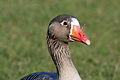
Head of an adult

Three eastern greylag geese (A. a. rubrirostris) at Keoladeo National Park in Rajasthan, India

In a group, many pairs of eyes are on watch

Six eggs in the nest at Mekszikópuszta, Hungary

Female with goslings; Vaxholm, Sweden

Migrating flock

Greylag goose can gather in very large flocks of thousands of individuals.
Greylag Goose — photo 8

Greylag Goose — photo 9
🦢 Social Behavior
Greylag Geese are social birds and enjoy being in flocks. 🦢They communicate with honks and body language, showing emotions like excitement and warning. These geese protect their territory and young by working together. When threatened, they can hiss and flap their wings to scare off predators! 🐾In their social groups, they engage in playful activities and squabbles, which help strengthen their bonds. These interactions are important for their well-being and success in finding food and raising goslings.
Go deeper🧳 Migration Patterns
Some Greylag Geese are migratory, traveling long distances for warmer weather. 🧳In winter, they leave their northern homes, like Scandinavia and Iceland, and head south to places like southern Europe and northwest Africa. The journey can be up to 3,000 km (1,864 miles)! 🌞They fly in a V-formation, which helps them save energy and stay together. The geese return to their breeding grounds each year when spring arrives, creating beautiful sights in the sky. Getting to see these migratory patterns is a special treat for bird enthusiasts! 🕊️
Go deeper🌿 Conservation Status
The Greylag Goose is currently classified as a species of Least Concern by the International Union for Conservation of Nature (IUCN). 🌿This means they are not at immediate risk of extinction. However, habitat loss and hunting can impact local populations. Conservation efforts are in place to protect their habitats and raise awareness about their importance. Many countries have designated areas, like parks and nature reserves, to help keep these magnificent birds safe and thriving. 🌳
Go deeper💞 Breeding And Nesting
Greylag Geese are monogamous, pairing with one partner for life. 💞During the spring, they build nests near water, often hiding them among tall grass or reeds. The female lays 4 to 6 eggs, which are light brown and become darker as they age. Both parents work together to keep the eggs warm, and after about 28 days, the goslings hatch! 🥚The little goslings are quick learners, following their parents as they head to water. The family stays together for several months, teaching the young ones how to swim and find food! 🐣
Go deeper🛡️ Cultural Significance
Greylag Geese hold a special place in various cultures. They are often featured in stories, songs, and even folklore. In Celtic mythology, the geese symbolize loyalty and protection. 🛡️ In Germany, they are associated with local traditions and festivities. Greylag Geese can also be seen in art, particularly in paintings highlighting nature. Their migratory patterns and honking sounds are reminders of the changing seasons, inspiring people to connect with nature. 🌍So next time you hear their calls, remember these fascinating birds and their impact on our world!
Go deeper🌊 Habitat And Distribution
Greylag Geese primarily live in freshwater habitats like lakes, rivers, and marshes. 🌊They love areas with plenty of grass for grazing. In Europe, they can be found from the UK to Scandinavia, and some even migrate to Africa during the winter! 🌍These birds prefer open landscapes where they can easily spot predators while foraging for food. In recent years, they have adapted to urban areas, making parks and golf courses their homes, much to the delight of birdwatchers! 🦆
Go deeper🐦 Physical Characteristics
Greylag Geese have a sturdy body, which allows them to swim and walk easily. Their feathers are mostly gray, but they also have white wing tips and a paler belly. 🐦Their heads are slightly rounded with pinkish-orange beaks and bright orange feet. The males are called ganders, while females are known as geese. The young goslings hatch with fluffy yellow down feathers before growing into their adult plumage. Their size varies, but they can grow to about 75 to 90 cm (30 to 35 inches) long. These unique features help them thrive in their environments!
Go deeper🌱 Diet And Feeding Behavior
Greylag Geese are herbivores, meaning they mainly eat plants. 🌱Their diet consists of grasses, seeds, and roots. They often graze in fields, using their strong bills to break up tough plants. These birds are known to also nibble on cultivated crops such as corn and wheat. The geese spend a lot of time watching for predators while they eat, and they can consume up to 2.5 kg (5.5 lbs) of food daily! 🍽️ Their feeding behavior helps shape the lands they live in, making them important parts of their ecosystems.
Go deeper