Green Heron Facts For Kids
The green heron is a small, solitary wading bird known for its striking plumage and unique fishing techniques.
Select reading age

Green Heron Facts For Kids
Videos & Quizzesincluded
About this topic
The green heron is a small bird known for its beautiful green and blue feathers. 🦚Found in North and Central America, it's often spotted near water. These birds are unique because they can cleverly use tools! For example, they sometimes drop leaves or insects on the water to attract fish. The scientific name for the green heron is *Butorides virescens*. They are about 18-24 inches long and have a wingspan of around 26 inches! They are fascinating creatures that not only look great but have many interesting behaviors. 🌊🐦
Explore with ChatDinoKey Points
Green herons are partial migrants, which means not all of them migrate!
The green heron is currently not endangered, but habitat loss can affect their numbers.
During spring, male green herons sing to attract female partners.
Green herons hold special meanings in different cultures!
Green herons love wet areas!
Green herons have stunning colors!
The green heron's favorite meal is fish, but it also enjoys eating frogs, insects, and small crustaceans.
Green herons are not only beautiful but also very chatty!
Photos of Green Heron

Green Heron — photo 1
Green Heron — photo 2

Green Heron — photo 3

Green Heron — photo 4

Green Heron — photo 5
Green Heron — photo 6

Green Heron — photo 7

Green heron have iridescent green feathers on their wings

"Green heron" by John J. Audubon
🌞 Migration Patterns
Green herons are partial migrants, which means not all of them migrate! Some of them stay in their homes year-round, while others travel south for warmer weather during winter. 🌞Usually, those that migrate leave northern areas around September to find places with more food. They may fly hundreds of miles to reach Florida or Mexico. They return to their northern homes in March or April to breed again. 🏡Their migration ensures they have food and a great place to raise their young!
Go deeper🦚 Conservation Status
The green heron is currently not endangered, but habitat loss can affect their numbers. 🦚As wetlands and marshes disappear, these birds might find it hard to find places to live and hunt. Organizations are working to protect important habitats to ensure these amazing birds thrive for years to come. The green heron is still common in many areas, so efforts to keep their environments safe are crucial. By being aware of nature, we can help protect these wonderful creatures! 🌳💚
Go deeper💕 Breeding And Nesting
During spring, male green herons sing to attract female partners. This is a special time for them! 💕Once paired, they build nests high in trees or shrubs. These nests are made from sticks and reeds, and they are well-camouflaged to protect their eggs from predators. A female usually lays 3 to 5 eggs that take about 3 weeks to hatch. The baby herons, called chicks, are fluffy and rely on their parents for food. 🌱After a few weeks, they learn to fly and hunt for themselves, ready to explore the world!
Go deeper🌍 Cultural Significance
Green herons hold special meanings in different cultures! 🌍For many people, they represent patience because of their still hunting style. In Native American cultures, they are seen as symbols of resourcefulness. Their cleverness in using tools has amazed and inspired those who observe them. Artists have drawn and painted these striking birds, showcasing their beauty. 🎨From stories to art, green herons remind us to appreciate nature and the skills of its incredible creatures!
Go deeper🏞️ Habitat And Distribution
Green herons love wet areas! 🏞️ They can be found in marshes, ponds, and rivers across North America, from Canada to Mexico. You might also see them in Central America and the Caribbean. They prefer places with lots of plants and trees nearby, where they can hide and hunt. These birds often stay in areas close to water. They are not usually found in very dry places, as they need water to catch their food. 🌳🌊 Their favorite habitats help them stay safe and find fish easily!
Go deeper💙 Physical Characteristics
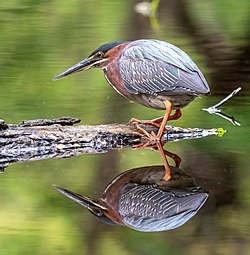
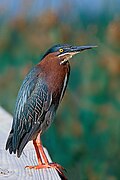
Green herons have stunning colors! Their head is dark green, while their back is a rich blue. 💙Their legs are long and yellow, perfect for wading through water. These birds have sharp beaks that help them catch fish. They can also be recognized by their short necks and stocky bodies. While standing still, they look like little statues, trying to blend in with their surroundings. In the sunlight, their feathers shine beautifully, making them look almost magical! ✨Overall, their unique colors and shapes make them easy to spot—and very special!
Go deeper🐟 Diet And Feeding Behavior
The green heron's favorite meal is fish, but it also enjoys eating frogs, insects, and small crustaceans. 🐟🦐 They are patient hunters. Sometimes they stand still for a long time, waiting for the perfect moment to catch their dinner! They hunt by using their sharp beaks and quick movements. You may see them using a unique trick by throwing food on the water's surface to attract fish! This clever behavior shows how smart these birds are. They eat what is available in their watery homes, making them very adaptive! 🍃
Go deeper🗣️ Vocalizations And Communication
Green herons are not only beautiful but also very chatty! 🗣️ They have a variety of calls, including croaks and squawks that they use to communicate. During the breeding season, male herons make loud calls to attract females. They might also share information with each other about nearby food or danger. When feeling threatened, they might gasp or make a hissing sound to scare away predators. Their vocalizations help them connect with their families and keep safe in their watery homes! 🎶
Go deeper