All Articles

Gothic Art

Gothic Art Facts For Kids

Gothic art is a style of medieval art from the 12th century that includes striking architecture, vibrant colors, and detailed storytelling, primarily expressed in cathedrals and other buildings in Northern France.
🎨 Reading age for 6-8
Background blob
Gothic Art
Gothic Art
Facts for Kids!
Image by Cancre, licensed under Creative Commons Attribution-Share Alike 2.5

Do more with AI

Introduction

Gothic art is a cool style that started in Northern France around the 12th century! 🏰It grew from earlier Romanesque art, which was more rounded. Gothic art is famous for its tall buildings, detailed sculptures, and colorful stained glass windows. 🌈People created amazing cathedrals, like the famous Notre-Dame in Paris. Gothic art wasn't just about buildings; it included paintings and sculptures, too. This style lasted until the 16th century! So when you see pointy arches and beautiful artwork, you might be looking at Gothic art! 🎨

Images of Gothic Art

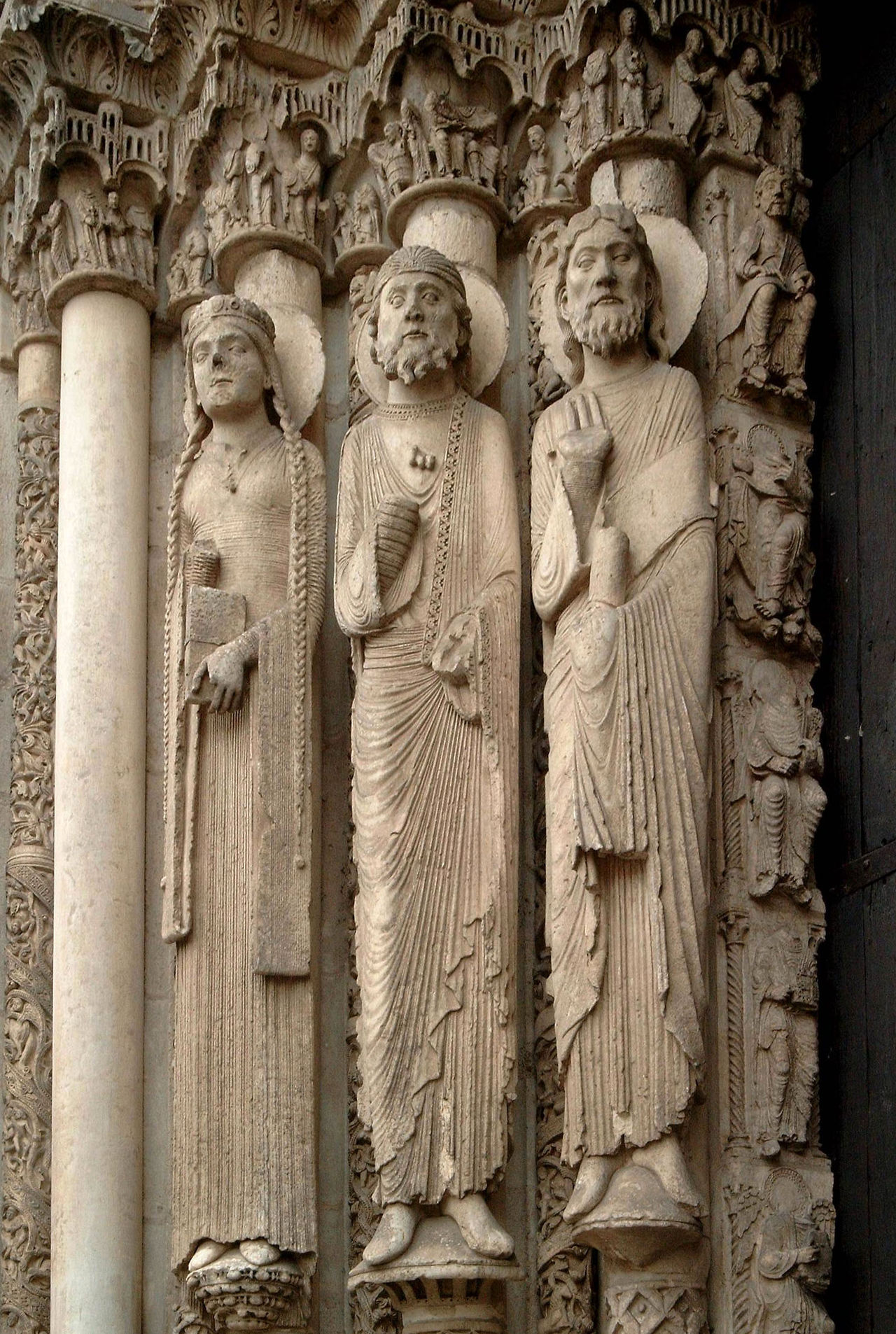
Photos of Gothic ArtImage by Oldmanisold, licensed under Creative Commons Attribution-Share Alike 4.0
Photos of Gothic ArtImage by anonymous, licensed under Creative Commons Attribution 3.0
14th Century International Gothic Mary Magdalene in St. Johns' Cathedral in Toruń, PolandImage by Pko, licensed under Creative Commons Attribution 2.5

14th Century International Gothic Mary Magdalene in St. Johns' Cathedral in Toruń, Poland

The Lady and the Unicorn, the title given to a series of six tapestries woven in Flanders, this one being called À Mon Seul Désir; late 15th century; wool and silk; 377 x 473 cm; Musée de Cluny, Paris

The Lady and the Unicorn, the title given to a series of six tapestries woven in Flanders, this one being called À Mon Seul Désir; late 15th century; wool and silk; 377 x 473 cm; Musée de Cluny, Paris

Simone Martini (1285–1344)

Simone Martini (1285–1344)

Part of German stained glass panel of 1444 with the Visitation; pot metal of various colours, including white glass, black vitreous paint, yellow silver stain, and the "olive-green" parts are enamel. The plant patterns in the red sky are formed by scratching away black paint from the red glass before firing. A restored panel with new lead cames

Part of German stained glass panel of 1444 with the Visitation; pot metal of various colours, including white glass, black vitreous paint, yellow silver stain, and the "olive-green" parts are enamel. The plant patterns in the red sky are formed by scratching away black paint from the red glass before firing. A restored panel with new lead cames

Hours of Jeanne d'Evreux, by Jean Pucelle, Paris, 1320s

Hours of Jeanne d'Evreux, by Jean Pucelle, Paris, 1320s

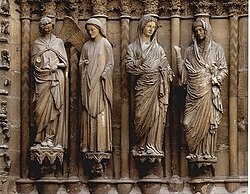
Photos of Gothic ArtImage by Medieval sculptor, licensed under Creative Commons Attribution-Share Alike 3.0
Reims Figures of the Middel Portal to the West: Annonciation (left) and Visitation (right).

Reims Figures of the Middel Portal to the West: Annonciation (left) and Visitation (right).

Historical Context

The Gothic art movement blossomed during the Middle Ages, a time from about 500 to 1500 AD. ⏳At this time, Europe was filled with castles, knights, and churches. Many cathedrals were built for worship and community activities. The Gothic style began in Northern France and quickly spread to places like England, Germany, and Italy. In the 12th century, architects wanted their buildings to soar high, reaching toward the heavens! This idea linked with the belief in God and the importance of religion. The church became a central place for art and culture during this period. ✝️

Sculpture And Relief Work

Sculpture and relief work were big parts of Gothic art! 🗿Artists carved amazing figures into stone. They often showed biblical stories and important people, like saints. 🕊️ Many sculptures adorned the entrances of cathedrals, telling stories to visitors. You might find angels, animals, and famous figures from the Bible. Many sculptures were carved in a style that made them look realistic, with emotions and flowing clothing. 🌬️ This was a big change from earlier art forms. The details in the relief work added beauty and helped people learn about their faith! 🌈

Gothic Painting Techniques

When it came to painting, Gothic artists used exciting techniques! 🎨They often painted on wooden panels, which made the colors bright and vibrant. 🌈One popular method was using egg yolk mixed with pigments to create tempera paint. This helped to create soft textures and detailed images! Another technique was fresco, which meant painting directly onto wet plaster. When the plaster dried, the colors became bold and beautiful. Artists often painted religious scenes that helped tell stories in churches, leading people to feel connected to their faith. ✝️

Characteristics Of Gothic Art

Gothic art has some unique features! 🤩First, look for pointed arches that give buildings an upward feeling. 🌆Second, tall spires were added to structures, making them reach for the sky! Third, windows became larger, allowing vibrant stained glass to shine bright. These beautiful colors often showed stories from the Bible. 🕊️ Sculptures and carvings were added, too! 🌟You'd find detailed figures of saints, mythical creatures, and everyday people. Overall, Gothic art was all about light, height, and intricate designs! 🎉

Major Artists And Their Works

Many talented artists contributed to Gothic art! 🎨One famous creator is Giotto di Bondone, who painted altarpieces filled with emotion and depth. 🌸His work was seen in the early part of the Gothic period. Another artist, Nicola Pisano, was known for his sculpture styles that combined Gothic and Roman ideas! His work can be found in Italy, like the pulpit in Pisa. 🌍Don't forget about the Master of the Virgin, whose beautiful sculptures can be seen in cathedrals throughout France. Each of these artists helped shape the look of Gothic art! 🏛️

Influence On Later Art Movements

Gothic art had a big impact on later art styles! 🎭After the Gothic period ended, the Renaissance started, blending some ideas from Gothic art with new ones. For example, the use of perspective and human emotions in paintings took a step further from Gothic styles. ⏳Artists like Leonardo da Vinci and Michelangelo were inspired by Gothic sculptures and buildings. The Neoclassical movement also looked back at Gothic architecture, blending it with older Greek and Roman designs. Today, we see Gothic elements in movies, games, and new buildings! Gothic art is truly timeless! 🌟

Regional Variations In Gothic Art

Gothic art wasn't the same everywhere! 🌍Different regions had their own unique styles. In France, cathedrals like Notre-Dame and Chartres showcase incredible flying buttresses and intricate stained glass. 🕊️ Meanwhile, in England, cathedrals like Canterbury are known for their grandeur and pointed arches. German Gothic art often included wooden sculptures with fine details! In Italy, Gothic art mixed with Renaissance ideas, creating breathtaking buildings and paintings. Each area added its flair, so when you look around, you'll discover different types of Gothic beauty! 🎉

Gothic Cathedrals And Architecture

Gothic cathedrals are some of the most impressive buildings! 🏰They have features like tall towers, flying buttresses, and intricate stained glass windows. The Notre-Dame Cathedral in Paris is a famous example that showcases these elements. 🌟Another notable cathedral is Chartres Cathedral, known for its stunning blue glass! The cathedrals were built not only for worship but also as symbols of city pride. People gathered here for special occasions, like festivals and services. Today, many of these structures are tourist attractions where visitors marvel at their beauty! 🌍

Preservation And Restoration Efforts

Many Gothic buildings and artworks are really old! 🏰That's why preservation and restoration are essential. Special teams of experts work hard to keep cathedrals, sculptures, and paintings safe. 👷‍♂️ They clean stained glass, repair stone, and carefully restore paintings without causing damage. For example, the Notre-Dame Cathedral is currently being restored after a fire in 2019. 🔥Preservation helps us learn about history and keeps Gothic art alive for future generations. Today, people visit these sites to appreciate their beauty and learn from the past! 🌈

Gothic Art Quiz

Q1
Question 1 of 10

Learn more about Gothic Art

Ready to create?

Drop Files here
Make

To create a safe space for kid creators worldwide!

Create

Vibe Coding

Kids GPT

All Tools

Kibu

Resources

Worksheets

SafeTube

Blog

FAQ

Account

Pricing

Log-in

Sign-up

Data Deletion

Company

About

Community Guidelines

Privacy Policy

Terms of Service

2025, URSOR LIMITED. All rights reserved. DIY is in no way affiliated with Minecraft™, Mojang, Microsoft, Roblox™ or YouTube. LEGO® is a trademark of the LEGO® Group which does not sponsor, endorse or authorize this website or event. Made with love in San Francisco.