Godavari River Facts For Kids
The Godavari River is one of India's major rivers, known for its long course, rich cultural heritage, and immense contribution to agriculture and biodiversity.
Select reading age

Godavari River Facts For Kids
Videos & Quizzesincluded
About this topic
The Godavari River is one of India's longest rivers, flowing over 1,465 kilometers (910 miles)! 🌊It starts in the Western Ghats mountains of Maharashtra and flows eastward through states like Madhya Pradesh, Chhattisgarh, and Andhra Pradesh before reaching the Bay of Bengal. The river is often called "Dakshina Ganga," which means "Ganges of the South." It is an essential source of water for millions of people and provides habitat for a variety of wildlife. The Godavari holds special importance in Indian culture and is celebrated in many festivals. 🎉
Explore with ChatDinoQuick Facts
Key Points
The Godavari River is home to a variety of plants and animals!
The Godavari River plays a crucial role in the economy of the regions it flows through.
Many organizations and communities are working to protect the Godavari River!
The Godavari River begins near the city of Nasik in Maharashtra at a height of around 1,067 meters (3,500 feet).
For many people in India, the Godavari River is sacred.
In Hindu mythology, the Godavari is described as a goddess.
As a mighty river, the Godavari supports hydroelectric power projects, which generate electricity.
Like many rivers, the Godavari faces environmental challenges.
Photos of Godavari River
![carte réalisée sur umap, [1]](https://upload.wikimedia.org/wikipedia/commons/thumb/6/61/Godavari.png/960px-Godavari.png)
carte réalisée sur umap, [1]
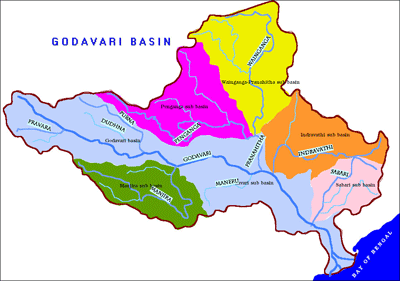
Godavari River basin.

Godavari River delta extending into the Bay of Bengal (upper river in image).
![Bhadrachalam Temple during 2005 floods[12]](https://upload.wikimedia.org/wikipedia/commons/thumb/9/92/Bhadrachalam_during_2005_floods.jpg/960px-Bhadrachalam_during_2005_floods.jpg)
Bhadrachalam Temple during 2005 floods[12]

Road bridge over Godavari River at Bhadrachalam

Godavari River — photo 6

A colonial Map of Yanam showing then course of Godavery River.

Gautami personified with Gautama.

Godavari Statue at Gangadwar, worshiped as origin of Godavari, Triambak
🐬 Flora And Fauna
The Godavari River is home to a variety of plants and animals! 🐬Many species of fish, like catfish and tilapia, swim in its waters. Birds such as kingfishers and herons can be often seen along its banks, looking for meals. The riverbanks are lined with trees like mango, neem, and banyan trees, providing habitats for many creatures. 🌳Some endangered species also live around the river, like the Gharial crocodile. Preserving this rich biodiversity is important for maintaining a healthy ecosystem.
Go deeper💧 Economic Importance
The Godavari River plays a crucial role in the economy of the regions it flows through. 💧The river supports agriculture by providing irrigation, helping farmers grow rice, cotton, and sugarcane. The water is also used for fishing, providing food and jobs for many families. 🚜Additionally, industries near the river benefit from its water for production processes. Ports along its course facilitate trade and transport of goods, making it vital for the region’s economy. The river's journey supports livelihoods for countless individuals!
Go deeper🌱 Conservation Efforts
Many organizations and communities are working to protect the Godavari River! 🌱Initiatives include cleaning up the river and raising awareness about pollution. Local residents are encouraged to take care of their waterways by organizing clean-up drives and planting trees along the banks. 🌳Governments are also launching projects to monitor water quality and reduce the waste dumped into the river. By all working together, we can help keep the Godavari healthy and thriving for everyone and everything that relies on it!
Go deeper🏞️ Geography And Course
The Godavari River begins near the city of Nasik in Maharashtra at a height of around 1,067 meters (3,500 feet). It passes through the scenic Sahyadri Mountains, meandering through rolling hills and grassy plains. 🏞️ This mighty river travels through many cities, including Nashik, Rajahmundry, and Eluru. On its journey, it forms the Godavari Delta before emptying into the Bay of Bengal. 🌅The river’s basin covers around 312,812 square kilometers (121,000 square miles), making it one of India's largest river basins!
Go deeper🌟 Cultural Significance
For many people in India, the Godavari River is sacred. 🌟Pilgrims visit the river for religious practices and festivals, especially during the Kumbh Mela, where millions gather for a holy bath. The Godavari also features in many ancient stories and poems. Temples were built on its banks, like the famous Rajahmundry Temple. The river is celebrated in songs, dances, and folk tales, connecting families and communities. 🕺Festivals like Godavari Pushkaralu happen every 12 years, where people come together to celebrate and pay homage to the river and its divine importance.
Go deeper🌊 Mythology And Legends
In Hindu mythology, the Godavari is described as a goddess. 🌊Many legends are associated with her, such as the story of how a sage created the river. It is believed that bathing in the Godavari washes away sins. The river is mentioned in ancient texts like the Ramayana and Mahabharata, emphasizing its importance in spiritual tales. These stories are passed down through generations, keeping the river's significance alive in people's hearts. 💖
Go deeper⚡ Hydroelectric Projects
As a mighty river, the Godavari supports hydroelectric power projects, which generate electricity. ⚡The "Godavari Hydro Electric Project" helps light up homes and power industries, providing energy that many people rely on. Dams built along the river, like the Rajahmundry Barrage, allow for controlled water flow, helping in agriculture and flood management. These projects contribute to sustainable development, providing power without harming the environment too much.
Go deeper🚫 Environmental Challenges
Like many rivers, the Godavari faces environmental challenges. 🚫Pollution from industries and sewage threatens its water quality, affecting plants and animals. Deforestation along the banks can lead to erosion, harming the river's ecosystem. Rising temperatures and climate change also impact water levels, which can lead to flooding or droughts. 🌡️ Protecting the river from these challenges is essential to preserving its beauty and the life it supports for future generations!
Go deeper