Gliese 581g Facts For Kids
Gliese 581g is a tantalizing exoplanet located in the habitable zone of its star, where conditions may allow for the presence of liquid water and possibly life.
Select reading age
Gliese 581g Facts For Kids
Videos & Quizzesincluded
About this topic
Gliese 581g is an exoplanet, which means it’s a planet that orbits a star outside our solar system! 🌌This planet is located about 20.3 light-years away from Earth in the constellation of Libra. It’s fascinating because scientists believe Gliese 581g might have conditions suitable for life as we know it! Discovered in 2010, it is part of a group of planets circling the star Gliese 581, which is a "red dwarf" star. That means it's smaller and cooler than our Sun! ☀️
Explore with ChatDinoKey Points
Gliese 581g was discovered by a team of astronomers led by the famous scientist, Dr.
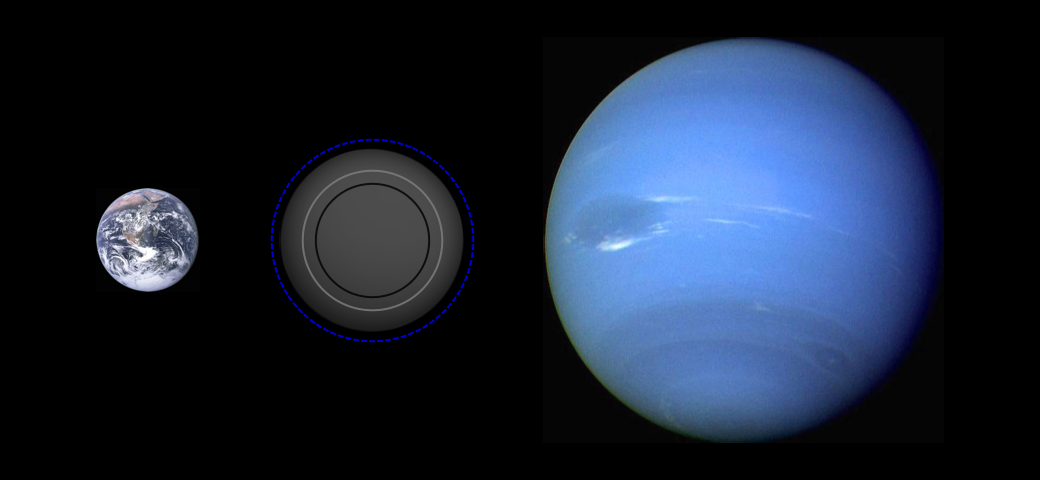
Gliese 581g is about 3 times the size of Earth, making it a “super-Earth.”
Gliese 581g has sparked a lot of interest not just in science, but also in culture!
Gliese 581g orbits its star, Gliese 581, in about 36.6 Earth days!
Scientists are really excited about Gliese 581g because it lies in the "Goldilocks Zone."
Some important scientists working on studying Gliese 581g include Dr.
So far, we haven’t sent any spacecraft to Gliese 581g since it’s so far away.
While Gliese 581g is similar to Earth in some ways, it is quite different in others!
Photos of Gliese 581g

The W. M. Keck Observatory at twilight, where Gliese 581g was discovered
![The six-planet model of the Gliese 581 system with circular orbits[1]](https://upload.wikimedia.org/wikipedia/commons/thumb/6/60/GJ581orbits_Vogt2010.svg/960px-GJ581orbits_Vogt2010.svg.png)
The six-planet model of the Gliese 581 system with circular orbits[1]

Planetary orbits in the Gliese 581 system compared to those of the Solar System ("g" designates Gliese 581g)

The habitable zone of Gliese 581 compared with the Solar System's habitable zone, showing Gliese 581g near the center
🧑🔬 Discovery
Gliese 581g was discovered by a team of astronomers led by the famous scientist, Dr. Steve Vogt. 🧑🔬 They used a telescope at the Keck Observatory in Hawaii to find this special planet. The team found it by observing how the star Gliese 581 wobbled, which happened because of the gravitational pull from the planet! This was an exciting moment for scientists since it suggested that other planets might be hiding around stars we can’t see with the naked eye! 🌠
Go deeper🌍 Characteristics
Gliese 581g is about 3 times the size of Earth, making it a “super-Earth.” 🌍 This means it has more mass than our planet and could have a thick atmosphere. Its surface temperature is thought to be nice for water to exist, which is super important for life! Researchers believe that if it has water, there might be chances for living things to thrive. The planet is also very rocky, and its day might last for weeks! How cool is that? 😮
Go deeper🎨 Cultural Impact
Gliese 581g has sparked a lot of interest not just in science, but also in culture! 🎨Fictional stories, movies, and video games often imagine what life might be like there. The idea of learning about other worlds excites people's imaginations and makes scientists and young people dream about the future. Could we ever visit Gliese 581g or find life? 🌟This mystery motivates explorers, writers, and artists to think about what lies beyond our Earth!
Go deeper⌛ Orbital Dynamics
Gliese 581g orbits its star, Gliese 581, in about 36.6 Earth days! ⌛That’s much shorter than a year for us! Since Gliese 581 is a cooler star, this planet is much closer to it than Earth is to the Sun. Because of this proximity, it would receive enough warmth for water to be liquid. It travels in a circular orbit, which means it doesn’t get too hot or too cold on different parts of its path around its star. This stability might help support possible life!
Go deeper🌟 Potential For Life
Scientists are really excited about Gliese 581g because it lies in the "Goldilocks Zone." 🌟 This special zone is not too hot and not too cold, making it just right for water to stay liquid! Liquid water is super important because all known living things need it to survive. If there is water on this planet, it could mean that life, like plants and even tiny creatures, could exist there. This makes Gliese 581g a big target for future space exploration! 🌊
Go deeper🧑🔬 Notable Researchers
Some important scientists working on studying Gliese 581g include Dr. Steve Vogt, who was part of the original discovery team, and Dr. Geoffrey Marcy, another influential astronomer. 🧑🔬 Both have dedicated much of their careers to finding exoplanets and learning about their potential for hosting life. Their work helps us understand the universe better and get one step closer to discovering if we are alone in space! 🌠
Go deeper🚀 Exploration Missions
So far, we haven’t sent any spacecraft to Gliese 581g since it’s so far away. 🚀However, scientists use powerful telescopes to study it from Earth. Future missions may plan to look closer at this planet to find out if it really has water and if life could exist. Organizations like NASA and ESA (European Space Agency) are working on new technologies that may help explore faraway planets like Gliese 581g in the coming years! 🌌
Go deeper🌏 Comparison With Earth
While Gliese 581g is similar to Earth in some ways, it is quite different in others! 🌏It’s about 3 times bigger than Earth and may have a rocky surface, just like ours. However, its atmosphere could be very different, potentially thicker or made up of different gases! While Earth has plants, animals, and people, it’s still unknown what life might even be like on Gliese 581g. It’s exciting to think about how life might adapt to the conditions there! 🌱
Go deeper