Glass Armonica Facts For Kids
The glass armonica is a musical instrument that produces sound by rubbing the edges of glass bowls or goblets with wet fingers.

Do more with AI
Introduction
The glass armonica is a musical instrument made of glass! 🎶It was invented by Benjamin Franklin in 1761. Imagine a set of glass bowls that are arranged in order, each producing different sounds when you touch them with wet fingers! The glass armonica creates sweet, dreamy music that can be very relaxing. It was very popular in the 18th century and is sometimes called the "glass harp." You can find it in concerts and even some movies today! The glass armonica shows us how amazing music can be, even with simple items like glass. ✨
Images of Glass Armonica

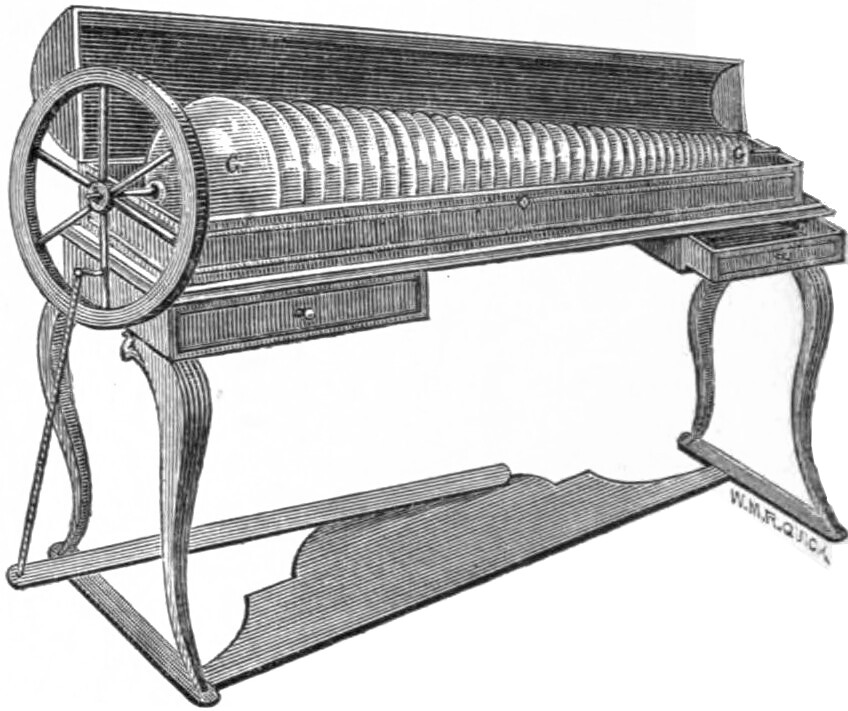
Spinning glass disks (bowls) on a common shaft are arranged with the lower notes (larger disks) to the left and higher notes (smaller disks) to the right.

A glass harp, an ancestor of the glass armonica, being played in Rome. The rims of wine glasses filled with water are rubbed by the player's fingers to create the notes.

A modern glass armonica built using Benjamin Franklin's design

Part of the original manuscript score of "Aquarium" from The Carnival of the Animals by Camille Saint-Saëns. The top staff was written for the (glass) "Harmonica". Playⓘ

An audio speaker emitting sound waves, in the Gnome style

Dennis James plays the armonica at the Poncan Theatre in Ponca City, Oklahoma, on April 2, 2011.
How The Glass Armonica Works
The glass armonica works by using friction. 👐The musician uses their wet fingers to gently rub the glass bowls, which are arranged from big to small. Each bowl creates a different musical note! When the player spins the instrument, it makes it easy to reach all the bowls. The sound is soft and sweet, much like the sound of a harp. 🎵Also, the water helps the fingers glide smoothly over the glass, producing lovely melodies. It can play many notes at once, which is why it sounds so special!
History Of The Glass Armonica
The glass armonica was created by Benjamin Franklin, who lived in Philadelphia, Pennsylvania. 🏙️ He loved music and wanted to create a new instrument. Franklin saw how wine glasses played different notes when rubbed with fingers, and he had a brilliant idea! He connected the glasses on a spinning spindle, which made it easier to play. The first glass armonica was played in 1762! Many famous composers, like Mozart, wrote music for it. 🎼The instrument was very popular until the 19th century, when it slowly faded away in favor of other instruments.
Modern Uses Of The Glass Armonica
Today, the glass armonica is not as common, but it's still used in special performances! 🎉Some musicians explore its beauty in modern music and experimental genres. You can hear it in movies like "The Shape of Water," where it creates an enchanting atmosphere. 🎥Some artists even mix the glass armonica with electronic sounds. Schools and music classes sometimes introduce the glass armonica to teach kids about unique instruments. This helps keep the beautiful music alive for future generations to enjoy!
Fun Facts About The Glass Armonica
Did you know that the glass armonica has a fun nickname? It's sometimes called the "glass harp!" 🎻 Many people believed that the sounds could heal ailments as people listened to the soothing melodies. In fact, a famous writer, Edgar Allan Poe, even wrote about it! 🖊️ The glass armonica has also appeared in famous movies, creating enchanting tunes. Interestingly, it can be challenging to master! Only a few skilled musicians today play the glass armonica, keeping its magical sound alive for new listeners to discover. 🌟
Comparison To Other Musical Instruments
The glass armonica is very different from other instruments like the piano or guitar! 🎸While the piano has keys and strings, the glass armonica uses glass bowls to produce sound. Unlike drums that are hit, the armonica is played by rubbing glass with wet fingers! 🎹The sound of the glass armonica is often softer and more ethereal than that of most instruments. Each glass bowl can create different pitches, allowing for delicate melodies. Many musicians find it special because of its unique voice, weaving magic into their music! ✨
The Cultural Impact Of The Glass Armonica
The glass armonica influenced music and culture in many ways! 🎤It was used in concerts, operas, and even in royal courts! In the late 18th century, it became a fashionable instrument among the aristocracy. 🎩Many people were fascinated by its sound. The glass armonica also sparked curiosity in new instruments and styles. Some believed it had "magical" properties and could even heal people! Its unique sound continues to inspire musicians today, and it reminds us of how music can connect people across time and place. 🌍
Maintenance And Care Of The Glass Armonica
Taking care of a glass armonica is important! 🧼First, always keep it clean to avoid dirt affecting the sound. Wipe the glass with a soft, damp cloth after playing. It's also important to keep it in a safe place to prevent breaking. Make sure the glasses are secure and well-tuned! The glass armonica should be placed away from extreme temperatures, as glass can crack. 🌡️ Lastly, when not in use, cover the instrument to protect it from dust. By taking care of it, you can enjoy beautiful music for years to come! 🎶
Famous Composers And Pieces For Glass Armonica
Many famous composers have written music for the glass armonica! 🎹Wolfgang Amadeus Mozart is one of them. He wrote a beautiful piece called "Adelaide di Borgogna" that features the glass armonica. Another composer, Beethoven, also liked it! He used the glass armonica in his works too. 🎶In fact, over 300 compositions were made for glass armonica in the 18th century. Its unique sound captured the hearts of musicians everywhere, making it a fun instrument to play!
Did you know?
🎼 The glass armonica was invented by Benjamin Franklin in 1761.
🎶 It consists of a series of glass bowls or goblets of different sizes arrayed on a spindle.
🔊 The instrument produces sound through friction when a player's wet fingers are rubbed along the rims of the glass.
🎵 The glass armonica was popular in the 18th century and used by composers like Mozart and Beethoven.
💡 The sound of the glass armonica is often described as ethereal or haunting.
🌍 It has been used in various cultures worldwide for centuries as a unique musical instrument.
🧑🎤 Famous performers on the glass armonica include Mozart and composer G. C. Anacréon.
🎤 The instrument fell out of favor in the 19th century due to its association with madness and illness.
🛠️ Modern glass armonicas are often made with specialized glass and designed for ease of playing.
📖 The instrument has been featured in movies and television, often associated with mysticism.
Glass Armonica Quiz
Learn more about Glass Armonica
