Georgism Facts For Kids
Georgism is an economic philosophy that advocates for land value taxation and the social ownership of land to reduce inequality and promote social justice.
Select reading age

Georgism Facts For Kids
Videos & Quizzesincluded
About this topic
Georgism is an idea created by Henry George, a famous American thinker from the 1800s. 🌍He believed that land should belong to everyone, not just a few rich people. This means if someone makes money from land, they should pay a tax on that land to help everyone in their community. Henry George wanted to make things fairer so that everyone had a chance to do well. He wrote a famous book called "Progress and Poverty" in 1879, explaining his ideas about land, money, and how society works! 📚
Explore with ChatDinoKey Points
Let's look at a few case studies!
Some cities and countries have used Georgism in different ways!
Georgism proposes that by taxing land, we can create a better economy!
Henry George was born in Philadelphia, Pennsylvania, in 1839.
At the heart of Georgism are three main principles!
Georgism can also help the environment!
Not everyone agrees with Georgism!
Today, Georgism is relevant as cities face issues related to land use and housing!
Photos of Georgism

A supply and demand diagram showing the effects of land-value taxation in which burden of the tax is entirely on the landowner when the tax is implemented. The rental price of land does not change and there is no deadweight loss.
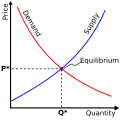
Illustrates the intersection of supply and demand curves as the free market equilibrium

Georgist single tax poster published in The Public, a Chicago newspaper (c. 1910–1914)

Henry George, whose writings and advocacy form the basis for Georgism

Georgism — photo 5

Georgism — photo 6

Georgism — photo 7

Georgism — photo 8

Georgism — photo 9
📚 Case Studies
Let's look at a few case studies! 📚One example is the state of Alaska, which gives residents money from oil revenue, a bit like Georgism. People benefit from shared resources! Another example is the city of Hong Kong, which has high land tax revenue and provides health and education services! 🎓These examples show how land taxes can help people. By visiting these places, we can see how Georgism's ideas come to life and help strengthen communities for everyone!
Go deeper🏘️ Georgism In Practice
Some cities and countries have used Georgism in different ways! 🏘️ For example, in some parts of Pennsylvania, cities have land taxes to help fund schools and parks. 🌳In places like Canberra, Australia, they have a similar system that taxes land values. This means that everyone benefits from the money collected, helping to pay for community services. More importantly, these ideas ask people to think about the importance of sharing land and the benefits of a fair economy.
Go deeper💰 Economic Implications
Georgism proposes that by taxing land, we can create a better economy! 💰If landowners pay taxes, they might not sit on unused land. Instead, they would build homes, parks, and schools. More buildings mean more jobs for everyone! 🤩This leads to better neighborhoods and fewer people without homes. By using land taxes rather than income taxes, Georgism encourages people to earn and spend more! This idea can help create a happier and more successful community for everyone.
Go deeper🏙️ Historical Background
Henry George was born in Philadelphia, Pennsylvania, in 1839. 🏙️ He saw people struggling to find homes while rich landowners got richer. This sparked his interest in why some people had so much land while others had none. In 1871, George proposed his ideas at a meeting. Because many people liked his thoughts, he became very well-known. 🌟In his book, he wrote about how land is a special resource that everyone should share. His ideas made many people think about how to create a fairer society.
Go deeper🌿 Key Principles Of Georgism
At the heart of Georgism are three main principles! First, land is a gift of nature, which means it should belong to everyone. 🌿Second, we should use land taxes to help everyone instead of taxing people for what they earn. Last, people should have the freedom to work and invest without being held back. This means helping everyone have equal chances to succeed! 🌈By following these principles, Georgism aims to make sure everyone gets fair opportunities and the benefits of the land.
Go deeper🌍 Georgism And Environmentalism
Georgism can also help the environment! 🌍When we tax land, it encourages people to use the land wisely. This means protecting forests, rivers, and parks instead of letting them be destroyed. 🌳Supporters believe that fewer people hoarding land can lead to more environmentally friendly choices, like building community gardens or renewable energy sources. Georgism encourages us to care for our planet and helps everyone enjoy cleaner air and beautiful nature!
Go deeper⚖️ Critiques And Counterarguments
Not everyone agrees with Georgism! Some people believe that taxing land can be difficult to manage. ⚖️ Others think it doesn’t solve all economic problems, like how to help people without homes. Some argue that it might be challenging to decide how much land to tax properly. 🤔Critics also say focusing only on land ignores other important issues. However, Georgists respond that their ideas lead to fairness and that land is a key resource people should share.
Go deeper🏙️ Modern Adaptations And Relevance
Today, Georgism is relevant as cities face issues related to land use and housing! 🏙️ Some modern thinkers incorporate Georgist ideas to tackle problems like homelessness and rising costs of living. 🌈People believe that taxing land can help cities build affordable homes and community spaces. Many supporters argue that fair distribution of land leads to happier, more balanced societies. By adapting these ideas, we can think seriously about fairness in our world!
Go deeper