Gamelan Facts For Kids
Gamelan is a traditional ensemble music from Indonesia, featuring predominantly percussion instruments, that plays an important role in Javanese, Sundanese, and Balinese culture.
Select reading age
Gamelan Facts For Kids
Videos & Quizzesincluded
About this topic
Gamelan is a special type of music from Indonesia, especially from the islands of Java, Bali, and Sunda! 🎶It has many different instruments, most of which are percussion, like drums and gongs. Imagine a musical team working together, creating lovely sounds that tell stories! Gamelan is often played in festivals, religious ceremonies, and community events. People gather to enjoy the sounds and celebrate their culture. Did you know that the word "gamelan" comes from the Javanese word meaning "to hammer"? This is because many instruments are hit to make music! 🥁✨
Explore with ChatDinoKey Points
Gamelan music and dance are closely linked in Indonesian culture!
Gamelan music has a long history that dates back over a thousand years!
Gamelan includes various music styles, each with its rhythm and mood!
When Gamelan music is performed, it’s not just about the sounds; it's also about how artists act on stage!
Gamelan uses special tunings and scales that make it different from Western music!
Gamelan is unique because it has lots of different instruments, each playing an important role!
Different regions of Indonesia have their unique styles of Gamelan, showcasing various sounds and techniques!
Gamelan is an essential part of Indonesian culture, representing the people's values and beliefs.
Learning Gamelan is a fun and exciting adventure that helps kids explore music and culture!
Gamelan music is not just celebrated in Indonesia but has also inspired many modern musicians around the world!
Photos of Gamelan

Gamelan — photo 1

Gamelan is mentioned in the Kakawin Nagarakertagama in a palm-leaf manuscript called lontar that was written by Mpu Prapanca in 1365 AD. A collection of National Library of Indonesia in Jakarta

Various Javanese musical instrument in Gamelan Salindro, The History of Java by Thomas Stamford Raffles (1781–1826).

Javanese Gamelan Munggang (one of sacred gamelans) being played (as part of ritual) in Surakarta Sunanate, Central Java, 2000

A sindhen is singing a Javanese song accompanied by Gamelan ensemble

Gamelan — photo 6

💃 Gamelan And Dance
Gamelan music and dance are closely linked in Indonesian culture! 💃The rhythms of Gamelan inspire beautiful movements and storytelling through dance. Dancers wear colorful costumes that sparkle and shine, much like the music itself! Different dance styles accompany different Gamelan pieces, with graceful hand movements and intricate footwork. Traditional dances like "Legong" and "Kecak" are often performed in front of large audiences, showcasing the wonderful connection between music and body movement. 🎶Watching Gamelan dancers is like seeing a story come to life! It's a beautiful way to celebrate culture and artistry!
Go deeper🌟 History Of Gamelan
Gamelan music has a long history that dates back over a thousand years! 🌟It started in the Java region of Indonesia, around the 8th century. As time passed, Gamelan spread to other islands like Bali, each creating their unique style. Famous rulers, like King Hayam Wuruk, supported this art by inviting musicians to the royal court. Gamelan music reflects the rich culture and stories of the Indonesian people. Some believe it connects to spirituality and even has magical powers! 🎇Festivals and performances became exciting events that brought communities together, and they are celebrated to this day!
Go deeper🌈 Gamelan Music Genres
Gamelan includes various music styles, each with its rhythm and mood! 🌈One popular genre is "gending," which can be played in ceremonies or for entertainment. There’s also "angklo," known for lively dances, and "wayang," which accompanies puppet shows. 🎭Each genre has its unique patterns and tempos, showcasing the performers' creativity. Some pieces may be fast and energetic, while others can be calm and soothing, perfect for meditations or storytelling. Gamelan music is always a delightful experience, bringing joy to people of all ages! 🎊Watching and listening will make you want to dance and celebrate!
Go deeper🎤 Performance Practices
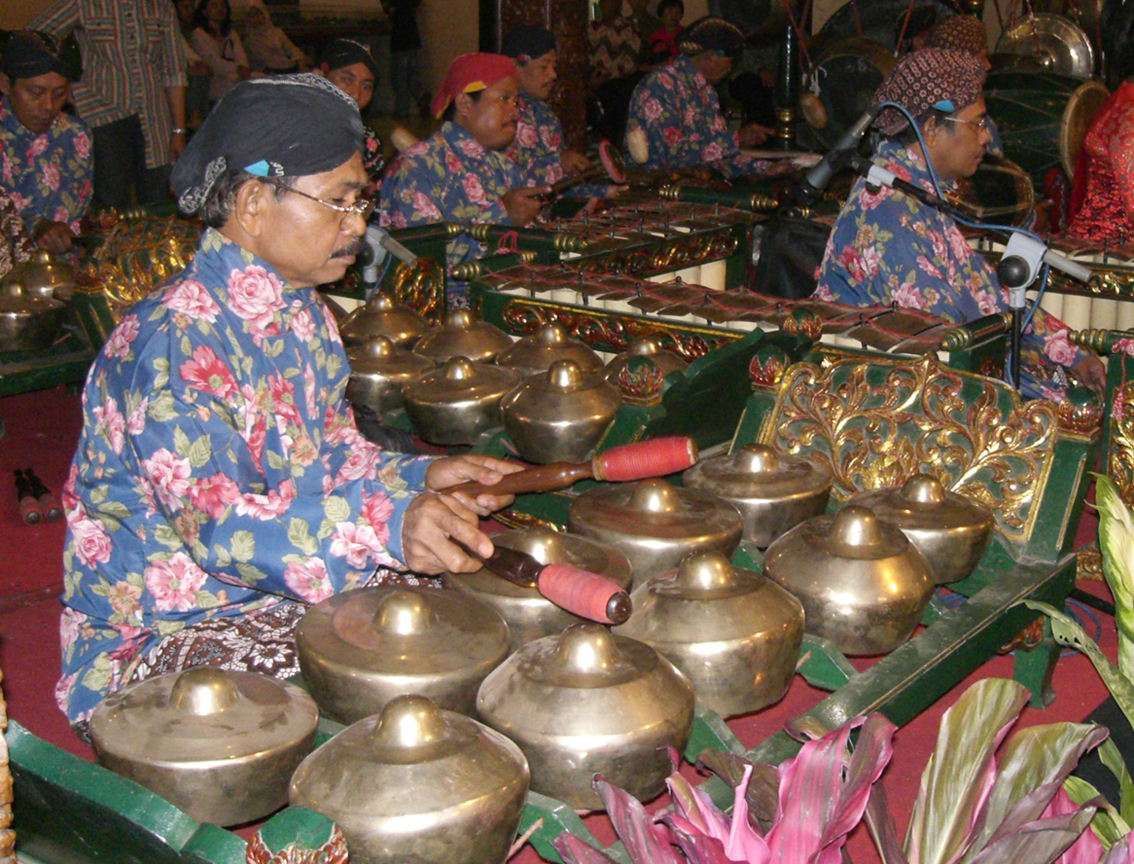
When Gamelan music is performed, it’s not just about the sounds; it's also about how artists act on stage! 🎤✨ Musicians often wear beautiful traditional clothing that reflects their culture. They sit together in a circle or line, making it easy to see and hear each other. Performances are lively and filled with energy, and audiences tend to join in with clapping and cheering! Gamelan ensembles can be large or small, depending on the occasion. Many times, dancers join the musicians, adding movement and color to the performance. This creates a magical experience for everyone in attendance! 🎇
Go deeper🎶 Gamelan Tunings And Scales
Gamelan uses special tunings and scales that make it different from Western music! 🎶The most common scales are called "slendro" and "pelog." Slendro has five notes, making it sound bright and cheerful. Pelog has seven notes, leading to more complex and dreamy sounds. 🎏The tuning of the instruments is also unique because they might not match the notes we know, like do, re, mi. This makes Gamelan music very special! Each Gamelan group might have its tuning, just like family recipes! It’s important for musicians to listen carefully to each other to create harmony and beauty in their performance. 🎉
Go deeper🥁 Instruments Used In Gamelan
Gamelan is unique because it has lots of different instruments, each playing an important role! 🥁🎺 Some popular instruments include metallophones, which look like big xylophones, and gongs that create deep, resonating sounds. There’s also the kendang, a drum that keeps the beat! 🎵Other instruments include the suling (bamboo flute) and the rebab (string instrument). Each instrument is handmade, and they are usually made of metal or bamboo. Different sets of instruments can create different styles of Gamelan music! Deeper sounds come from gongs, while higher sounds come from the metallophones. It's like a big musical family! 🎼
Go deeper🎵 Regional Variations Of Gamelan
Different regions of Indonesia have their unique styles of Gamelan, showcasing various sounds and techniques! 🎵In Bali, Gamelan often features energetic music and colorful performances called "Gamelan Bali." In Java, two main styles are "Gamelan Yogyakarta" and "Gamelan Surakarta," each having its tunings and patterns. 🏞️ Sundanese Gamelan, popular in West Java, emphasizes softer melodies and is often played at the countryside. Each region incorporates its local cultures, traditions, and stories into their Gamelan, making every performance a new adventure. 🌍Exploring these regional variations shows how diverse and rich Indonesian culture is!
Go deeper🌍 Cultural Significance Of Gamelan
Gamelan is an essential part of Indonesian culture, representing the people's values and beliefs. 🌍It is played during ceremonies, religious events, and festivals, connecting people with their traditions. Many communities see Gamelan music as a way to honor ancestors and spiritual beliefs! 🎉Children often learn Gamelan from a young age, helping to keep these traditions alive. It promotes teamwork, as musicians must work together to create beautiful sounds. In Indonesia, Gamelan is not just music but a way of life, showing how art can connect people and enrich communities. It’s a wonderful way to celebrate identity!
Go deeper🎓 Learning And Education In Gamelan
Learning Gamelan is a fun and exciting adventure that helps kids explore music and culture! 🎓Many schools in Indonesia include Gamelan in their music education programs. Kids can learn to play various instruments and work as a team to create beautiful melodies! 🌈Workshops and classes are also available for international students, where they can meet musicians and learn traditional techniques. Gamelan encourages creativity, discipline, and cooperation among young learners. Joining a Gamelan group can lead to wonderful friendships and a deeper understanding of Indonesian culture. So grab a drum or a gong and join the fun! 🥁✨
Go deeper🎸 Influence Of Gamelan On Modern Music
Gamelan music is not just celebrated in Indonesia but has also inspired many modern musicians around the world! 🎸✨ Famous composers like Claude Debussy and Lou Harrison incorporated Gamelan's unique sounds and rhythms into their music. Many popular bands, like "The Beatles," have blended Gamelan with their styles! 🎶This has led to exciting new music genres that explore different cultures. Gamelan workshops and performances can now be found globally, giving people an opportunity to experience this incredible music! Learning about different musical styles can open doors to creativity, showing that music is a universal language! 🌍🎉
Go deeper