Galatea Facts For Kids
Galatea is the fourth-closest inner moon of Neptune and the fifth-largest moon of the planet, primarily composed of ice and rock.
Select reading age
Galatea Facts For Kids
Videos & Quizzesincluded
About this topic
Galatea is a fascinating moon that orbits the planet Neptune! 🌌It is the fourth closest inner moon to Neptune and the fifth largest of all Neptune's moons. Galatea was discovered on July 10, 1989, by NASA's Voyager 2 spacecraft during its journey through our solar system. 🌑It measures about 170 kilometers (106 miles) across, making it relatively small compared to many other moons. Galatea has an interesting rocky surface and is one of Neptune's special little companions that help scientists learn more about this distant planet. 🚀
Explore with ChatDinoKey Points
Galatea has a very thin atmosphere, which is mostly made of gases like hydrogen and some others.
The surface of Galatea is interesting and varied!
Galatea orbits around Neptune at a distance of about 26,000 kilometers (16,200 miles).
Galatea was discovered by scientists while Voyager 2 flew by Neptune in 1989.
The only spacecraft that has visited Galatea is NASA's Voyager 2.
Galatea is a rocky moon made mostly of ice and other materials.
NASA and other space agencies have big plans for studying Neptune and its moons, like Galatea!
Even though Galatea is not as famous as some other moons, it has made some appearances in science fiction!
Galatea is one of 14 known moons of Neptune, and it’s smaller than some but larger than others!
Photos of Galatea

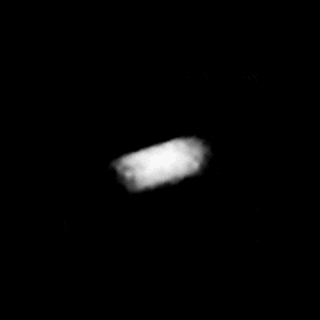
Galatea inside of a faint ring arc near Neptune
🌬️ Atmosphere
Galatea has a very thin atmosphere, which is mostly made of gases like hydrogen and some others. 🌬️ However, it is so thin that it's almost like it doesn't have one! This means that there isn't enough air on Galatea for humans to breathe. 😮The lack of atmosphere also causes extreme temperature changes, with surfaces being very cold, about -220°C (-364°F)! Brrr! ❄️ This makes Galatea an icy world, where nothing can survive without the right kind of space gear! 🧊🛸
Go deeper🌟 Surface Features
The surface of Galatea is interesting and varied! It has many craters, which are like little dents made by rocks crashing into it from space. 🌟Some of these craters are quite deep, while others are shallower. Scientists believe that Galatea might have some very small valleys or hills as well. The dark areas on its surface suggest that there are different materials, making it a unique and exciting place to study! 🔭Galatea is like a puzzle, with each crater holding secrets about its history! 🧩
Go deeper🌍 Orbit And Rotation
Galatea orbits around Neptune at a distance of about 26,000 kilometers (16,200 miles). 🌍It goes around the planet quickly, completing one full orbit in just 7.5 hours! That's much faster than Earth's 24-hour day. The moon is tidally locked, which means it rotates at the same speed that it orbits, always showing the same side to Neptune. 🌐This is similar to how our Moon always faces Earth. Galaxy enthusiasts love tracking its quick dance around Neptune! 💃🕺
Go deeper🛰️ Discovery And Naming
Galatea was discovered by scientists while Voyager 2 flew by Neptune in 1989. 🛰️ This spacecraft was the first to take close-up images of the planet and its moons! The name "Galatea" comes from Greek mythology, where Galatea was a beautiful sea nymph. 🌊The moon's name was chosen because it was part of the poetic tradition surrounding the ocean and celestial objects. Galatea orbits Neptune every 7.5 hours, making it a speedy little moon! ⏳
Go deeper🚀 Exploration Missions
The only spacecraft that has visited Galatea is NASA's Voyager 2. 🚀This amazing spacecraft flew by Neptune and its moons in 1989, gathering valuable information and taking stunning photographs! Although Voyager 2 is now far away, it helped scientists learn so much about Galatea and Neptune. 🌌Scientists hope that future missions will one day explore Galatea again to discover even more secrets about this intriguing moon! 🌠
Go deeper🧊 Physical Characteristics
Galatea is a rocky moon made mostly of ice and other materials. 🧊It is shaped like a potato, which means it's not perfectly round like some other moons. The surface of Galatea is covered in many craters, which are caused by meteoroids crashing into it over time. 🌑Its dark surface reflects some sunlight, making it visible among the stars. Galatea's gravity is also quite weak, so if you hopped on it, you would feel lighter than on Earth! 🏃♂️💨
Go deeper🚀 Future Research Directions
NASA and other space agencies have big plans for studying Neptune and its moons, like Galatea! 🚀Future missions could involve sending spacecraft back to explore these icy worlds up close. 🛰️ Scientists want to learn more about the surface features, the very thin atmosphere, and how Galatea impacts Neptune's rings. 🌠They hope to understand the moon's history and discover if it has any hidden mysteries! Galatea offers a great opportunity for adventure and exploration in our amazing universe. 🌌✨
Go deeper📚 Galatea In Popular Culture
Even though Galatea is not as famous as some other moons, it has made some appearances in science fiction! 📚It inspires writers, artists, and dreamers who enjoy space adventures. Galatea is often mentioned in discussions about Neptune and its moons in books and shows. 🌌It reminds us that every moon, even the smaller ones, plays a part in the amazing universe we live in! Just like Galatea, every little moon has a story! 🌟
Go deeper🌑 Comparative Analysis With Other Neptunian Moons
Galatea is one of 14 known moons of Neptune, and it’s smaller than some but larger than others! 🌑For example, Triton is the largest moon of Neptune, measuring about 2,700 kilometers (1,680 miles) across. 🌍In contrast, moons like Naiad and Thalassa are much smaller than Galatea! Each moon has its unique characteristics, but Galatea stands out for its rocky surface and quick orbit around Neptune. 🌌By comparing them, scientists can understand how moons are formed and how they change over time! 📊
Go deeper