Flood Irrigation Facts For Kids
Flood irrigation is a traditional method of watering crops by inundating fields with water, utilizing gravity to direct flow.
Select reading age
Flood Irrigation Facts For Kids
Videos & Quizzesincluded
About this topic
Flood irrigation is a way to water crops by letting water flow over the fields. 🌊It’s an ancient method where fields are flooded with water from rivers or canals. This technique is used in many countries, like India and Egypt. Farmers choose flood irrigation to help their plants grow and produce food. Some crops that benefit from this method are rice, wheat, and cotton. 🌾Flood irrigation can cover a lot of land, but farmers need to make sure the water goes where it’s needed and doesn't cause too much water loss.
Explore with ChatDinoQuick Facts
Key Points
Flood irrigation can both help and hurt the environment.
While flood irrigation is useful, it has some challenges too!
The future of flood irrigation is looking bright!
Flood irrigation has been around for thousands of years!
Flood irrigation has some cool benefits!
Flood irrigation is one of several ways to water plants.
Flood irrigation is used in lots of places globally!
Technology is helping farmers improve flood irrigation!
Photos of Flood Irrigation

Level basin flood irrigation on wheat

Residential flood irrigation in the Southwest, United States of America.

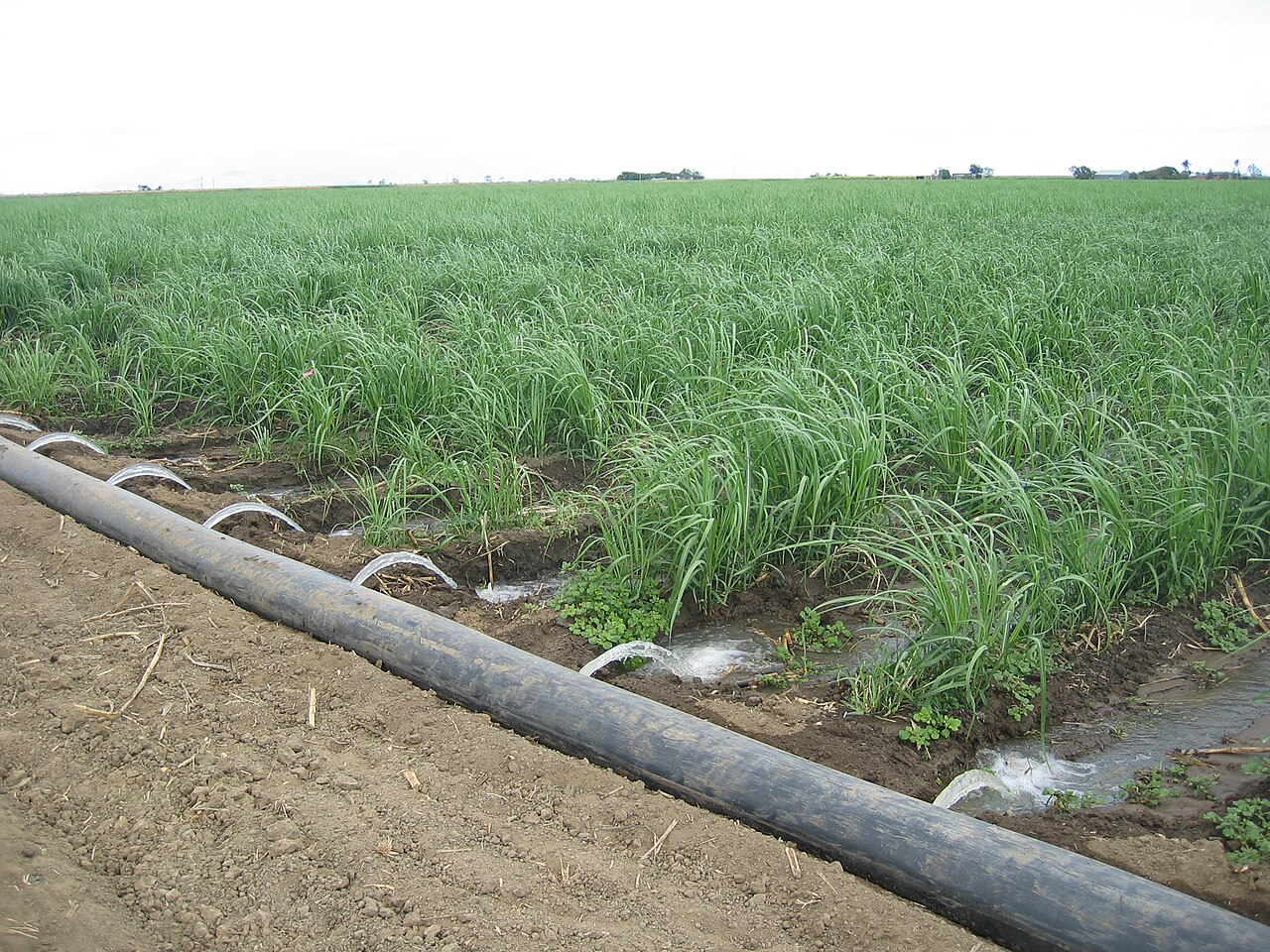
Furrow irrigation system using siphon tubes

Gated pipe supply system
🌍 Environmental Impact
Flood irrigation can both help and hurt the environment. 🌍On one hand, it helps maintain water levels in local habitats and can promote a variety of plant growth. 🌿But, if not done carefully, it can cause issues like water pollution from runoffs or spreading pesticides. Excessive flooding can also harm animals living nearby. 🦢Therefore, it’s super important for farmers to use flood irrigation responsibly, ensuring that it benefits both the crops and the environment. With good practices, we can help keep nature healthy while growing food!
Go deeper🌧️ Challenges And Limitations
While flood irrigation is useful, it has some challenges too! 🌧️ One of the biggest problems is that it can waste a lot of water if not managed well. When it rains, fields can get too wet, which can drown plants. 💦In some places, flooding can also wash away soil, making it less fertile. It can also lead to salinity, which means there are too many salts in the soil. 😟That can hurt plant growth. Farmers must carefully plan and use flood irrigation wisely to prevent these issues and take care of their land!
Go deeper🌞 Future Of Flood Irrigation
The future of flood irrigation is looking bright! 🌞As more farmers learn to use technology and smart practices, it can become more efficient. This means using less water and getting a better harvest! 🌱The focus on sustainability will help protect nature and ensure that we can still grow enough food for everyone. Researchers are also studying how to avoid problems like soil salinity. By improving this ancient method, we can continue to benefit from flood irrigation for many years to come! 🌾
Go deeper🏺 History Of Flood Irrigation
Flood irrigation has been around for thousands of years! One of the oldest places to use this method is Mesopotamia, located between the Tigris and Euphrates rivers. 🏺Ancient people learned to control river waters around 6000 B.C. to help grow crops. In ancient Egypt, farmers used flood irrigation from the Nile River to grow food for the entire civilization. 🌍This technique allowed civilizations to thrive, and many still use it today, proving its importance in growing crops throughout history!
Go deeper💧 Benefits Of Flood Irrigation
Flood irrigation has some cool benefits! 💧First, it evenly distributes water across fields, which helps plants grow strong and healthy. It can also be less expensive than other watering methods because it uses natural water sources like rivers. 🌊Additionally, this method can help control weeds and pests, which is great for farmers! Flood irrigation also helps recharge groundwater, making sure there is enough fresh water underground for the future. 🌱These advantages make it an important technique for many farmers today!
Go deeper🚜 Comparison With Other Irrigation Methods
Flood irrigation is one of several ways to water plants. 🚜Another common method is drip irrigation, where water is delivered directly to the plant roots through small tubes. This saves water and is very efficient! 🌱Sprinkler irrigation is also popular; it sprays water onto the crops similar to rain. Both methods can be more efficient than flood irrigation but often cost more. However, flood irrigation covers large areas quickly and is easier for some farmers to use. Each method has its pros and cons - it's all about finding the best fit for the farm! 🌾
Go deeper🍚 Flood Irrigation Practices Around The World
Flood irrigation is used in lots of places globally! In India, farmers grow rice in flooded fields called “paddy fields.” 🍚 In China, the vast Yangtze River helps irrigate hundreds of thousands of acres. In Egypt, farmers depend on the Nile River's floods to nourish crops like wheat and corn. 🌽Each region has its own techniques and seasons to consider. This method isn't just efficient; it's become a vital part of many cultures and traditions around the world! 🌏
Go deeper📱 Technological Innovations In Flood Irrigation
Technology is helping farmers improve flood irrigation! 📱🔧 One example is smart sensors, which measure soil moisture levels. This helps farmers know exactly when and how much to irrigate their fields. Drones are also used to monitor crops from the sky, becoming tools to optimize water usage! 🌤️ Additionally, drip technology can now work with flood systems to be more efficient. These innovations make flood irrigation more sustainable, meaning farmers can produce food while taking better care of the Earth. 🌎
Go deeper